

Blog
What Is Dupatta? History, Types, Importance & Draping Styles Guide

The dupatta is one of the most recognizable and culturally significant garments in South Asian fashion. But what is dupatta exactly, and why has it remained important for centuries? In simple terms, a dupatta is a long scarf traditionally worn by women across India, Pakistan, Bangladesh, and Nepal. It is commonly paired with outfits like salwar kameez, lehenga choli, and anarkali suits, serving both decorative and cultural purposes.
However, the dupatta is much more than just a fashion accessory. It carries deep historical, symbolic, and cultural value while also evolving into a versatile styling element in modern fashion. Let’s explore everything you need to know.
What Is Dupatta? Meaning and Definition
If you’re wondering what is dupatta, it is a long rectangular piece of cloth worn over the shoulders, across the chest, or over the head as part of traditional South Asian attire.
The word dupatta comes from Sanskrit roots:
- “Du” meaning two
- “Patta” meaning cloth
Historically, it referred to a “double-layered cloth” worn as an upper garment.
In English, a dupatta can be described as a traditional scarf or shawl, but it differs significantly in its cultural and ceremonial importance.
It is commonly worn with:
- Salwar kameez
- Lehenga choli
- Anarkali suits
- Sharara and gharara outfits
Beyond clothing, the dupatta represents modesty, grace, and cultural identity.
Dupatta History and Origin
Understanding dupatta history helps explain why it remains so important today.
Ancient Origins
The concept of draping cloth over the upper body dates back to the Indus Valley Civilization (2500 BCE). Ancient sculptures and texts reference garments similar to the dupatta, often called uttariya in Vedic literature.
Medieval & Mughal Era
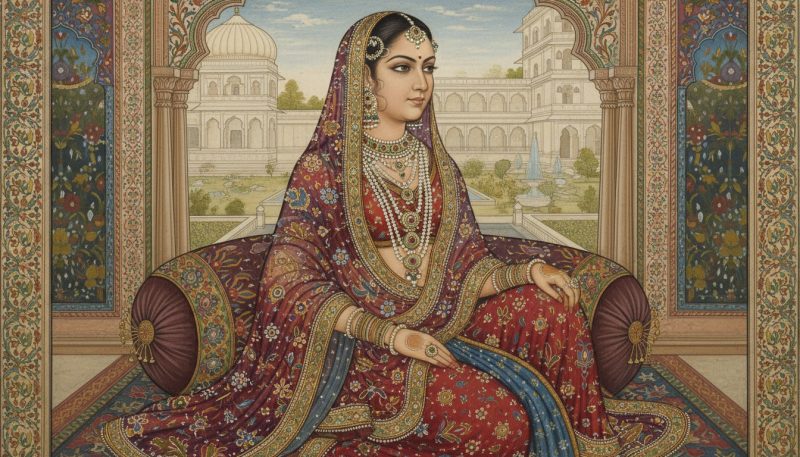
During the Mughal period, dupattas became more refined and ornate. Royal women wore richly embroidered dupattas made from silk, adorned with:
- Zari work
- Gota patti
- Banarasi weaving
This era elevated the dupatta from simple covering to artistic expression.
Colonial Period
British colonial influence introduced stitched garments, but the dupatta remained integral to traditional dress, especially in rural and ceremonial contexts.
Modern Evolution
Today, the dupatta has evolved into:
- A fashion statement
- A bridal essential
- A fusion styling accessory
- A symbol of cultural heritage
Despite modernization, its traditional roots remain intact.
Importance of Dupatta in Culture and Tradition
The importance of dupatta goes far beyond aesthetics.
Symbol of Modesty and Respect
In many communities, covering the head with a dupatta signifies:
- Respect in religious spaces
- Cultural adherence
- Humility
It is commonly worn in:
- Temples
- Gurudwaras
- Mosques
- Weddings
Bridal Significance
In weddings, the dupatta holds deep emotional meaning. Bridal dupattas often symbolize:
- Blessings
- New beginnings
- Family honor
In Sikh weddings, a dupatta may be used in ceremonial rituals connecting bride and groom.
Regional Cultural Identity
Different regions celebrate dupattas uniquely:
- Punjab – Phulkari dupattas
- Rajasthan – Bandhani dupattas
- Uttar Pradesh – Banarasi silk dupattas
- Madhya Pradesh – Chanderi dupattas
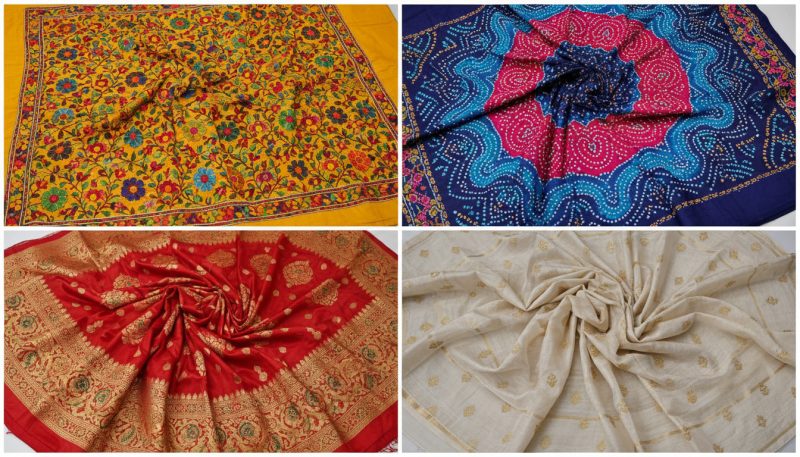
Each style represents local craftsmanship and identity.
Types of Dupatta
There are many types of dupatta, categorized by fabric and craftsmanship.
| Fabric Type | Texture & Feel | Best For | Occasion Type | Styling Benefit |
| Cotton Dupatta | Lightweight, breathable, soft | Daily wear, office, summer | Casual & everyday wear | Comfortable and easy to carry |
| Silk Dupatta | Smooth, rich, slightly heavy | Weddings & festive events | Formal & traditional | Adds luxury and elegance |
| Chiffon Dupatta | Soft, flowy, sheer | Modern suits & gowns | Party & semi-formal | Easy to drape and stylish |
| Georgette Dupatta | Slightly textured, durable | Party wear & celebrations | Semi-formal & festive | Holds pleats well |
| Organza Dupatta | Sheer, crisp, structured | Bridal & designer outfits | Weddings & receptions | Gives structured volume |
| Net Dupatta | Lightweight, delicate, see-through | Lehenga & bridal wear | Bridal & ceremonial | Decorative and glamorous look |
Types of Dupatta Based on Craft & Region
These variations highlight the artistic richness of South Asia.
| Type | Origin | Best For |
| Bandhani Dupatta | Rajasthan & Gujarat | Festive wear |
| Phulkari Dupatta | Punjab | Cultural ceremonies |
| Banarasi Dupatta | Varanasi | Bridal & formal events |
| Chanderi Dupatta | Madhya Pradesh | Elegant gatherings |
| Kota Doria Dupatta | Rajasthan | Summer occasions |
| Gota Patti Dupatta | Rajasthan | Weddings |
Dupatta Draping Styles (Traditional & Modern)
The keyword dupatta draping styles carries high interest and for good reason. The way you drape a dupatta can completely transform an outfit.
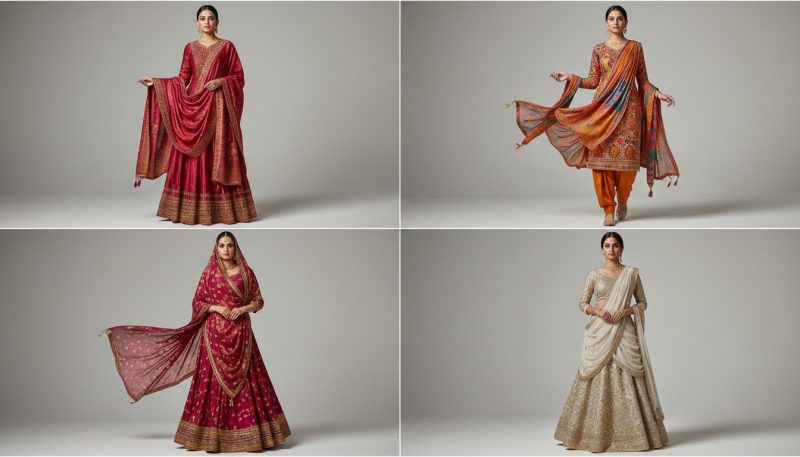
Traditional Dupatta Draping Styles
1. Classic Over Both Shoulders
Draped evenly across both shoulders simple and elegant.
2. Punjabi Style
Pinned on one shoulder and spread across the front.
3. Gujarati Style
Placed over the head and draped across the torso.
4. Lehenga Front Drape
Worn across the chest and pinned at the waist.
5. Head Covering Style
Placed fully over the head during religious ceremonies.
Modern Dupatta Draping Styles
1. Belted Dupatta
Secured at the waist with a belt for structured styling.
2. One-Shoulder Drape
Let loose over one shoulder for contemporary elegance.
3. Cape Style
Spread evenly across shoulders like a cape.
4. Saree-Style Drape
Pleated and worn like a saree pallu.
5. Side-Swept Style
Pinned diagonally across the body.
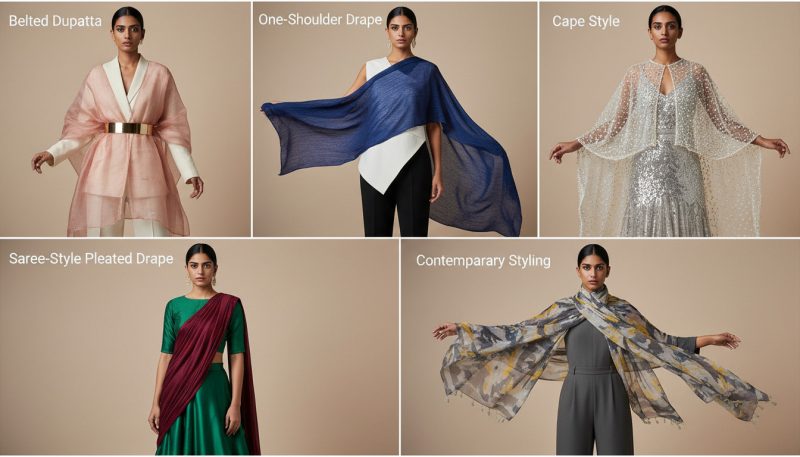
Modern styling proves the dupatta is not limited to tradition it adapts beautifully to new fashion trends.
Chunni and Dupatta : What’s the Difference?
Many people confuse chunni and dupatta, but there are subtle differences.
| Aspect | Chunni | Dupatta |
| Length | Usually shorter | Typically longer (2–2.5 meters) |
| Usage | Casual or regional | Formal & ceremonial |
| Regional Term | Common in North India | Broader South Asian usage |
In many regions, the terms are used interchangeably, but “dupatta” is generally the more formal term.
Modern Relevance of Dupatta
Today, the dupatta is not limited to traditional outfits.
It is styled with:
- Indo-western gowns
- Long jackets
- Jeans and kurtis
- Contemporary fusion wear
Even men in some cultural ceremonies wear a dupatta-like stole as a symbol of honor. This transformation proves the dupatta remains relevant across generations.
Conclusion
Now that you understand what is dupatta, its rich history, importance, types of dupatta, and various dupatta draping styles, it becomes clear that this garment is far more than a simple piece of fabric.
For elegant and secure styling ideas, explore our detailed guide on how to style duptta to perfect your wedding look.
Frequently Asked Questions
What is the purpose of a dupatta?
The purpose of a dupatta is both cultural and decorative. Traditionally, a dupatta is worn to symbolize modesty, respect, and tradition in South Asian attire. It is draped over the shoulders or head with outfits like salwar kameez and lehenga. In modern fashion, it also enhances the overall look of an outfit.
What is the difference between dupatta and chunni?
The difference between dupatta and chunni mainly lies in terminology and length. A dupatta is a long rectangular cloth (usually 2 to 2.5 meters) worn with traditional outfits across South Asia. A chunni is often a regional term used in North India and Punjab, sometimes referring to a slightly shorter or lighter version of a dupatta.
What is called dupatta in English?
In English, a dupatta is commonly referred to as a traditional scarf or shawl. However, these terms do not fully capture its cultural importance. A dupatta is specifically associated with South Asian clothing and is worn as part of outfits like salwar kameez, lehenga choli, and anarkali suits.
What is the difference between a dupatta and a scarf?
A dupatta differs from a scarf in cultural significance and usage. A scarf is a general fashion accessory worn worldwide for style or warmth. A dupatta, however, is an integral part of South Asian traditional dress and carries cultural, religious, and ceremonial importance.
What is another name for a dupatta?
Another name for a dupatta includes chunni, odhni, or orna, depending on the region. In Punjab, it is often called chunni, while in Rajasthan and Gujarat it may be referred to as odhni. These names describe similar garments worn as part of traditional attire.
Is dupatta Indian or Pakistani?
The dupatta is part of the shared cultural heritage of South Asia, including India, Pakistan, Bangladesh, and Nepal. It is not exclusive to one country. The garment has historical roots that predate modern national boundaries and remains widely worn across the region today.


 New Arrivals
 Ready To Wear
 Kid’s Clothing
 Wedding Wear
 Men’s Wear
 Jewellery
 Designers
 Sale
Sale