

Blog
Sharara vs Gharara: What’s the Real Difference?
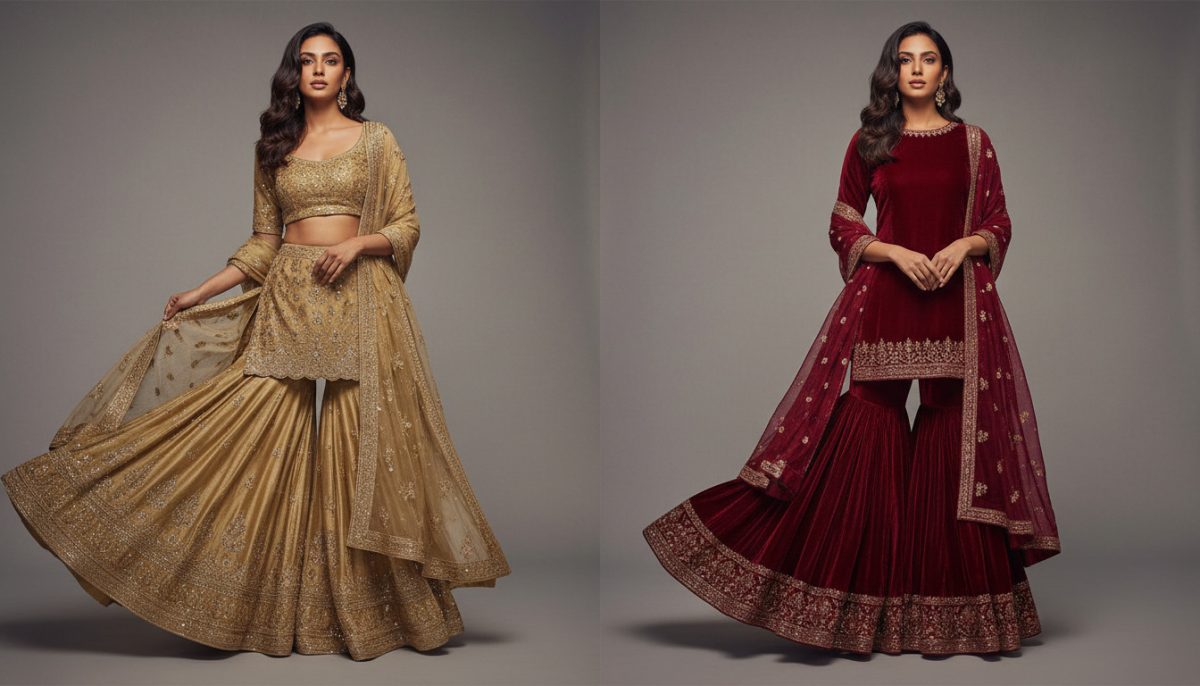
If you’ve ever confused a sharara with a gharara, you’re not alone. At first glance, both outfits feature flared bottoms paired with a kurti or kameez and dupatta. But the real difference lies in their construction, stitching, and where the flare begins.
A sharara flares out from the waist and remains wide throughout the legs. A gharara, on the other hand, is fitted until the knee and then dramatically flares out from a stitched seam at the knee joint.
That single structural detail the knee seam, is what separates these two traditional South Asian outfits. Let’s start with understanding each garment individually.
What Is a Sharara?
A sharara is a traditional South Asian outfit consisting of wide-leg, flared pants paired with a short or mid-length kameez (kurti) and a dupatta. The defining characteristic of a sharara is that the flare begins from the waist and continues wide throughout the entire length of the legs.
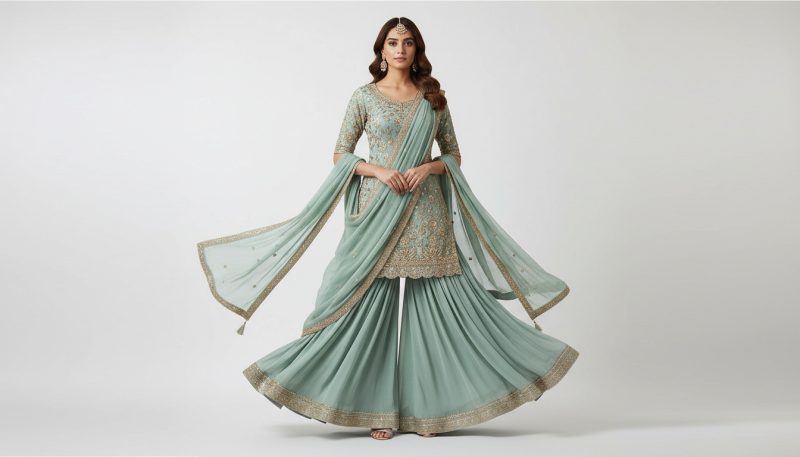
Unlike structured garments, a sharara does not have a knee seam or joint. The pants are typically made using multiple panels or gathered fabric stitched from the waistband downward, creating a flowing, skirt-like silhouette while still maintaining a divided pant structure.
Key Features of a Sharara
- Flare starts from the waist
- No knee seam or joint
- Loose and wide throughout
- Flowing, lightweight silhouette
- Often made with georgette, chiffon, silk, or net
- Paired with short kurtis, peplum tops, or straight kameez
Because of its continuous flare, a sharara creates soft movement and comfort. It is generally considered easier to walk in and less restrictive compared to a gharara.
Silhouette & Structure
Visually, a sharara appears almost like a lehenga from a distance because of its volume. However, it remains a two-legged garment. The width is distributed evenly from waist to hem, giving it a relaxed and modern aesthetic.
While shararas have Mughal-era influences, they have evolved significantly and are now common at:
- Mehndi ceremonies
- Sangeet functions
- Eid celebrations
- Contemporary weddings
In short, if the flare starts from the top and there’s no visible knee seam, you’re looking at a sharara.
What Is a Gharara?
A gharara is a traditional South Asian outfit defined by its distinct knee seam and dramatic flare below the knee. Unlike a sharara, which flares from the waist, a gharara is fitted from the waist down to the knees and then expands into a wide, gathered flare.
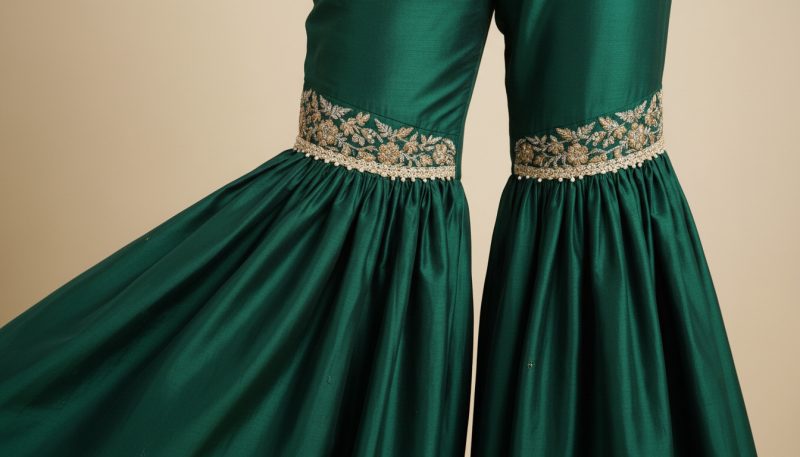
The most important structural element of a gharara is the knee joint seam often highlighted with decorative lace, gota, zari, or embroidery. This seam connects the fitted upper portion to the voluminous lower flare, creating a clear visual break in the silhouette.
Key Features of a Gharara
- Fitted from waist to knee
- Visible knee seam (joint)
- Flare begins below the knee
- Structured and dramatic lower volume
- Traditionally heavier fabrics and embellishments
- Paired with short kurtis and dupattas
Construction & Stitching Difference
The gharara’s construction is more technical than a sharara. It typically involves:
- A straight or slightly tapered upper pant portion.
- A horizontal seam at the knee.
- A gathered or panelled fabric section attached below the knee to create a pronounced flare.
This seam is not just decorative it’s structural. It’s what gives the gharara its iconic shape and traditional identity.
Silhouette & Cultural Roots
The gharara has strong roots in Lucknow’s Nawabi culture and was historically worn by Mughal-era women. Because of its structured form and elaborate embellishment, it is often associated with:
- Bridal wear
- Nikah ceremonies
- Traditional weddings
- Formal festive events
Visually, the gharara creates a more regal and dramatic appearance compared to the softer, flowing silhouette of a sharara.
In simple terms:
If the garment is tight until the knee and then suddenly flares out from a visible seam it’s a gharara.
Sharara vs Gharara: Key Differences Explained
Now that you understand each garment individually, let’s compare them side by side. The difference between sharara and gharara comes down to stitching, flare placement, silhouette, and traditional structure.
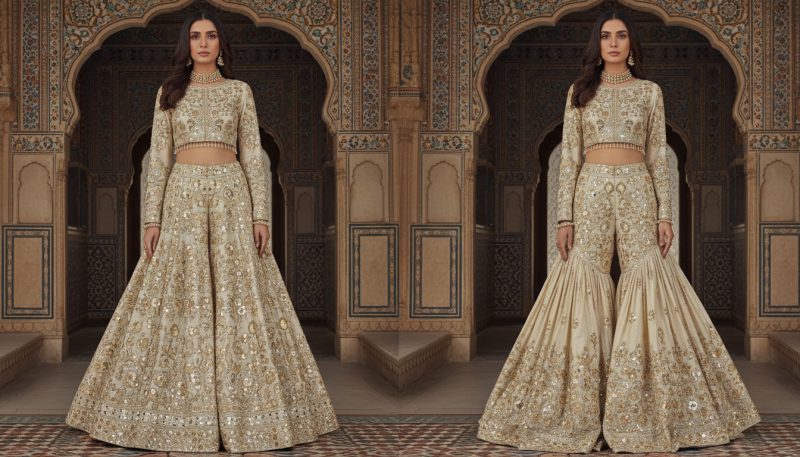
Here is a clear comparison table to help you instantly identify them:
| Feature | Sharara | Gharara |
| Flare Starts From | Waist | Knee |
| Knee Seam (Joint) | No | Yes (visible stitched seam) |
| Fit Above Knee | Loose throughout | Fitted until knee |
| Lower Silhouette | Even, flowing flare | Dramatic gathered flare below knee |
| Structure | Soft, fluid | Structured, segmented |
| Traditional Roots | Mughal-inspired, evolved modern form | Strongly associated with Lucknow/Nawabi culture |
| Comfort Level | More comfortable for movement | Slightly heavier and structured |
| Bridal Preference | Popular for modern brides | Traditional bridal choice |
Sharara vs Gharara for Weddings: Which Should You Choose?
Both outfits work for weddings, but they create different looks.
Choose a Gharara If:
- You want a traditional, heritage look
- It’s a nikah or formal ceremony
- You prefer a structured, regal silhouette
- Heavy embroidery and dramatic flare matter to you
Choose a Sharara If:
- You want more comfort and movement
- It’s a mehndi or sangeet
- You prefer a soft, flowing silhouette
- You want a modern festive look
Conclusion
In essence, the difference between a sharara and a gharara comes down to structure and flare. A sharara flows wide from the waist with no knee seam, creating a soft and modern silhouette, while a gharara is fitted till the knee and then flares out dramatically from a stitched joint, giving it a more traditional and regal look. Once you understand this key construction detail, identifying and choosing between the two becomes simple.
Frequently Asked Questions
Which is better sharara or gharara?
It depends on preference. A sharara is more comfortable and modern, while a gharara looks more traditional and structured.
How does the sharara differ from a gharara?
A sharara flares from the waist with no knee seam. A gharara is fitted till the knee and flares out from a stitched knee joint.
Is gharara Pakistani or Indian?
The gharara originated in Lucknow, India, during the Mughal era but is popular in both India and Pakistan today.
Are ghararas and shararas comfortable?
Both can be comfortable, but shararas are generally more comfortable because they are loose throughout without a knee seam.
What body type looks best in a sharara?
A sharara suits most body types, especially pear-shaped and apple-shaped figures, because the waist flare creates a balanced silhouette.
Does a sharara have two legs?
Yes, a sharara has two separate legs, even though it may look like a skirt due to its wide flare.


 New Arrivals
 Ready To Wear
 Kid’s Clothing
 Wedding Wear
 Men’s Wear
 Jewellery
 Designers
 Sale
Sale