

Blog
Bridal Dupatta Draping: A Complete Guide to Stunning Wedding Styles
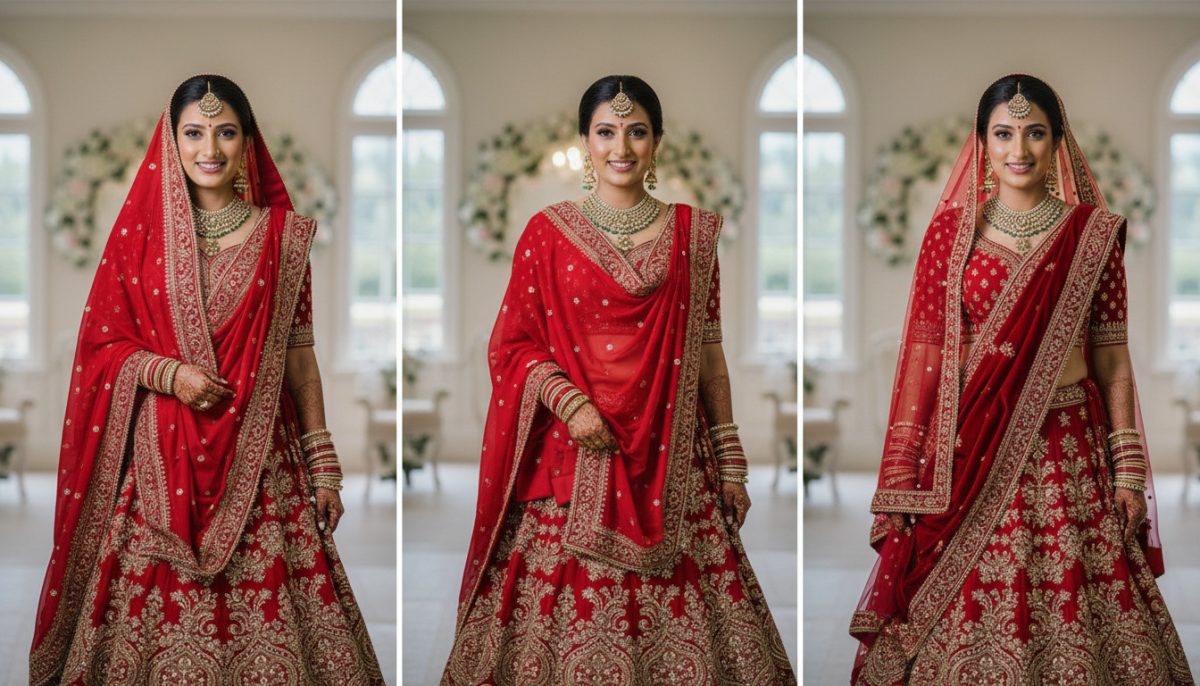
Bridal dupatta draping can completely change the way your wedding outfit looks and feels. The same lehenga can appear royal, minimal, traditional, or modern just by changing the drape.In South Asian weddings, the dupatta is not only a styling piece but also a core part of the bridal identity. Whether you’re wearing a lehenga, sharara, gharara, or bridal saree, the right drape helps frame your face, balance your jewelry, and keep you comfortable through long ceremonies.
In professional bridal styling, dupatta draping is often finalized during bridal trials because it directly affects comfort, posture, and wedding photographs. As a bridal styling rule, the best dupatta drape is the one that looks beautiful and stays secure especially during bridal entry, sitting for rituals, and photos.
Why Bridal Dupatta Draping Matters
The bridal dupatta is more than an accessory. It shapes your silhouette and creates harmony between your blouse, lehenga embroidery, and bridal jewelry.
Traditionally, the head drape symbolized modesty and respect during ceremonies such as mehndi, nikkah, barat, walima, and other pre-wedding events. Today, brides also use dupatta draping to express personal style through belted drapes, cape drapes, or layered double dupattas.
A well-planned drape helps you:
- Highlight heavy borders and embroidery
- Frame the face for flattering photos
- Stay comfortable while moving and sitting
- Avoid constant fixing during the event
Stylist tip: Always finalize your dupatta drape during your bridal trial, not on the wedding day.
Single vs Double Dupatta Draping: Which Is Right for You?
Choosing between single and double dupatta sets the entire bridal vibe.
Single Dupatta Draping Style
This look is clean, modern, and lightweight. It keeps blouse and waist detailing visible and feels easier to carry for long hours. It works best for mehendi, sangeet, engagement, and reception looks. Fabrics like organza, net, chiffon, and georgette hold beautifully in single drapes.
Expert tip: If your blouse has heavy neckline work, choose a single dupatta drape that doesn’t cover the front.
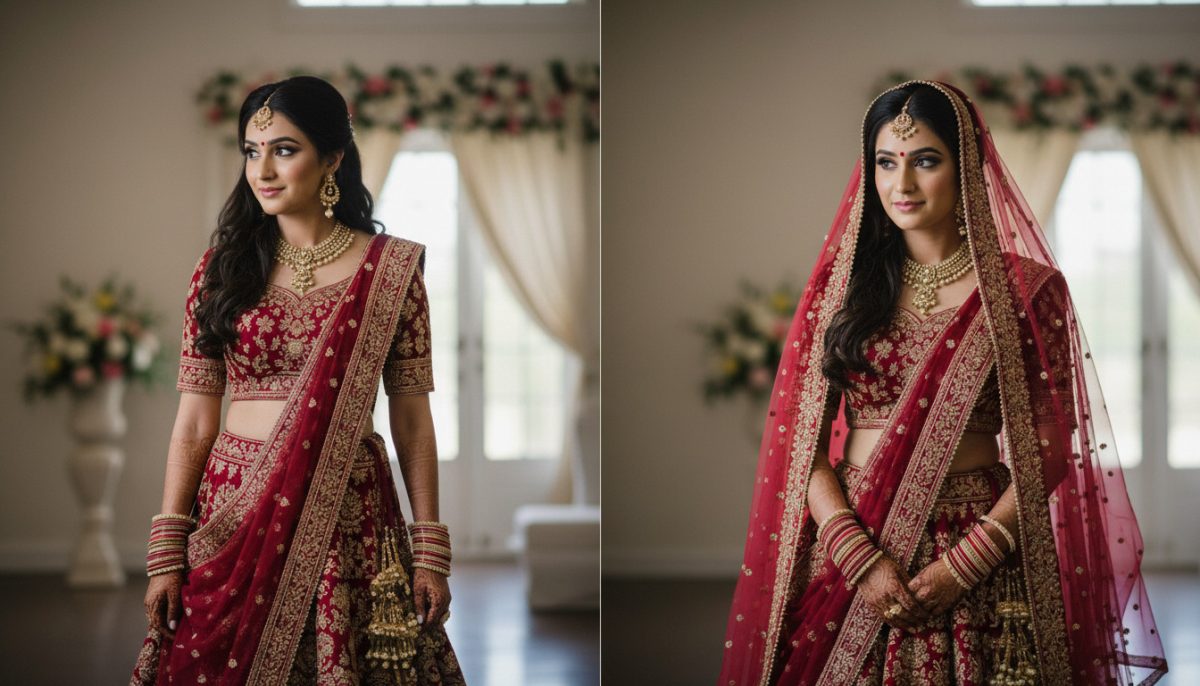
Double Dupatta Draping Style
Double dupatta looks are the most regal choice for the main wedding ceremony. One dupatta is usually worn on the head, while the second is styled across the body. This approach is common in designer bridal styling inspired by HSY, Sana Safinaz, Elan, Faiza Saqlain, and Nomi Ansari.
Expert tip: Keep the head dupatta lighter (net or organza) and the body dupatta heavier (silk, velvet, or embroidered) to avoid discomfort.
Classic Bridal Dupatta Draping Styles
These timeless drapes are perfect for brides who want a traditional and elegant look.
1) Classic Head and Shoulder Drape
The dupatta is pinned on the head and brought forward over one shoulder, creating a graceful bridal frame.
Best for: Wedding rituals and traditional ceremonies
Best fabrics: Net, organza, soft silk
Stylist tip: Use small safety pins near the hairline and shoulder seam for a clean finish.
2) Saree-Style Dupatta Drape
The dupatta is pleated, wrapped lightly around the waist, and taken over the shoulder like a saree pallu. This creates a structured and flattering silhouette.
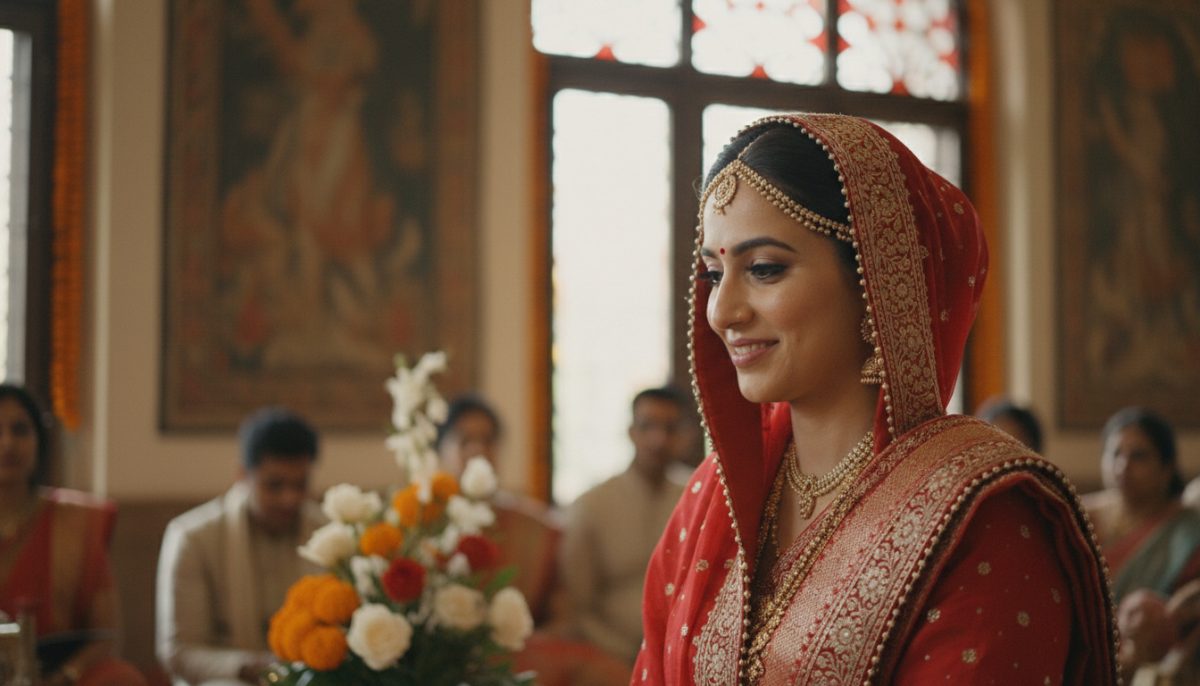
Best for: Brides with heavy borders or Banarasi dupattas
Expert tip: Secure pleats at the waist to prevent slipping while walking or sitting.
3) Gujarati Seedha Pallu Drape
The embellished end of the dupatta is brought to the front, making the border the focal point.
Best for: Traditional weddings and cultural looks
Best fabrics: Silk, bandhani, embroidered net
Stylist tip: Keep neck jewelry lighter so the pallu stands out.
4) Pakistani Style Lehenga Dupatta Drape
This drape is loved for its graceful, modest finish. The dupatta is usually worn over the head or across the shoulders, with one side brought forward to cover the chest softly and the other falling neatly at the back.
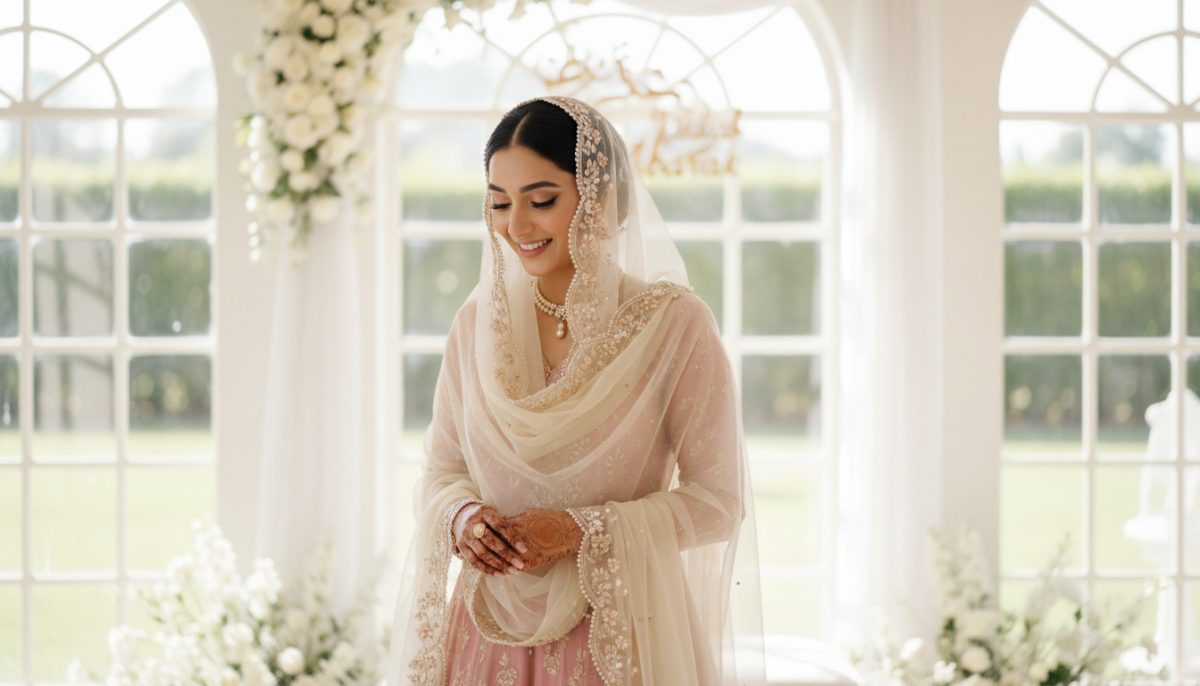
Best for: Nikkah, barat looks, modest bridal styling
Best fabrics: Net, chiffon, organza, Banarasi borders
Stylist tip: Secure the dupatta at the crown and shoulder, then add one hidden pin near the waist to stop slipping.
Modern & Trending Bridal Dupatta Draping Styles
Modern bridal styling focuses on comfort, movement, and clean silhouettes.
5) Belted Dupatta Draping
The dupatta is secured at the waist using a kamarbandh or bridal belt, adding structure and stability.
Best for: Sangeet, reception, cocktail night
Expert tip: Match the belt tone with your jewelry for a polished look.
6) Cape Style Dupatta Drape
The dupatta is pinned on both shoulders and left flowing at the back like a cape.
Best for: Reception photos and statement blouse looks
Best fabrics: Organza, georgette, net
Stylist tip: Skip heavy necklaces and opt for statement earrings.
7) One-Sided Dupatta Drape
The dupatta is pleated and pinned on one shoulder, falling neatly on one side.
Best for: Engagements, modern brides, intimate weddings
Expert tip: Works beautifully with detailed blouses and layered bangles.
Royal Wedding Dupatta Draping Styles
These styles are designed for a grand bridal entry and traditional ceremony impact.
8) Veil and Body Drape (Double Dupatta)
A sheer dupatta is worn as a veil over the head, while a second dupatta is draped across the body. This style is popular in celebrity bridal looks, including Priyanka Chopra’s bridal veil styling.
Best fabrics: Net veil with velvet, silk, or embroidered dupatta
Stylist tip: Keep the veil sheer so facial expressions show clearly in photos.
9) Head-to-Shoulder Flow Drape
The dupatta is placed over the head and brought diagonally to the opposite shoulder, softly framing the face.
Best for: Traditional ceremonies and temple weddings
Expert tip: Use a longer dupatta to avoid tension on the scalp.
10) Trail Dupatta Drape
For brides who want a dramatic, princess-like entry, the trail drape is a beautiful choice. The dupatta is pinned securely near the head or shoulders and allowed to flow behind like a soft train.
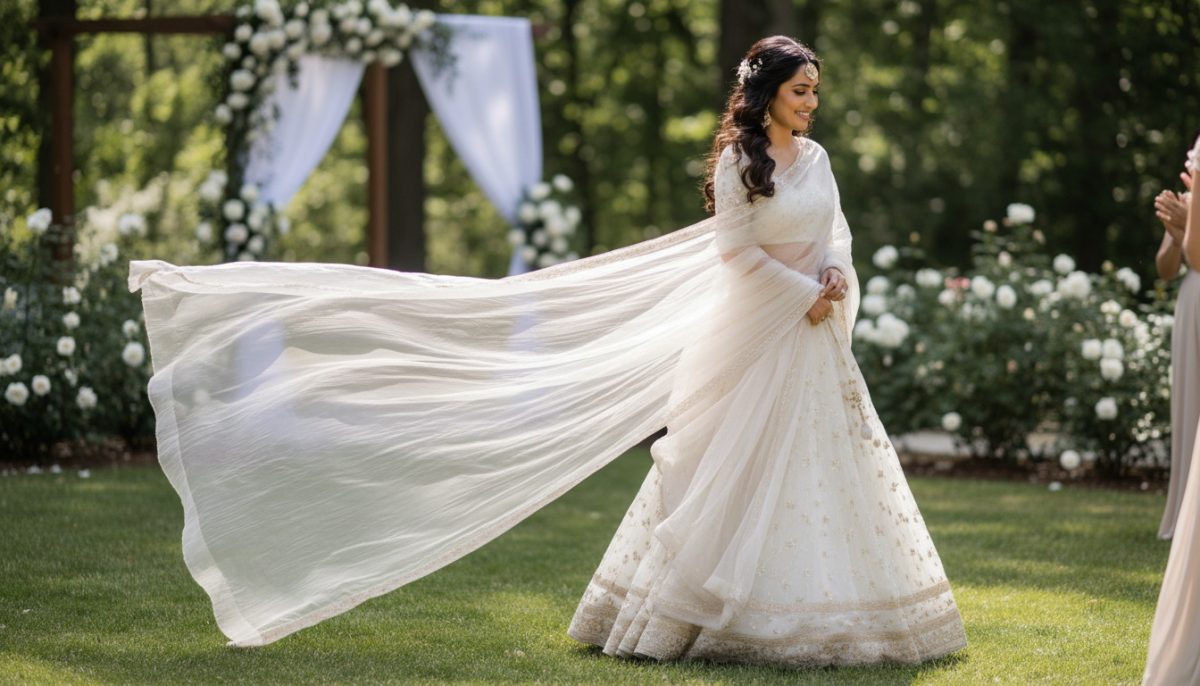
Best for: Bridal entry, photo shoots, outdoor weddings
Best fabrics: Organza, net, tissue, lightweight chiffon
Stylist tip: Avoid heavy velvet for a trail it can pull and lose shape. Anchor the trail with strong pins at the shoulder or back.
Best Dupatta Draping Based on Occasion
- Wedding ceremony: Double dupatta, veil-and-body, or saree-style drapes
- Reception: Belted, cape-style, or one-sided drapes
- Sangeet & Mehendi: Single dupatta, lightweight fabrics, hands-free draping
Choosing the right drape for each function improves comfort and visual balance.
Dupatta Draping by Fabric Type
Fabric affects fall, grip, and comfort so your drape should match the material.
- Net / Organza: Light and airy; ideal for veils, capes, and soft trails
- Silk / Velvet: Rich and structured; best used as the second dupatta
- Chiffon / Georgette: Flowing but slippery; secure with extra pins
- Banarasi / Brocade: Statement borders; perfect for saree-style draping
Expert insight: Most bridal stylists recommend one light dupatta and one heavy dupatta for balance.
Essential Tips to Secure Bridal Dupatta Draping
- Pre-pleat and steam the dupatta before the event
- Use sharp, small safety pins to avoid fabric damage
- Pin at three anchor points: head, shoulder, and waist
- Do a walk-and-sit test during your bridal trial
Carry an emergency pouch with pins and fashion tape for quick fixes.
Conclusion
Your bridal dupatta is a finishing touch that carries both tradition and personal style. Whether you choose a classic head drape, a modern belted look, or a royal double dupatta style, the key is balance between beauty and comfort. Pick a drape you can carry confidently from entry to rituals to photos. When your dupatta feels secure, you’ll look effortlessly graceful and truly bridal.


 New Arrivals
 Ready To Wear
 Kid’s Clothing
 Wedding Wear
 Men’s Wear
 Jewellery
 Designers
 Sale
Sale