

Blog
How to Wear a Dupatta (Complete Step-by-Step Guide)
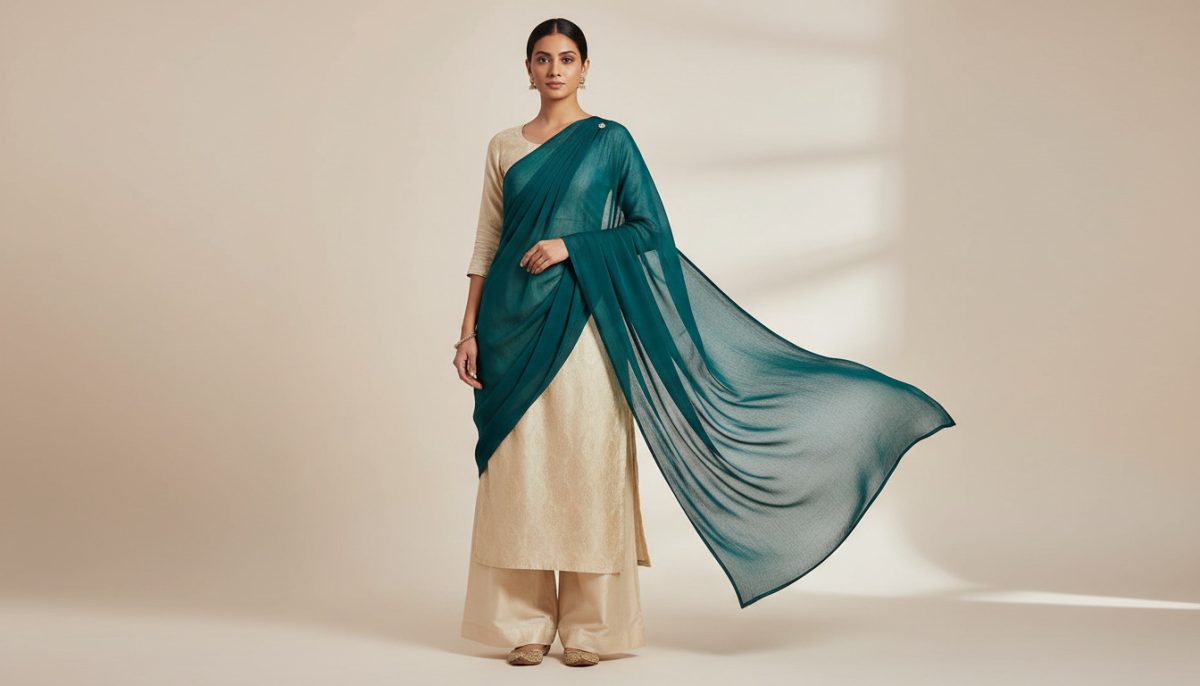
A dupatta is more than just an accessory it completes traditional outfits like salwar suits, lehengas, kurtis, and anarkalis. The way you wear a dupatta can completely change the look of your outfit, making it appear elegant, modern, festive, or minimal.
If you’ve ever struggled with slipping fabric, uneven pleats, or not knowing which drape suits your outfit, this guide will help. Below, you’ll learn:
- The basics of wearing a dupatta correctly
- Step-by-step instructions for different draping styles
- How to wear dupatta with suits, lehengas, and kurtis
- How to carry a dupatta comfortably throughout the day
Let’s start with the foundation.
Basics of Wearing a Dupatta Correctly
Before trying different styles, it’s important to understand the fundamentals. Most draping problems happen because the basics aren’t done properly.
1. Check the Length and Balance
A standard dupatta is usually around 2.25 to 2.5 meters long. When placed over the shoulders:
- Both sides should fall evenly (unless styling intentionally uneven).
- The shorter end should not be above the waist.
- The longer end should not drag excessively on the floor.
Balanced length makes any drape look polished.
2. How to Pleat a Dupatta Properly
Neat pleats instantly elevate your look.
Step-by-step pleating method:
- Hold one end of the dupatta.
- Fold 4–6 even pleats (about 2–3 inches wide).
- Align the edges carefully.
- Smooth the fabric downward before placing it on your shoulder.
For chiffon or georgette, make slightly narrower pleats to avoid bulk. For cotton or silk, structured pleats hold better.
3. How to Pin a Dupatta Securely (Without Visible Pins)
Pinning incorrectly can ruin the look.
- Always pin from the inside of the blouse or suit seam.
- Use small safety pins for delicate fabrics.
- Avoid placing pins too close to embroidery.
- One secure shoulder pin is usually enough for most styles.
If done correctly, your dupatta should stay in place without constant adjustments.
How to Wear a Dupatta in Different Styles
Now that the basics are clear, let’s explore different ways to wear a dupatta. Each style below includes simple steps so you can recreate the look easily.
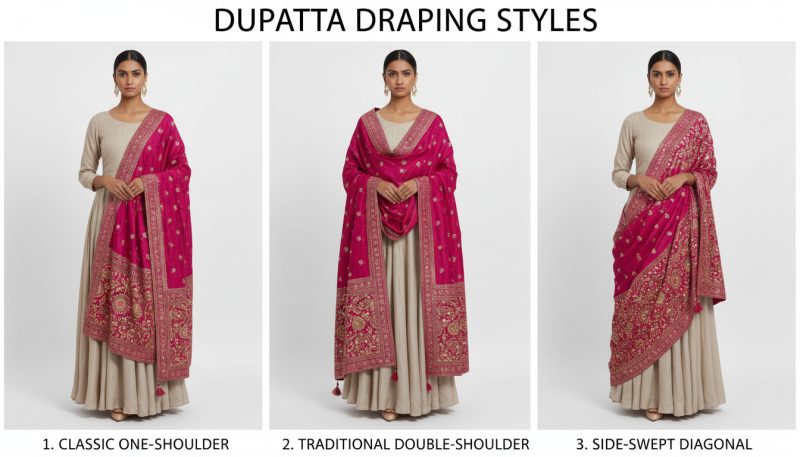
1. Classic One-Shoulder Drape
This is the most common and beginner-friendly style. It works beautifully with salwar suits and lehengas.
How to do it:
- Pleat one end of the dupatta neatly.
- Place the pleated section on your left or right shoulder.
- Let the rest of the fabric fall freely at the back.
- Adjust the front length so it falls around knee level.
- Secure with a hidden pin at the shoulder if needed.
Best for: Everyday wear, office wear, and simple festive events.
Best fabrics: Cotton, chiffon, georgette.
2. Double-Shoulder Traditional Style
This style looks elegant and balanced, especially for formal occasions.
How to do it:
- Place the dupatta evenly around your neck like a stole.
- Let both ends fall down the front.
- Adjust so both sides are equal in length.
- Lightly pin on both shoulders if you want extra security.
Best for: Religious events, family functions, traditional gatherings.
Best fabrics: Silk, cotton, light embroidered dupattas.
3. Front Flowing Drape
This modern and effortless style adds movement to your outfit.
How to do it:
- Place the dupatta over one shoulder without pleating.
- Let the rest fall freely across the front.
- Spread it slightly to show borders or embroidery.
- Secure lightly if needed.
Best for: Festive occasions and evening functions.
Best fabrics: Net, chiffon, lightweight silk.
4. Side-Swept Style
This style adds dimension and looks stylish without being too traditional.
How to do it:
- Drape the dupatta over one shoulder.
- Bring the longer end across the front.
- Tuck it lightly at the opposite waist.
- Adjust for a soft diagonal look.
Best for: Weddings, parties, and engagement ceremonies.
Best fabrics: Georgette, embellished dupattas.
How to Carry a Dupatta Comfortably
Wearing a dupatta properly is important but carrying it comfortably throughout the day matters just as much. The goal is to avoid constant adjusting while keeping the look elegant.
Keep Pinning Minimal
- Use 1–2 hidden pins only.
- Pin inside blouse seams for invisibility.
- Avoid over-pinning, which makes the fabric stiff.
Choose the Right Fabric
- Cotton: Easy to manage, stays in place.
- Chiffon/Georgette: Light but slippery — needs secure pinning.
- Silk: Structured but slightly heavy.
Maintain Good Posture
Standing straight helps the dupatta fall neatly and reduces slipping.
Secure for Movement
For long events or outdoor functions:
- Anchor the shoulder firmly.
- Lightly tuck the lower end at the waist if needed.
- Check balance before stepping out.
A well-secured dupatta should allow you to move freely without repeated adjustments.
How Fabric Affects Dupatta Draping
Different fabrics behave differently, so adjust your drape accordingly.
Cotton Dupatta
- Holds pleats well
- Requires fewer pins
- Ideal for structured styles
Chiffon & Georgette
- Lightweight and flowy
- Slips easily from shoulders
- Use narrow pleats and secure pin placement
Silk Dupatta
- Rich and slightly heavy
- Works best with neat pleats
- Distribute weight evenly
Net Dupatta
- Delicate and sheer
- Use small, gentle pins
- Avoid pulling tightly
Understanding fabric helps you choose the right draping technique and avoid discomfort.
How to Wear Dupatta with Different Outfits
The right dupatta style depends on your outfit. Matching the drape to the silhouette keeps the overall look balanced.
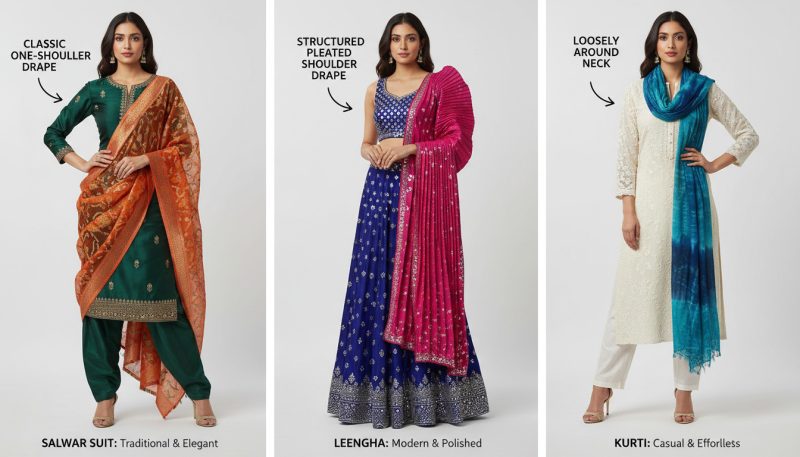
With Salwar Suit
Salwar suits are versatile and easy to style.
Best styles:
- Classic one-shoulder drape
- Double-shoulder traditional style
- Side-swept style
For daily wear, keep it simple with minimal pleating. For festive occasions, use neat pleats and secure at the shoulder.
With Lehenga
Lehengas require a more structured drape due to their volume.
Best styles:
- Pleated one-shoulder drape
- Belted dupatta style
- Double dupatta style (for formal events)
Keep pleats narrow and secure properly to prevent slipping, especially with heavy embroidery.
With Kurti
Kurtis work best with lighter, relaxed drapes.
Best styles:
- Stole-style around the neck
- Loose one-shoulder drape
- Double-shoulder relaxed style
Avoid heavy pleating for casual looks.
Common Mistakes to Avoid When Wearing a Dupatta
Small styling errors can affect the entire look. Avoid these common mistakes:
- Uneven pleats: Always align folds carefully.
- Too many visible pins: Keep pins hidden and minimal.
- Excessive length: Avoid letting the dupatta drag on the floor.
- Bulky shoulder drape: Don’t stack thick pleats in one place.
- Ignoring outfit balance: Heavy dupatta with heavy outfit can look overwhelming.
A clean, balanced drape always looks more elegant than an over-styled one. For elegant and secure styling ideas, explore our detailed guide on bridal dupatta draping to perfect your wedding look.
Conclusion
Learning how to wear a dupatta properly can transform your entire outfit. From classic one-shoulder styles to structured belted drapes, the right technique depends on your outfit, fabric, and occasion.
Focus on neat pleats, balanced length, minimal pinning, and comfortable carrying. Once you master the basics, experimenting with different dupatta styles becomes effortless. With these simple techniques, you can style your dupatta confidently for everyday wear, festive occasions, and formal celebrations. ex
Frequently Asked Questions
How to wear a dupatta properly?
To wear a dupatta properly, balance both ends evenly and create neat pleats before placing it on your shoulder. Secure it with a hidden pin if needed to prevent slipping. The dupatta should sit comfortably and complement your outfit without constant adjustment.
Should dupatta be on left or right side?
A dupatta can be worn on either the left or right shoulder. Traditionally, it is often draped on the left, but there is no strict rule. Choose the side based on comfort, outfit design, and personal preference.
What do you wear a dupatta with?
A dupatta is commonly worn with traditional outfits like salwar suits, lehengas, kurtis, and anarkalis. It adds elegance, layering, and balance to the overall look. The draping style may vary depending on the outfit and occasion.
Can you wear a dupatta without pins?
Yes, especially with cotton or heavier fabrics. However, for chiffon or net, light pinning may be needed to prevent slipping.
How long should a dupatta be?
A standard dupatta is around 2.25 to 2.5 meters long. It should fall at least to knee level when draped over one shoulder.


 New Arrivals
 Ready To Wear
 Kid’s Clothing
 Wedding Wear
 Men’s Wear
 Jewellery
 Designers
 Sale
Sale