

Blog
What Is Anarkali Dress? History, Features, and Types Explained

Have you ever seen a beautifully flared traditional outfit that looks almost like a royal gown but is part of South Asian ethnic fashion? That elegant outfit is called an Anarkali dress. Known for its flowing silhouette and timeless charm, the Anarkali dress has remained one of the most popular traditional outfits for women for centuries.
From grand weddings to festive celebrations, the Anarkali dress continues to be a favorite choice because it combines royal heritage, comfort, and graceful style. But what exactly is an Anarkali dress, and why is it so famous in traditional fashion?
What Is Anarkali Dress?
An Anarkali dress is a traditional South Asian outfit known for its long flared kurta, fitted bodice, and churidar pants, usually paired with a dupatta. The defining feature of this outfit is its dramatic flare, which creates an elegant, flowing silhouette similar to a gown.
The outfit typically includes three main parts:
- A long frock-style kurta that flares from the waist
- Churidar pants, which are fitted trousers worn underneath
- A dupatta, a decorative scarf draped over the shoulders
Because of its graceful shape and rich embroidery, the Anarkali dress is widely worn for weddings, festivals, engagement ceremonies, and formal celebrations. It is especially popular in India, Pakistan, and other parts of South Asia, where traditional clothing plays an important role in cultural events.
Why Is It Called Anarkali Dress?
The name “Anarkali” comes from a legendary figure associated with the Mughal Empire. According to popular historical stories, Anarkali was a beautiful courtesan in the royal court of Emperor Akbar during the 16th century.
The legend tells of a tragic love story between Anarkali and Prince Salim, who later became Emperor Jahangir. Although historians debate the accuracy of the story, the tale became famous in literature and films.
The word “Anarkali” itself means “pomegranate blossom.” The dress is believed to have been inspired by the graceful clothing worn by women in the Mughal royal court. Over time, the elegant flared outfit became known as the Anarkali dress, symbolizing royal beauty and sophistication.
History of Anarkali Dress
The Anarkali dress has a long history that dates back several centuries.
Mughal Era Origins
During the Mughal period, royal women and court dancers often wore long flowing garments with fitted bodices and flared skirts. These outfits allowed ease of movement while still appearing regal and elegant.
The flared silhouette was especially popular in the royal courts because it reflected the luxurious fashion of the time. Rich fabrics such as silk, brocade, and velvet were often used, along with detailed embroidery and embellishments.
Modern Revival
The Anarkali dress saw a major revival in modern times through Bollywood films and designer fashion collections. Historical movies featuring Mughal characters showcased elaborate Anarkali costumes, bringing the style back into mainstream fashion.
Today, designers have reimagined the Anarkali dress using modern fabrics and contemporary cuts while preserving its traditional elegance. It is now a staple outfit for bridal wear, festive occasions, and formal events.
Key Features of Anarkali Dress
Several distinctive elements make an outfit an Anarkali dress. These features give the dress its recognizable and elegant look.
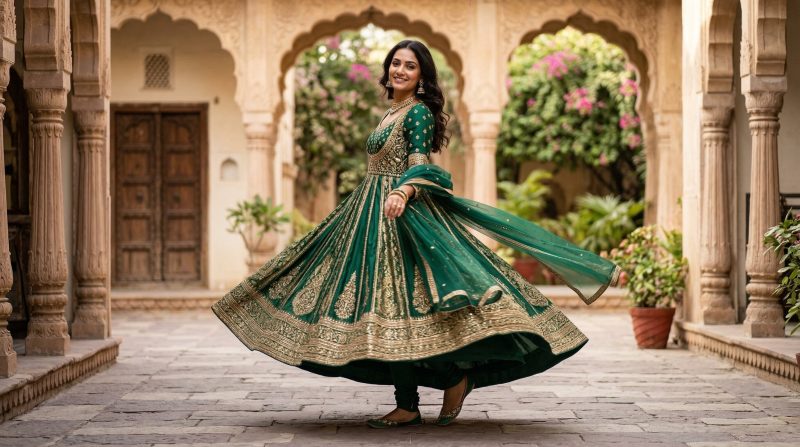
Fitted Bodice
The upper portion of the dress is usually fitted to the body. This helps create structure and enhances the overall silhouette.
Long Flared Skirt
The most defining feature of an Anarkali dress is its dramatic flare. The skirt spreads out from the waist or just below the bust, creating a graceful flow when walking or moving.
Floor-Length or Knee-Length Kurta
Anarkali kurtas can vary in length. Some styles reach the knees, while others extend to the ankles or even the floor.
Churidar Pants
Underneath the flared kurta, women typically wear churidar pants. These tight-fitting trousers gather around the ankles, adding balance to the wide flare of the dress.
Dupatta
A dupatta is often worn with the Anarkali dress. It can be draped over the shoulders, around the arms, or across the head depending on the occasion.
Parts of an Anarkali Suit
Understanding the structure of an Anarkali suit helps explain how the outfit achieves its distinctive shape.
Bodice
The bodice is the fitted upper portion of the dress. It helps define the waist and provides contrast to the flared skirt.
Kalis (Panels)
The flare of the dress is created using kalis, which are vertical fabric panels stitched together. The more panels a dress has, the fuller the flare becomes.
Churidar
The churidar is a slim-fitting pant worn underneath the Anarkali. Its gathered fabric around the ankles adds a traditional touch to the outfit.
Dupatta
The dupatta completes the ensemble and often features decorative embroidery or borders that complement the dress.
Types of Anarkali Dresses
Over time, designers have introduced several variations of the traditional Anarkali dress. Each type offers a slightly different look while maintaining the signature flare.
Floor-Length Anarkali
This style resembles a gown and extends all the way to the ankles or floor. It is commonly worn for weddings and formal events.
Jacket Style Anarkali
A jacket-style Anarkali features a long embroidered jacket worn over the flared dress. This layered design creates a more dramatic and contemporary look.
Cape Style Anarkali
In this modern variation, a lightweight cape replaces the traditional dupatta. The cape adds elegance and movement to the outfit.
Layered Anarkali
Layered Anarkalis include multiple fabric layers that create extra volume and dimension. These styles are often used in designer collections.
Anarkali Gown
This fusion style combines elements of a Western gown with a traditional Anarkali. It is especially popular for receptions and formal parties.
When to Wear an Anarkali Dress
One of the biggest reasons Anarkali dresses remain popular is their versatility. Depending on the fabric, embroidery, and design, they can suit both grand celebrations and smaller gatherings.
- Weddings and bridal events: Heavily embroidered or floor-length Anarkalis are perfect for weddings, receptions, and bridal functions where a rich and elegant outfit is expected.
- Engagement ceremonies: A stylish Anarkali with moderate embroidery creates a festive yet sophisticated look suitable for engagement celebrations.
- Festivals such as Eid and Diwali: Festive occasions often call for traditional outfits, and a comfortable Anarkali in fabrics like silk or georgette works well for prayers, gatherings, and celebrations.
- Family celebrations: For birthdays, family dinners, or cultural gatherings, a lighter Anarkali offers both elegance and comfort.
- Formal parties: Modern Anarkali designs with subtle embroidery or minimal embellishment can be styled for formal evening events.
In general, heavily embellished Anarkalis are best suited for weddings and grand celebrations, while lighter fabrics and simpler designs work better for festivals and smaller gatherings.
How to Style an Anarkali Dress
Styling plays an important role in completing the overall look of an Anarkali outfit. The right footwear, jewelry, and accessories can enhance its elegance without overpowering the outfit.
Footwear
Traditional footwear usually complements the graceful silhouette of an Anarkali.
- Juttis: Comfortable and traditional, juttis pair beautifully with both casual and festive Anarkalis.
- Mojaris: These embroidered flats add a classic ethnic touch to the outfit.
- Heeled sandals: If you want a more formal or elongated look, heeled sandals work well with floor-length Anarkalis.
Jewelry
Ethnic jewelry enhances the traditional appeal of the outfit while keeping the styling cohesive.
- Jhumka earrings: These classic earrings pair perfectly with most Anarkali styles.
- Chandbali earrings: Ideal for weddings or festive occasions, they add a royal touch.
- Bangles or kadas: Simple bangles or statement kadas complete the ethnic look.
Accessories
Small accessories can elevate the overall outfit and make it feel more polished.
- Potli bags: These traditional drawstring bags are perfect for festive or wedding wear.
- Embroidered clutches: A stylish clutch can add a modern touch to the outfit.
- Statement dupattas: A beautifully embroidered dupatta can enhance even a simple Anarkali dress.
Frequently Asked Questions
What is the difference between Anarkali and salwar kameez?
An Anarkali dress features a long flared kurta, while a traditional salwar kameez usually has a straight-cut kurta paired with loose pants.
Why is the dress called Anarkali?
The dress is named after Anarkali, a legendary courtesan from the Mughal era whose story became popular in South Asian history and culture.
Can Anarkali dresses be worn for weddings?
Yes, Anarkali dresses are commonly worn for weddings and festive celebrations because of their elegant and royal appearance.
What fabrics are used for Anarkali dresses?
Common fabrics include silk, chiffon, georgette, net, and velvet, often decorated with embroidery or embellishments.
Is Anarkali dress traditional or modern?
The Anarkali dress originated in the Mughal era, making it a traditional outfit. However, modern designers have adapted the style to suit contemporary fashion trends.


 New Arrivals
 Ready To Wear
 Kid’s Clothing
 Wedding Wear
 Men’s Wear
 Jewellery
 Designers
 Sale
Sale