

Blog
How to Wear Heavy Dupatta with Salwar Suit: Elegant Draping Styles That Stay Comfortable

Have you ever worn a beautiful salwar suit, but the heavy dupatta kept slipping from your shoulder or felt difficult to manage? It’s a common experience, especially during weddings, festivals, or special events when dupattas are made with rich fabrics, embroidery, or decorative borders. While these heavy dupattas add elegance and tradition to an outfit, they can also feel tricky to style if they aren’t draped properly.
Many people search for ways to wear a heavy dupatta comfortably while keeping their outfit stylish and balanced. The right draping technique can make a big difference. With a few simple styling tricks, you can keep the dupatta secure while still highlighting its beauty.
In this guide, you’ll learn how to wear heavy dupatta with salwar suit, along with practical draping styles and tips that make the outfit look graceful without feeling uncomfortable.
Why Heavy Dupattas Can Be Difficult to Manage
Heavy dupattas are often made with fabrics like silk, velvet, or Banarasi weave and may include zari work, embroidery, or sequins. These details make the dupatta visually stunning but also heavier than lightweight fabrics.
Because of their weight, heavy dupattas can:
- Slip from the shoulder easily
- Pull the outfit downward
- Feel uncomfortable after long hours
- Look bulky if draped incorrectly
Understanding how to carry heavy dupatta with suit helps distribute the weight evenly and prevents the fabric from sliding while walking or sitting.
6 Stylish Ways to Wear a Heavy Dupatta with Salwar Suit
Different draping styles can completely change the look of a salwar suit. Here are some elegant ways to manage a heavy dupatta while keeping the outfit balanced.
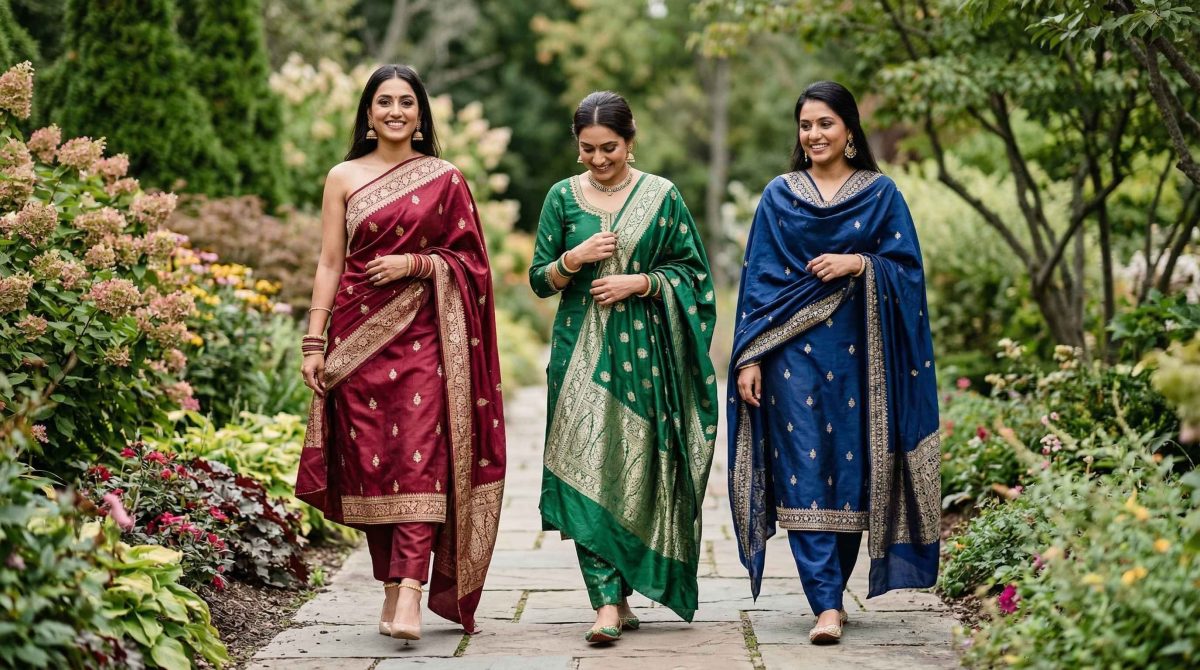
Classic One-Shoulder Pleated Style
This is one of the easiest and most reliable ways to drape a heavy dupatta.
How to do it
- Fold the dupatta into neat pleats.
- Place the pleated section over one shoulder.
- Secure it with a small safety pin.
- Let the remaining fabric fall naturally behind.
This style keeps the dupatta secure while showing the embroidered border beautifully.
Front Flow Draping Style
This drape looks graceful and slightly formal, making it suitable for festive occasions.
Steps
- Place one end of the dupatta on the shoulder.
- Bring the rest of the fabric diagonally across the front.
- Allow the remaining portion to fall along the opposite side.
This style highlights the dupatta design and works well for photographs.
Double-Shoulder Traditional Drape
For a balanced and traditional appearance, the double-shoulder style works beautifully.
How to style it
- Spread the dupatta evenly across the back.
- Bring both ends forward over each shoulder.
- Secure gently with pins if needed.
This drape distributes weight evenly, which makes it comfortable for longer events.
Side Drape with Waist Pin
This drape helps keep the dupatta secure and stylish at the same time.
Steps
- Place one end of the dupatta on the shoulder.
- Bring the other end across the front.
- Pin the end lightly at the waist.
The waist pin prevents the fabric from slipping and creates a clean silhouette.
Belted Dupatta Style
A belted dupatta style is modern and practical, especially for festive outfits.
How it works
- Drape the dupatta across both shoulders.
- Secure the middle with a decorative belt around the waist.
The belt helps hold the dupatta in place and adds structure to the outfit.
Lehenga-Inspired Dupatta Drape
This drape is inspired by bridal styling and looks elegant with embroidered dupattas.
How to create it
- Pleat the dupatta neatly.
- Place one end over the shoulder.
- Let the remaining fabric fall diagonally across the body.
This style gives a regal appearance and works well for weddings or celebrations.
How to Style Heavy Dupatta on Suit for a Balanced Look
When styling a heavy dupatta, balance is essential so the outfit doesn’t look overwhelming.
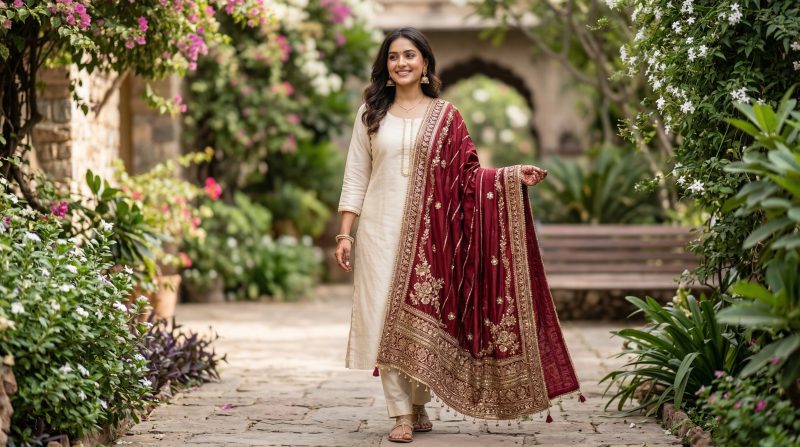
Here are a few styling tips:
Pair it with a simple suit: If your dupatta has heavy embroidery or embellishments, wear it with a plain kurta so the outfit looks balanced rather than overly detailed.
Keep the border visible: While pleating the dupatta, align the decorative border neatly so it frames the drape and highlights the design.
Avoid too many accessories: Since a heavy dupatta already adds visual detail, choose minimal jewelry like simple earrings or light bangles.
Focus on one statement piece: Let the dupatta remain the main highlight of the outfit while keeping the rest of the styling subtle.
How to Match Dupatta with Suit
Choosing the right dupatta can completely transform the look of a salwar suit. When deciding how to match dupatta with suit, consider both color and fabric.
Some popular combinations include:
- Plain suit with embroidered dupatta for contrast
- Printed suit with subtle dupatta for balance
- Monochrome outfit with matching dupatta for an elegant look
The goal is to keep the outfit visually harmonious while allowing one element to stand out.
Tips to Keep a Heavy Dupatta Secure All Day
- Use discreet pins: Secure the dupatta to your shoulder or waist with small safety pins to prevent it from slipping.
- Create neat pleats: Fold the dupatta into even pleats so the fabric weight is distributed properly.
- Pair with lightweight fabric: A lighter suit helps balance the weight of a heavy dupatta and improves comfort.
- Adjust the length: Keep the dupatta at a manageable length so it doesn’t drag or shift while walking.
- Pin at two points: Securing the dupatta at both the shoulder and waist helps keep it stable throughout the day.
Understanding Dupatta Draping with Salwar Kameez
The dupatta is an important element of traditional South Asian clothing. Knowing how to wear dupatta with salwar kameez allows you to experiment with different styles depending on the occasion.
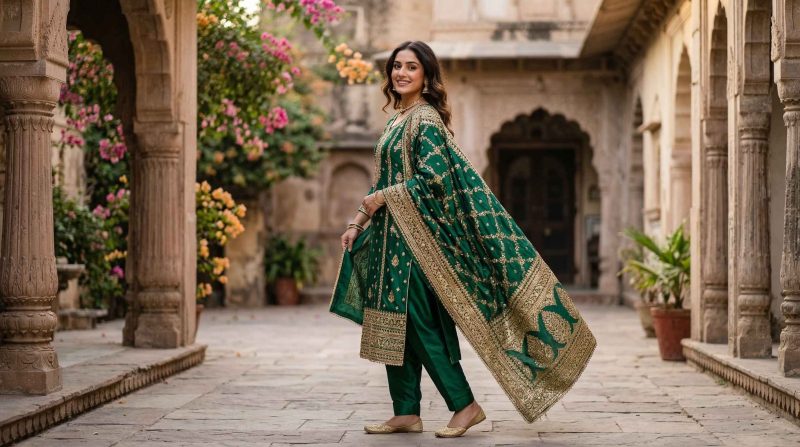
Different draping techniques can:
- Highlight embroidery and borders
- Create a modern or traditional look
- Improve comfort during long events
Once you understand basic draping methods, it becomes easier to adjust the style according to the outfit and occasion.
Common Mistakes to Avoid When Wearing a Heavy Dupatta
Small styling mistakes can affect the overall appearance of the outfit.
Avoid these common issues:
- Letting the dupatta hang without pleating
- Pairing a heavily embroidered dupatta with an equally heavy suit
- Using too many pins that distort the fabric
- Ignoring the alignment of decorative borders
Keeping the drape simple often results in a more elegant look.
Conclusion
A beautifully draped dupatta can elevate even a simple salwar suit into a striking outfit. The key is choosing the right draping style and balancing the weight of the fabric so it feels comfortable throughout the day. Once you understand how to wear heavy dupatta with salwar suit, you can experiment with different drapes, fabrics, and styling techniques. With the right approach, even the heaviest dupatta can become the highlight of your outfit while still feeling easy to carry.
Frequently Asked Questions
How do you keep a heavy dupatta from slipping off the shoulder?
To keep a heavy dupatta from slipping, create neat pleats and secure them with a small safety pin at the shoulder. You can also pin one end of the dupatta at the waist to distribute the weight and keep the drape stable throughout the day.
Can you wear a heavy dupatta with a simple salwar suit?
Yes, pairing a heavy dupatta with a simple or plain salwar suit is actually a popular styling choice. A minimal suit allows the dupatta’s embroidery or decorative border to stand out while keeping the outfit balanced and elegant.
What fabrics are commonly used for heavy dupattas?
Heavy dupattas are usually made from fabrics like Banarasi silk, velvet, brocade, and heavily embroidered net. These fabrics add richness and texture to the outfit, making them ideal for festive and wedding occasions.
How do you choose the right dupatta for a salwar suit?
When selecting a dupatta, consider the fabric, color, and embroidery of the suit. A heavily embroidered dupatta pairs well with a plain suit, while a printed or embellished suit usually looks better with a lighter or simpler dupatta.


 New Arrivals
 Ready To Wear
 Kid’s Clothing
 Wedding Wear
 Men’s Wear
 Jewellery
 Designers
 Sale
Sale