

Blog
How to Wear Saree to Look Slim: A complete guide

Wearing a saree can make you look slimmer when it is draped with intention. The slimming effect does not depend on body size but on how the fabric falls, where the pleats sit, and how lines are created across the body.
If you are searching for how to wear saree to look slim, the goal is simple: reduce visual width and increase visual height. This guide explains exactly how to do that using practical styling techniques.
How Saree Styling Creates a Slimming Illusion
A saree looks slimming when it creates clean vertical or diagonal lines and avoids horizontal breaks. The eye naturally reads vertical lines as height, which makes the body appear leaner. Loose fabric, low waist placement, and bulky pleats interrupt these lines and add visual weight. Proper draping restores balance by controlling proportions and fall.
Best Saree Draping Techniques to Look Slim
Following are the best ways to wear a saree to look slim, focusing on draping techniques that create a balanced and elongated silhouette. These methods are among the most effective techniques for achieving a slimmer appearance in a saree.
Nivi Drape (Most Reliable Method)
The Nivi drape is the most effective way to look slim in a saree because it creates symmetry and structure. Keep the pleats neat, evenly spaced, and tucked just below the navel. This mid-rise placement balances the torso and legs while preventing the stomach area from becoming prominent.
Draping the saree too low widens the torso visually, while a mid-rise tuck keeps proportions balanced. These technical details matter because pleat size and placement directly affect how wide or narrow the waist appears.
Key points:
- Pleat width: around 3–4 inches
- Number of pleats: 5–7
- Pallu: straight or slightly diagonal
- Fabric: kept taut over hips
Mermaid Drape
The mermaid drape works when the fabric is lightweight and the flare starts lower on the body. If the flare begins too early, it adds width instead of creating a sleek silhouette. This drape suits those who want a fitted look but should be avoided with stiff or heavy fabrics that hold volume.
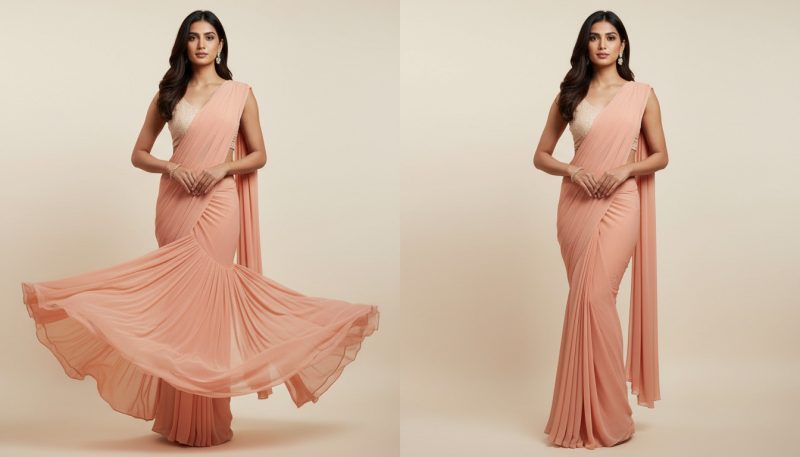
Butterfly or Thin-Pleat Drape
This style helps create a narrower waist illusion by using very slim pleats at the front. The pallu is spread wider over the shoulder, which visually reduces the midsection. Precision is important here, as uneven pleats can instantly look bulky.
Diagonal Pallu Drape
A diagonal pallu is one of the most effective techniques to create a slimmer appearance in a saree. By draping the pallu diagonally across the torso, horizontal width is broken and the body appears taller. The fabric should lie flat without layering to maintain a clean line.
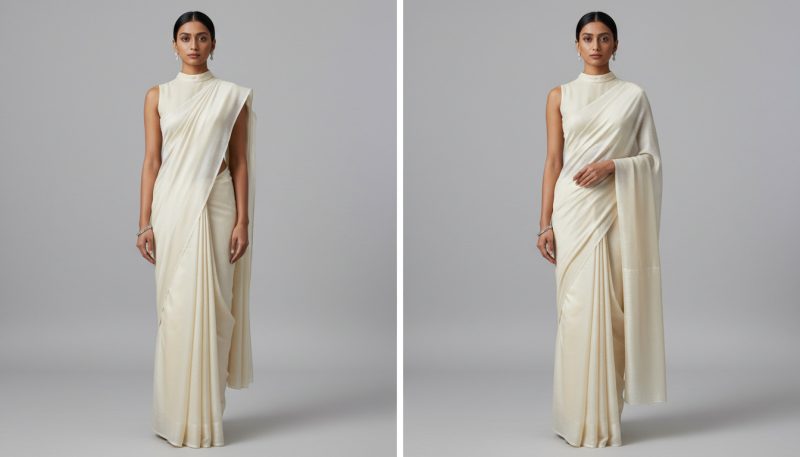
How to Drape Pleats and Tucks Correctly
Pleats play a major role in whether a saree looks slimming or bulky. Neat, narrow pleats create a smooth waistline, while wide or uneven pleats add volume. Correct pleat structure helps maintain a clean silhouette throughout the day.
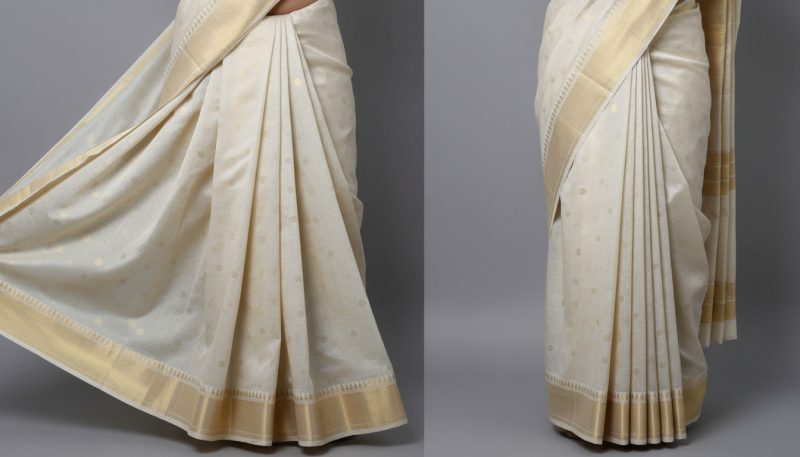
For a slim look:
- Keep pleats narrow and uniform
- Iron pleats before wearing
- Tuck pleats flat, not folded
- Secure with pins to avoid movement
Best Saree Fabrics That Make You Look Slim
Fabric determines how well the saree follows body lines. Lightweight fabrics fall smoothly and do not hold extra volume, which helps maintain a lean silhouette and prevents unnecessary bulk.
Best fabric choices:
- Chiffon
- Georgette
- Crepe
- Lightweight satin
Avoid stiff or thick fabrics, as they sit on the body and increase visual bulk.
Colors and Patterns That Visually Slim the Body
Color influences how wide or narrow the body appears. Dark shades absorb light and create a more streamlined look. Wearing a single color from blouse to saree forms a continuous vertical line that enhances height.
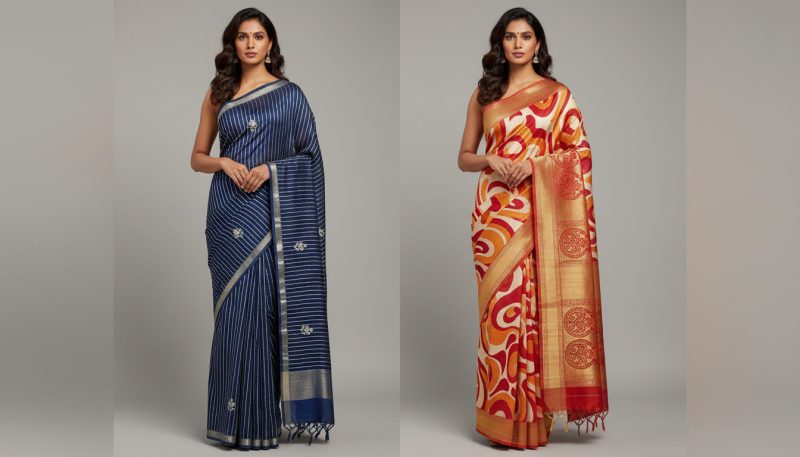
Patterns that help:
- Vertical stripes
- Small, subtle motifs
- Thin borders
Large prints and heavy horizontal borders should be avoided as they break the slimming line and add width.
Blouse Design That Enhances a Slim Look
A saree can be perfectly draped, but a poorly fitted blouse can ruin the silhouette. The blouse should fit close to the body without being tight. Necklines that open up the chest area visually lengthen the upper body and draw attention upward.
Best blouse features:
- V-neck or U-neck
- Clean seams and proper bust support
- Sleeves that do not cut at the widest arm area
Petticoat and Shapewear: The Base Matters
What you wear under the saree affects how it falls. A straight-fit petticoat allows the saree to drape smoothly without pushing the fabric outward. Flared or bulky underskirts increase width at the hips.
Shapewear helps by smoothing the waist and hip area, but it should be comfortable and not overly tight. The purpose of shapewear is smoothness, not compression, as excessive tightness can create visible lines under the saree.
Accessories That Support a Slim Silhouette
Accessories should enhance the saree, not overpower it. Minimal jewellery keeps the focus on clean lines, while heels improve posture and overall fall, contributing to a taller appearance.
Use carefully:
- Thin belts (only if placed correctly)
- Long earrings to elongate the neck
- Small, structured footwear
Avoid heavy waist accessories or chunky jewellery.
Common Saree Styling Mistakes That Add Bulk
Many people unintentionally make their saree look heavier.
Avoid these mistakes:
- Wide or messy pleats
- Low-waist tucking
- Heavy borders around hips
- Loose, layered pallu
- Flared petticoat
Correcting these alone can make a visible difference.
Conclusion
Learning how to wear saree to look slim is about precision, not restriction. When fabric choice, pleat structure, waist placement, and drape direction work together, a saree becomes one of the most flattering outfits you can wear.


 New Arrivals
 Ready To Wear
 Kid’s Clothing
 Wedding Wear
 Men’s Wear
 Jewellery
 Designers
 Sale
Sale