

Blog
Types of Saree: Complete Classification Guide
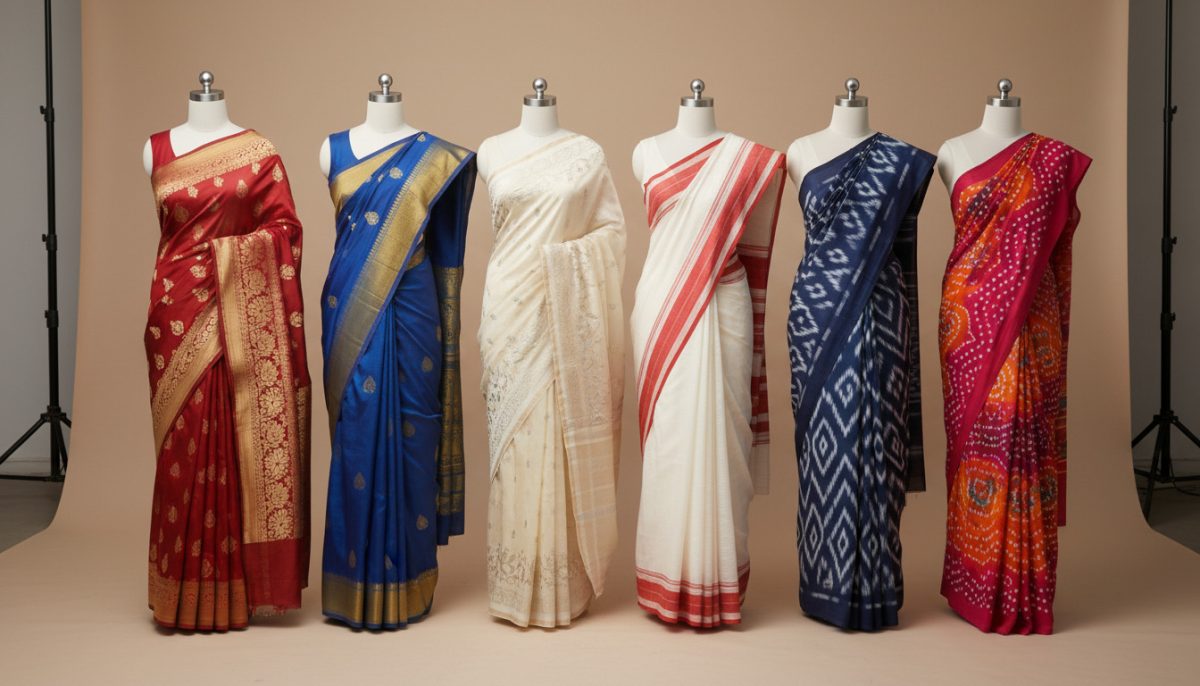
A saree is a traditional Indian garment consisting of a long, unstitched piece of fabric draped around the body. Over centuries, sarees have evolved into hundreds of distinct forms. These differences gave rise to various types of sarees, each identified by its region of origin, fabric, or weaving and dyeing technique.
Rather than being a single category, sarees are classified into multiple types based on how and where they are made. This guide explains the types of saree in a clear, structured way, helping you understand how different saree types are identified and how they differ from one another.
How Sarees Are Classified Into Different Types
Saree types are generally grouped into three main categories:
- Regional or traditional sarees: named after the place or community where they originated
- Fabric-based sarees: classified by the material used
- Weaving and dyeing technique based sarees: defined by how the fabric is created or decorated
Many sarees fall into more than one category. For example, a Banarasi saree is a regional saree, but it is also a silk saree and often a brocade-woven saree. Understanding these classifications removes confusion and helps identify saree types accurately.
Types of Saree by Region (Traditional & Regional Sarees)
Regional sarees are identified by the place or community where they originated and are closely linked to local weaving traditions. Each regional saree type has distinct characteristics based on its fabric, weaving technique, motifs, and cultural influence.
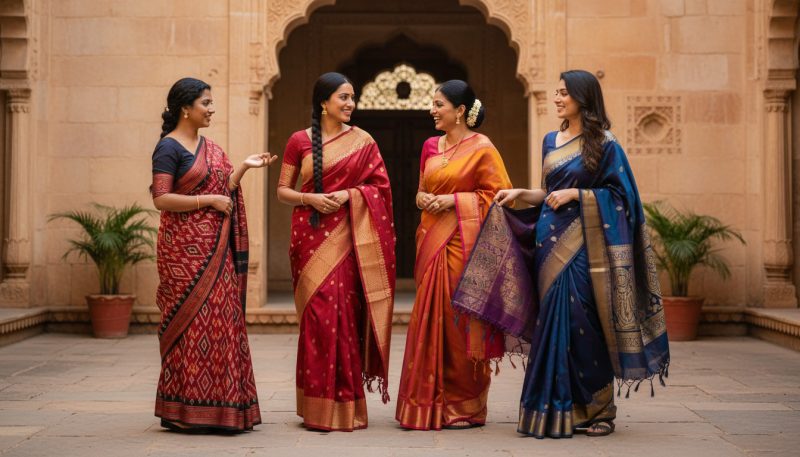
Banarasi Saree
Originating from Varanasi in Uttar Pradesh, the Banarasi saree is traditionally woven from silk and is known for its intricate brocade work. It features elaborate motifs inspired by Mughal art, such as florals and foliate patterns, with richly decorated borders and pallus.
Kanjeevaram (Kanchipuram) Saree
The Kanjeevaram saree comes from Kanchipuram in Tamil Nadu. Woven from pure mulberry silk, it is recognized by its contrasting borders, temple-inspired motifs, and durable silk fabric. The body and border are often woven separately and joined together.
Paithani Saree
Paithani sarees originate from Maharashtra and are made from fine silk. They are distinguished by vibrant colours and a richly woven pallu featuring motifs like peacocks, lotuses, and vines. The borders often contain metallic zari patterns.
Chanderi Saree
Produced in Madhya Pradesh, Chanderi sarees are woven from a blend of silk and cotton. They are lightweight, semi-sheer, and identified by delicate motifs and understated borders, making them easy to recognize.
Maheshwari Saree
Maheshwari sarees come from Maheshwar in Madhya Pradesh. They are known for their reversible borders, striped or checked patterns, and use of silk-cotton blends. The pallu often features distinctive geometric designs.
Sambalpuri Saree
From Odisha, Sambalpuri sarees are created using the ikat technique. They are identified by their symmetrical patterns, traditional motifs, and reversible borders, with designs appearing identical on both sides of the fabric.
Bomkai Saree
Also known as Sonepuri sarees, Bomkai sarees originate in Odisha. They combine ikat weaving with embroidery-like threadwork and feature motifs inspired by nature, including flowers, animals, and temple designs.
Baluchari Saree
Baluchari sarees are traditional to West Bengal and are made from silk. They are best recognized by their narrative pallus, which often depict mythological scenes, human figures, and architectural elements woven into the fabric.
Tant Saree
Tant sarees are cotton sarees from West Bengal, woven for hot and humid climates. They are lightweight and usually feature bold borders and simple motifs, making them easy to identify among regional cotton sarees.
Kasavu Saree
Kasavu sarees originate from Kerala and are traditionally made from cotton. They are characterized by an off-white body with a gold-toned border known as kasavu, creating a minimal yet distinctive appearance.
Gadwal Saree
From Telangana, Gadwal sarees are known for their silk body and cotton borders joined using a special interlocking technique. This contrast between textures is a key identifier.
Uppada Saree
Uppada sarees come from Andhra Pradesh and are woven using fine silk yarns. They are lightweight and recognized by their detailed zari borders and soft texture.
Pochampally Saree
Pochampally sarees originate in Telangana and are a well-known form of ikat sarees. They feature geometric patterns created by resist-dyeing the yarns before weaving.
Ilkal Saree
Ilkal sarees from Karnataka use a unique joining technique where the body and pallu are woven separately. They are identified by bold colours and distinctive borders.
Chettinad Saree
Chettinad sarees are woven in Tamil Nadu and usually made from cotton. They are recognized by their checks, stripes, and contrasting colour combinations.
Types of Saree by Fabric
Fabric-based sarees are classified according to the material used, regardless of where they are produced.
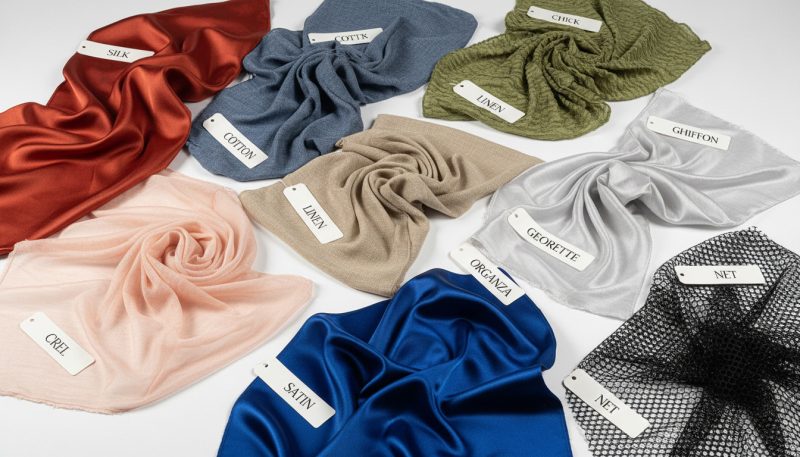
Silk Saree
Silk sarees are made using natural silk fibres and are known for their smooth texture and sheen. Many regional sarees, such as Banarasi and Kanjeevaram, fall under this category.
Cotton Saree
Cotton sarees are breathable and lightweight. They are commonly produced in various regions and are identified by their matte texture and crisp drape.
Linen Saree
Linen sarees are made from flax fibres and have a natural, slightly coarse texture. They are recognized by their airy weave and understated appearance.
Chiffon Saree
Chiffon sarees are lightweight and semi-sheer, made from twisted yarns. Their fluid drape and delicate appearance distinguish them from heavier fabrics.
Georgette Saree
Georgette sarees have a slightly crinkled texture and are more opaque than chiffon. They are identified by their grainy surface and soft flow.
Organza Saree
Organza sarees are sheer and crisp, made from tightly twisted silk or synthetic yarns. They hold their shape well and have a structured appearance.
Satin Saree
Satin sarees are recognized by their glossy surface and smooth finish. The weave creates a reflective texture that sets them apart from other fabrics.
Net Saree
Net sarees are made from open-weave net fabric and are identified by their transparent, mesh-like structure.
Types of Saree by Weaving & Dyeing Technique
These saree types are classified based on the method used to weave, dye, or decorate the fabric rather than the region they come from. The technique directly influences the saree’s patterns, texture, and overall appearance.
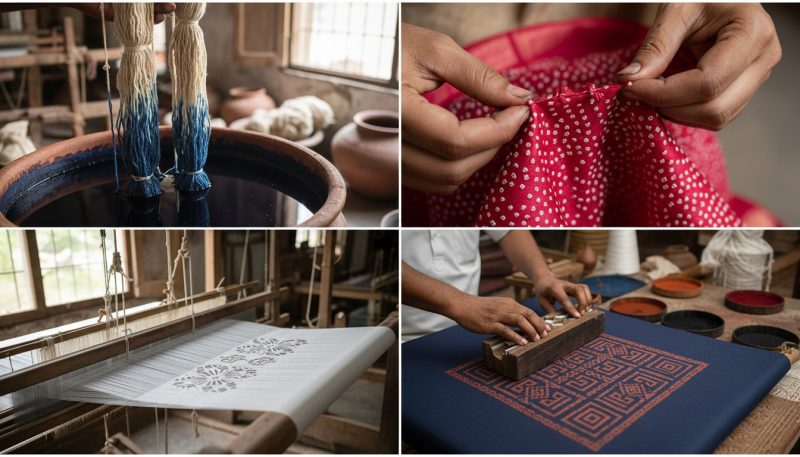
Ikat Saree
Ikat sarees are created by resist-dyeing the yarns before weaving. The patterns appear slightly blurred and can be single ikat or double ikat.
Patola Saree
Patola sarees are a form of double ikat, where both warp and weft yarns are dyed before weaving. This technique results in highly precise geometric designs.
Bandhani Saree
Bandhani sarees use a tie-dye technique in which small sections of fabric are tied before dyeing, creating dot-based patterns.
Leheriya Saree
Leheriya sarees are made using diagonal tie-dye methods that produce wave-like patterns across the fabric.
Jamdani Saree
Jamdani sarees are woven using the extra-weft technique, where motifs are added directly into the fabric during weaving, creating a floating effect.
Kalamkari Saree
Kalamkari sarees feature hand-painted or block-printed designs created using natural dyes. The motifs often depict floral or narrative themes.
Ajrakh Saree
Ajrakh sarees are block-printed using natural dyes and are recognized by their symmetrical patterns and deep, earthy colours.
If you’re new to draping or want to perfect the basics, our detailed guide on How to Wear a Saree walks you through each step from tucking and pleating to setting the pallu flawlessly. Whether you prefer the classic Nivi style or want to experiment with modern variations, this guide ensures a neat, elegant finish every time. It’s the perfect starting point to master saree draping with confidence.
Frequently Asked Questions
How many types of saree are there?
There is no fixed number, as sarees are classified by region, fabric, and technique. India alone has hundreds of identifiable saree types.
What are the main categories of saree types?
Sarees are mainly categorized into regional sarees, fabric-based sarees, and technique-based sarees.
How can I identify a saree type?
A saree can be identified by examining its origin, fabric, weaving or dyeing technique, and distinctive features such as borders and motifs.
Is Kanjeevaram different from Kanchipuram saree?
No, both terms refer to the same saree type originating from Kanchipuram in Tamil Nadu.
Are Patola sarees a type of Ikat?
Yes, Patola sarees are a specific form of double ikat sarees.


 New Arrivals
 Ready To Wear
 Kid’s Clothing
 Wedding Wear
 Men’s Wear
 Jewellery
 Designers
 Sale
Sale