

Blog
How to Wear a Saree: Step-by-Step Guide for Beginners (Easy & Elegant)

Wearing a saree for the first time can feel intimidating, but once you understand the basics, it becomes a graceful and confidence-boosting experience. A saree is more than just traditional Indian clothing; it is a timeless garment that suits every body type, occasion, and age when draped correctly.
This beginner-friendly guide will walk you through how to wear a saree step by step, explain what you need before you start, highlight common mistakes to avoid, and introduce popular draping styles once you master the basics.
What Is a Saree & Why Draping Matters
A saree is a long piece of fabric, usually 5.5 to 6 meters in length, draped around the body in various styles. While the fabric itself is simple, the way it is worn determines comfort, elegance, and ease of movement.
Proper draping:
- Enhances body shape
- Keeps the saree secure
- Prevents slipping or tripping
- Allows comfortable movement throughout the day
For beginners, learning one correct method, the Nivi style saree, is enough to wear almost any saree confidently.
What You Need Before Wearing a Saree
Preparing everything in advance makes saree draping much easier.
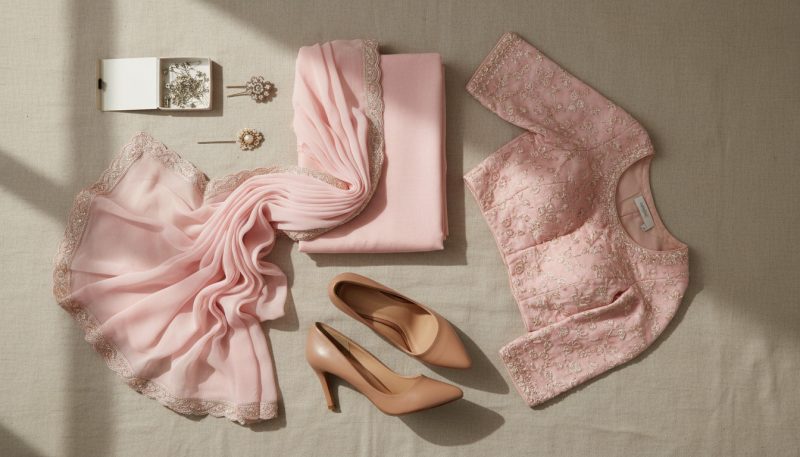
Clothing Essentials
- Saree (light fabrics like cotton, chiffon, or georgette are best for beginners)
- Blouse (well-fitted for comfort and support)
- Petticoat or shapewear (snug at the waist, ankle length)
Accessories & Tools
- Safety pins (small and medium sizes)
- Saree pin (optional, decorative)
- Waist belt (optional, for added support)
Footwear (Wear This First)
Always wear your footwear before draping the saree.
- Heels help with posture and elegance
- Flats or wedges work well for long wear
Your footwear determines the correct saree length, ensuring it doesn’t drag or look too short.
How to Wear a Saree Perfectly Step by Step Guide: ( Nivi Style)
The Nivi drape, originating from Andhra Pradesh, is the easiest and most popular saree draping style.
Step 1: Wear and Secure the Petticoat
Tie your petticoat tightly at the waist, slightly above the navel. It should feel secure but comfortable, as it supports the entire saree.
Beginner tip: A loose petticoat causes the saree to slip.
Step 2: Tuck the Plain End at the Waist
Hold the inner (non-decorative) end of the saree. Start tucking it into the petticoat at the navel, moving from right to left. Ensure the lower edge of the saree just touches the floor.
Step 3: Wrap Once Around the Waist
Continue wrapping the saree around your waist one full circle, keeping the fabric smooth and even. Check the length again before moving forward.
Step 4: Make Front Pleats (5–7 Ideal)
Take the remaining fabric and create 5 to 7 even pleats, each about 4–5 inches wide. Align them neatly so they fall straight.
Step 5: Tuck and Pin the Pleats
Tuck the pleats into the petticoat slightly left of the navel, facing left. Secure them with a safety pin for stability.
Step 6: Decide the Pallu Length
Place the decorative end (pallu) over your left shoulder to check the length. Ideally, it should fall just below the knees.
Step 7: Drape and Pin the Pallu
You can:
- Leave the pallu open for a relaxed look
- Pleat it neatly for a formal appearance
Pin it at the shoulder to keep it secure.
Step 8: Final Adjustments
Stand in front of a mirror. Adjust pleats, smooth wrinkles, and ensure the saree hugs your body comfortably. You’re now wearing a saree perfectly.
Common Mistakes to Avoid When Wearing a Saree
Many beginners struggle because of small errors. Avoid these:
- Tying the petticoat too loose
- Uneven or twisted pleats
- Forgetting to pin the pleats or pallu
- Wearing footwear after draping
- Making the pallu too long or too short
Fixing these instantly improves the overall look.
Popular Saree Draping Styles (After You Learn the Basics)
Once you master the Nivi drape, you can experiment with variations:
- Bengali Style: Pallu draped wide over the shoulder
- Gujarati Style: Pallu in front, pleats at the back
- Maharashtrian Style: Nine-yard saree, no pleats
- Lehenga Style Saree: Flared pleats like a skirt
- Pant Style Saree: Modern fusion with trousers
Each style builds on the same basics of tucking and pleating.
Fabric-Based Draping Tips
- Cotton: Crisp pleats, great for beginners
- Silk: Fewer pleats, secure with pins
- Chiffon/Georgette: Narrow pleats, extra pinning
- Net: Handle gently, use lining if needed
Choosing the right type of saree fabric makes draping easier.
Styling Tips to Look Elegant in a Saree
- Keep pleats neat and centered
- Match blouse neckline with the occasion
- Use a belt to define the waist
- Avoid over-accessorizing
- Confidence is the best accessory
Conclusion
Learning how to wear a saree may seem challenging at first, but with the right steps and a little practice, it becomes an easy and graceful process. By preparing properly, following the basic draping method, and avoiding common mistakes, anyone can wear a saree with confidence and comfort. Once you master the basics, you can explore different fabrics, occasions, and draping styles to create looks that suit your personality and lifestyle.
Frequently Asked Questions about How to Wear a Saree
How do you wear a saree for a beginner?
The easiest way for a beginner to wear a saree is the nivi draping style. Start by wearing a well-fitted petticoat, tuck the plain end of the saree at the waist, wrap it once around, make 5–7 front pleats, and drape the pallu over the left shoulder. Using safety pins helps keep the saree secure while you learn.
How do you wear a saree to look classy?
To look classy in a saree, keep the pleats neat and evenly aligned, choose a fabric that drapes well, and avoid over-accessorizing. A well-fitted blouse, properly pinned pallu, and clean finishing make the saree look elegant and polished.
How can I drape a saree in different ways?
Once you master the basic Nivi style, you can drape a saree in different ways such as the Bengali style, Gujarati style, Maharashtrian style, lehenga-style drape, or pant-style saree. All variations use the same basics of tucking, pleating, and pallu placement.
How do I get a good body shape in a saree?
To get a flattering shape in a saree, wear a snug petticoat or shapewear, keep pleats aligned at the center, and drape the pallu smoothly. Using a waist belt can help define the waist and prevent fabric from shifting.
How should the back of a saree look?
The back of a saree should look smooth and well-fitted, with the fabric falling evenly and the pallu draping neatly over the shoulder. There should be no bunching, loose tucks, or visible pins from behind.
What are common mistakes while wearing a saree?
Common mistakes include tying the petticoat too loose, making uneven pleats, not pinning the pallu properly, wearing footwear after draping, and choosing the wrong saree length. Avoiding these mistakes makes the saree look more elegant and comfortable.


 New Arrivals
 Ready To Wear
 Kid’s Clothing
 Wedding Wear
 Men’s Wear
 Jewellery
 Designers
 Sale
Sale