

Blog
What Is a Salwar Kameez? Everything You Need to Know
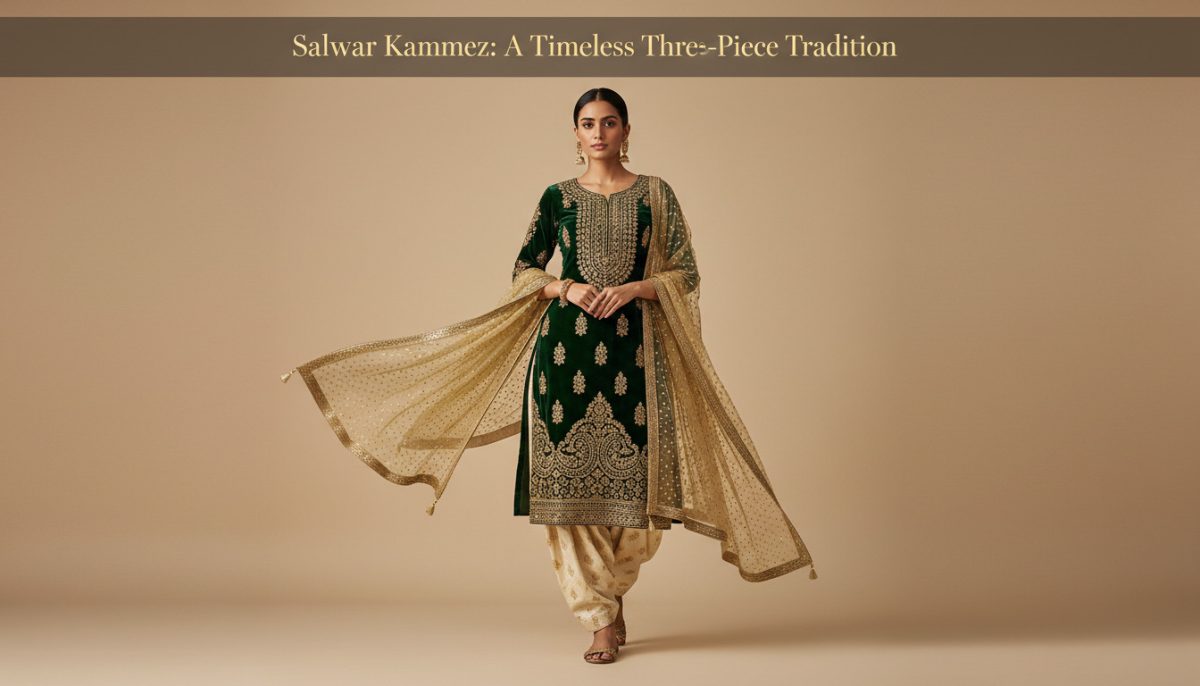
If you have ever wondered what is a salwar kameez, it is a traditional South Asian outfit made up of three main pieces: a salwar (loose trousers), a kameez (long tunic), and a dupatta (scarf). This versatile ensemble is widely worn across India, Pakistan, Bangladesh, and other parts of South Asia for daily wear, festive occasions, and formal events.
A traditional salwar kameez is known for its comfort, modest silhouette, and cultural significance. Over centuries, it has evolved in fabric, cut, and decoration, yet it continues to remain one of the most recognizable forms of ethnic wear in the region.
Meaning and Definition of Salwar Kameez
The term salwar kameez comes from two words:
- Salwar: Refers to loose-fitting trousers that are typically pleated at the waist and tapered at the ankles.
- Kameez: Refers to a long tunic or shirt that falls to the knees or below.
Together, these garments form what is often called a salwar suit. In many regions, especially in Punjab, it is also known as a Punjabi suit. When people ask for the salwar kameez definition, they are referring to this three-piece outfit that combines practicality with traditional aesthetics.
The addition of a dupatta, a long rectangular scarf worn over the shoulders or head, completes the ensemble and adds a layer of modesty and elegance.
Parts of a Salwar Kameez
Understanding the structure of the outfit helps clarify what makes it unique.
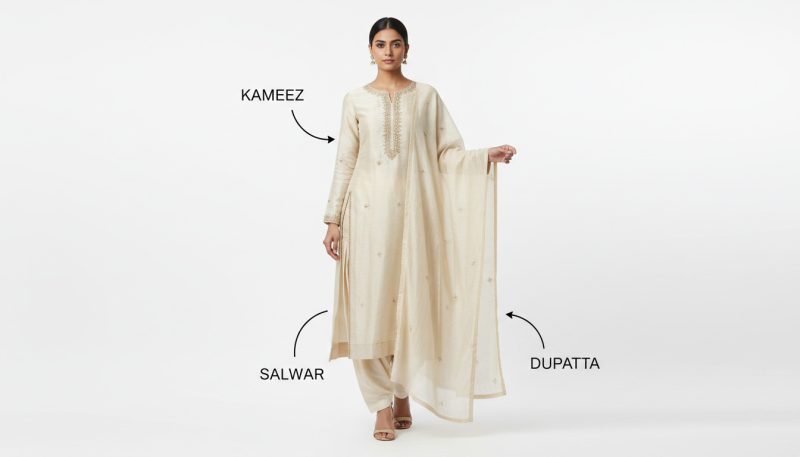
1. Salwar (Bottom Wear)
The salwar is a pair of loose trousers gathered at the waist with pleats and secured with a drawstring or elastic band. It narrows toward the ankle, often ending in cuffs.
Over time, several variations of the salwar have developed, including:
- Churidar – a more fitted version that gathers at the ankles.
- Patiala salwar – a heavily pleated style with a voluminous look.
- Palazzo pants – wide-legged and modern in appearance.
Despite these variations, the core function remains the same: comfort and ease of movement.
2. Kameez (Upper Tunic)
The kameez is a long tunic that can range from knee-length to calf-length. It typically features side slits, known as chaak, which allow for flexibility and graceful movement.
Kameez designs vary in:
- Sleeve length (full, half, sleeveless)
- Neckline shape (round, V-neck, boat neck)
- Embellishments such as embroidery or zari work
3. Dupatta (Scarf)
The dupatta is a long scarf that complements the outfit. It may be draped over both shoulders, one shoulder, or over the head during formal or religious occasions. In a traditional salwar kameez, the dupatta plays both a decorative and cultural role.
Salwar Kameez Origin and History
The salwar kameez origin can be traced back to Central Asia and Persia. The loose trousers and tunic style were common garments in these regions due to their practicality and suitability for different climates. The salwar kameez history in the Indian subcontinent is closely linked to the Mughal Empire. When the Mughals arrived in India, they brought with them Central Asian clothing styles. Over time, these garments blended with local traditions and became especially popular in the Punjab region.
If you are wondering who invented salwar kameez, there is no single individual credited with its invention. Instead, it evolved gradually through cultural exchange and adaptation. By the 19th and 20th centuries, it had become everyday attire for women in northern India and Pakistan. In the 1980s, it was even adopted as a common school uniform in many parts of India because of its comfort and modesty.
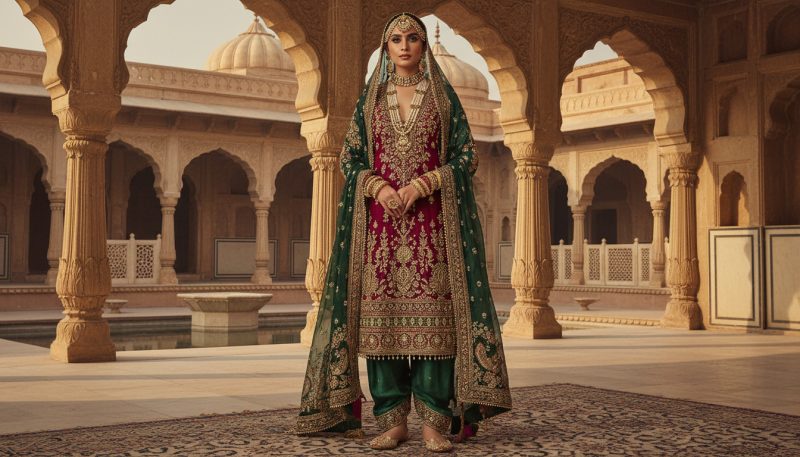
From Punjab, the outfit spread across South Asia and later to diaspora communities worldwide. Today, it is worn not only as traditional attire but also as a symbol of cultural identity.
Cultural Importance
The traditional salwar kameez holds deep cultural significance. In many parts of South Asia, it represents modesty, practicality, and tradition. It is worn by women of different age groups and communities, making it one of the most inclusive forms of regional clothing.
Several factors contributed to its widespread adoption:
- Climate suitability: Lightweight fabrics like cotton make it ideal for hot weather.
- Ease of wear: Unlike a saree, it does not require complex draping.
- Adaptability: It can be simple for daily wear or embellished for celebrations.
Because of its comfort and versatility, many women prefer it over other traditional garments for daily activities, work, and travel.
Salwar Kameez Types
There are many salwar kameez types, each defined by variations in cut and silhouette rather than drastic structural changes.
Some common types include:
- Anarkali Suit: Features a long, frock-style kameez that flares from the waist down.
- Patiala Suit: Known for its heavily pleated salwar, originating from Punjab.
- Churidar Suit: Includes a fitted churidar instead of a loose salwar.
- Straight-Cut Suit: A simple, straight kameez paired with slim trousers.
- Palazzo Suit: Combines a kameez with wide-legged palazzo pants.
While modern fashion often highlights the latest salwar kameez style, the fundamental structure of the outfit remains consistent.
Is Salwar Kameez Formal Wear?
A common question people ask is: is salwar kameez formal wear?
The answer depends largely on the fabric and embellishment. A simple cotton salwar kameez is suitable for everyday or casual use. However, when made from silk, chiffon, or velvet and decorated with embroidery or stonework, it becomes appropriate for formal events such as weddings and festivals.
This flexibility is one reason the outfit remains so popular. It can transition from daily wear to ceremonial attire without losing its essential identity.
How Is Salwar Kameez Different From Other Traditional Outfits?
Although it is a traditional garment, it differs from other South Asian outfits in structure and ease of wear.
| Outfit | Structure | Stitch Type | Ease of Wearing |
| Salwar Kameez | Tunic + trousers + dupatta | Fully stitched | Easy |
| Saree | Long draped fabric | Unstitched | Moderate |
| Lehenga | Skirt + blouse + dupatta | Stitched | Moderate |
| Kurta Pajama | Tunic + straight pants | Stitched | Simple |
Unlike a saree, which requires draping, the salwar kameez is pre-stitched and ready to wear. Compared to a lehenga, it is generally more practical for daily use.
Modern Evolution and Latest Designs
Over time, the outfit has adapted to changing tastes. Today, you can find the latest salwar kameez designs featuring contemporary cuts, asymmetrical hemlines, and fusion elements. The latest salwar kameez style may incorporate Western influences, such as pairing the kameez with jeans or tailored trousers.
Despite these innovations, the essential components salwar, kameez, and dupatta remain unchanged. The evolution reflects cultural adaptation rather than replacement.
Conclusion
To summarize, what is a salwar kameez? It is a timeless three-piece outfit rooted in Central Asian and Mughal history that became a defining element of South Asian culture. With its comfortable structure, cultural significance, and adaptable design, it continues to be worn in both traditional and modern contexts.
From its historical origins to the latest salwar kameez designs, this garment remains a powerful symbol of heritage and practicality bridging past and present through a simple yet elegant silhouette.
Frequently Asked Questions
What is the difference between salwar and kameez?
The salwar is the bottom part of the outfit and refers to loose-fitting trousers that taper at the ankles. The kameez is the upper garment, a long tunic worn over the salwar. Together, they form the complete salwar kameez ensemble.
What is special about salwar kameez?
What makes the salwar kameez special is its combination of comfort, modesty, and cultural heritage. It is a versatile outfit that can be worn casually or formally depending on the fabric and design. Its timeless structure has allowed it to remain popular across generations.
Where does salwar kameez come from?
The salwar kameez comes from Central Asia and Persia, where similar tunic-and-trouser garments were traditionally worn. It became widely popular in the Indian subcontinent during the Mughal era and later spread across South Asia, especially in the Punjab region.


 New Arrivals
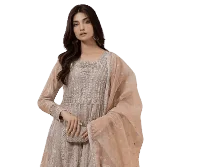 Ready To Wear
 Kid’s Clothing
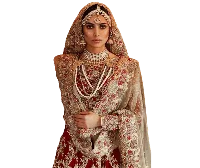 Wedding Wear
 Men’s Wear
 Jewellery
 Designers
 Sale
Sale