

Blog
Sharara vs Gharara vs Palazzo: What’s the Real Difference?
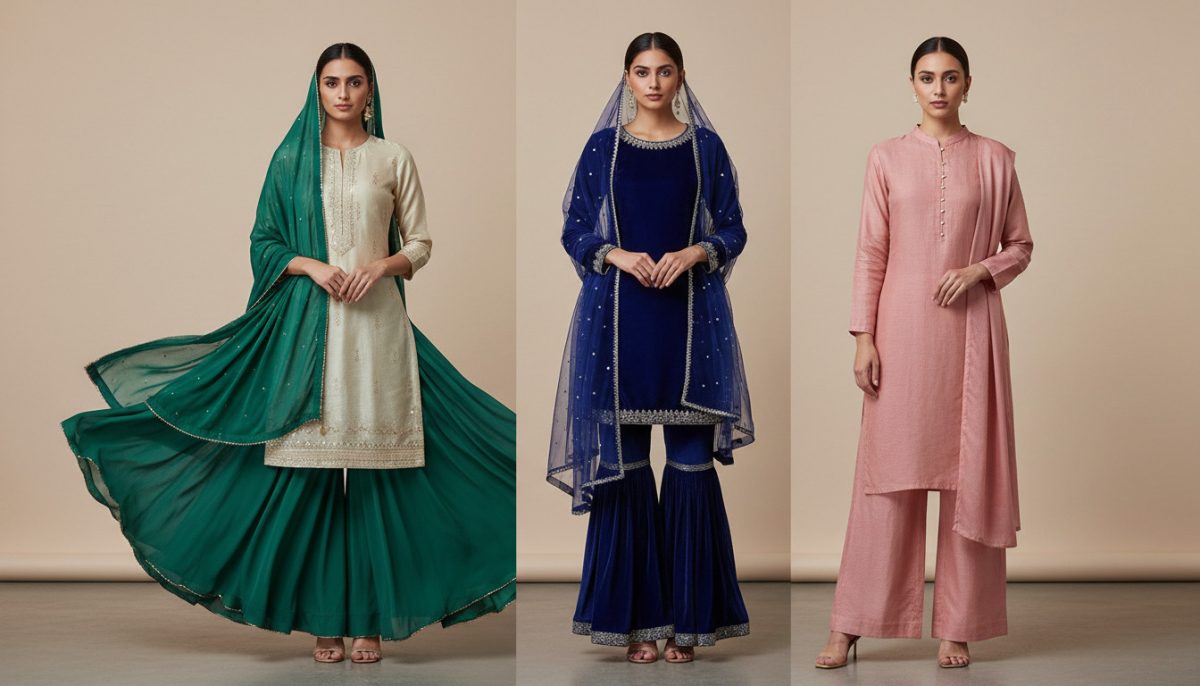
Sharara, gharara, and palazzo are often confused because all three feature wide, flared bottoms. But structurally, culturally, and stylistically, they are very different garments. If you’ve ever wondered about the difference between sharara and gharara, or how a palazzo suit compares to traditional flared silhouettes, this complete guide breaks it down clearly.
In this article, you’ll understand their origin, construction, flare pattern, occasion suitability, and which one is best for weddings, Eid, parties, or everyday wear.
What Is a Sharara?
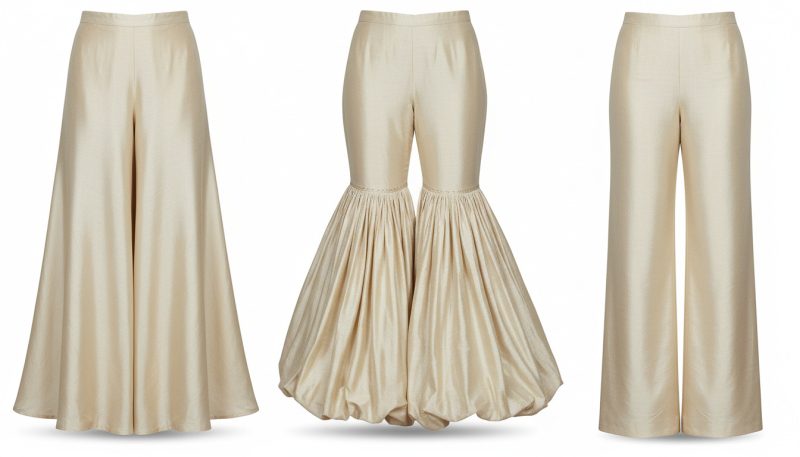
A sharara is a traditional flared bottom that widens dramatically from the waist down. Unlike a regular salwar or palazzo, the sharara features a continuous flare starting from the waist, creating a flowing and voluminous silhouette.
Key Features of Sharara:
- Flare begins at the waist
- No knee seam or joint
- Wide hem circumference
- Soft, flowing drape
- Usually paired with a short kameez and dupatta
Origin of Sharara
The sharara traces back to the Mughal era, where royal women wore heavily embroidered flared pants as part of court attire. Over time, it became popular in North India and Pakistan, especially for weddings and festive occasions.
When to Wear Sharara
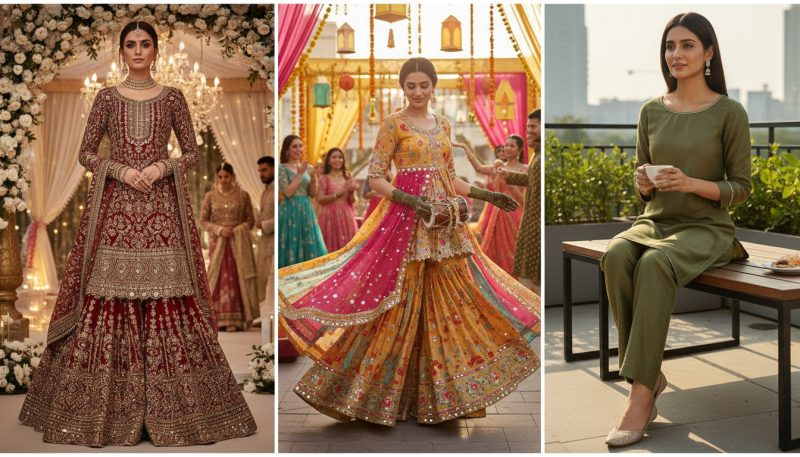
- Mehndi ceremonies
- Eid celebrations
- Wedding functions
- Festive gatherings
Sharara suits are typically crafted in georgette, chiffon, silk, or net, often adorned with gota patti, zari work, or mirror embroidery.
What Is a Gharara?
A gharara may look similar to a sharara at first glance, but its construction is completely different. The most important feature of a gharara is the distinct knee joint seam, often decorated with a gota band.
Key Features of Gharara:
- Fitted from waist to knee
- Dramatic flare begins below the knee
- Visible knee seam (ghera joint)
- Structured upper portion
- Heavy, panel-based flare
Origin of Gharara
The gharara originated in Lucknow (Awadhi culture) and became a symbol of Nawabi fashion. It was traditionally worn by royal women and later became a staple in bridal trousseau, especially for nikah ceremonies.
When to Wear Gharara
- Bridal events
- Nikah ceremonies
- Formal weddings
- Traditional celebrations
Ghararas are often made from brocade, silk, velvet, or heavily embroidered fabrics, giving them a regal and structured look.
What Is a Palazzo?
A palazzo is a wide-leg trouser that falls straight from the waist without dramatic flare or seam detailing. Unlike sharara and gharara, palazzo pants are rooted in Western fashion.
Key Features of Palazzo:
- Straight, wide-leg silhouette
- No knee seam
- Even width from waist to hem
- Relaxed fit
- Minimal structure
Origin of Palazzo
Palazzo pants gained popularity in 1960s Europe and America as comfortable, flowing trousers. Over time, they were adopted into Indo-western ethnic wear, becoming a staple in modern palazzo suits.
When to Wear Palazzo
- Casual outings
- Office wear
- Semi-formal parties
- Festive but comfortable gatherings
Palazzos are commonly made in cotton, rayon, crepe, or light silk, making them breathable and easy to carry all day.
Sharara vs Gharara vs Palazzo: Key Structural Differences
Understanding the technical difference between sharara, gharara, and palazzo helps you choose the right outfit confidently.
Flare Starting Point
- Sharara: Flare starts from the waist.
- Gharara: Flare starts below the knee.
- Palazzo: Minimal flare; straight wide-leg fall.
Knee Seam Presence
- Sharara: No knee seam.
- Gharara: Has a visible knee joint (defining feature).
- Palazzo: No seam detailing.
Silhouette Impact
- Sharara: Flowing and voluminous throughout.
- Gharara: Structured at top, dramatic at bottom.
- Palazzo: Relaxed and modern.
Cultural Depth
- Sharara: Mughal heritage.
- Gharara: Awadhi/Nawabi royal roots.
- Palazzo: Western origin adapted into ethnic fashion.
Quick Comparison Table
| Feature | Sharara | Gharara | Palazzo |
| Flare Start | From waist | From knee | From waist (minimal flare) |
| Knee Seam | No | Yes | No |
| Structure | Flowing | Structured upper | Straight wide-leg |
| Traditional Level | High | Very High | Moderate |
| Bridal Wear | Yes | Very common | Rare |
| Casual Wear | Limited | Rare | Yes |
| Comfort Level | Medium | Medium | High |
| Origin | Mughal era | Lucknow (Nawabi) | 1960s Western |
Which One Should You Choose?
Choosing between sharara vs gharara vs palazzo depends on occasion, comfort, and style preference.
For Weddings
- Choose gharara for a traditional, regal bridal look.
- Choose sharara for mehndi or festive wedding functions.
- Avoid palazzo if you want a heavily traditional vibe.
For Eid
- Sharara offers festive elegance.
- Gharara works for formal Eid gatherings.
- Palazzo suits are perfect for comfortable Eid celebrations at home or casual visits.
For Casual Wear
- Palazzo is the most practical option.
- Sharara and gharara are usually too elaborate for everyday wear.
For All-Day Comfort
- Palazzo wins due to breathable fabrics and relaxed fit.
- Sharara offers moderate comfort.
- Gharara may feel heavier due to structured flare and embroidery.
Comfort & Practicality Comparison
If comfort is your priority, palazzos are the most breathable and flexible. They allow easy movement and are suitable for long hours. Sharara provides comfort but may feel slightly heavy depending on fabric and embellishment.
Gharara, due to its knee seam and heavy lower flare, is best suited for shorter formal events rather than all-day wear.
Styling Tips for Each
Styling sharara, gharara, and palazzo depends on balancing their silhouette with the right top, dupatta drape, and accessories.
How to Style a Sharara
- Pair with a short embroidered kameez
- Add statement jhumkas
- Drape dupatta over one shoulder for a modern look
- Opt for heels to balance volume
How to Style a Gharara
- Choose a fitted kurti to highlight the knee seam
- Add traditional jewelry like chandbalis
- Carry a potli bag
- Keep dupatta neatly pleated for formal appeal
How to Style a Palazzo Suit
- Pair with a straight kurta or peplum top
- Add minimal jewelry for a modern look
- Wear flats or block heels
- Experiment with printed or pastel fabrics
Conclusion
The difference between sharara, gharara, and palazzo lies in their structure, cultural roots, and occasion suitability. While gharara offers a regal, traditional look with its knee seam design, sharara provides flowing festive elegance, and palazzo delivers modern comfort and versatility. Choosing the right one depends on whether you prefer heritage charm, dramatic flair, or effortless everyday style.
Frequently Asked Questions
What is the difference between sharara and palazzo?
The main difference between a sharara and a palazzo lies in the flare and traditional structure. A sharara has a dramatic, continuous flare from the waist and is typically worn for festive or wedding occasions, while a palazzo is a straight, wide-leg trouser designed for comfort and everyday or semi-formal wear. Sharara is rooted in Mughal tradition, whereas palazzo comes from modern Western fashion.
What is the difference between gharara and sharara?
The key difference between a gharara and a sharara is the knee seam. A gharara is fitted from the waist to the knee and then flares out sharply below the knee, while a sharara flares continuously from the waist without any joint. Gharara is considered more traditional and bridal, whereas sharara is slightly more versatile and flowy.
What is the difference between a palazzo and a palazzo?
There is no difference between a palazzo and a palazzo, as both refer to the same wide-leg trouser style. The term “palazzo” describes loose, straight-cut pants that fall evenly from the waist to the hem. Sometimes people repeat the term by mistake when comparing it with sharara or gharara.


 New Arrivals
 Ready To Wear
 Kid’s Clothing
 Wedding Wear
 Men’s Wear
 Jewellery
 Designers
 Sale
Sale