

Uncategorized
What Is a Sherwani? A Complete Guide to Traditional Men’s Outfit

From royal courts of the Mughal era to modern wedding celebrations, the sherwani has remained one of the most iconic men’s outfits in South Asian culture. Often associated with grooms, festivals, and formal ceremonies, this traditional attire reflects status, heritage, and refined craftsmanship. Understanding what a sherwani is, how it originated, and why it remains relevant today helps you appreciate its cultural and fashion significance in men’s ethnic wear.
What Is a Sherwani?
A sherwani is a formal, long, coat-style traditional garment worn by men in South Asia, particularly for weddings and ceremonial occasions. It typically falls below the knees and features a structured silhouette, a front button closure, and a band collar, commonly known as a Nehru collar.
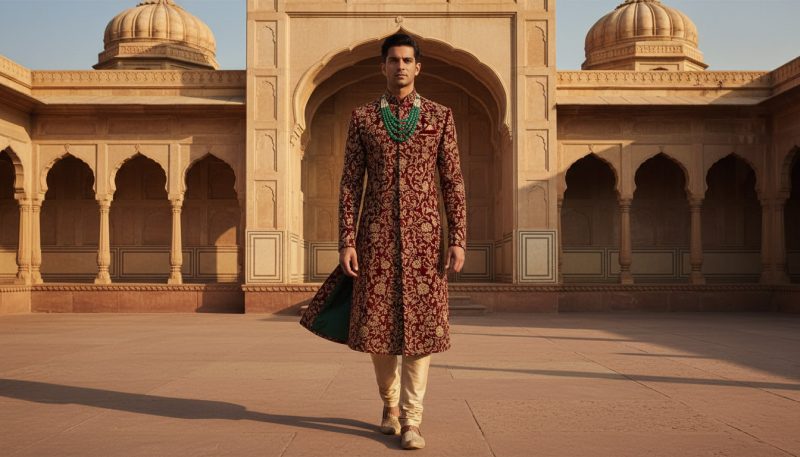
Key characteristics:
- Fabric: Often made of silk, brocade, velvet, or cotton blends.
- Design: Can be plain, embroidered, or heavily embellished depending on the occasion.
- Pairing: Usually worn with churidar, pajama, or dhoti pants and sometimes a scarf (dupatta or stole).
- Purpose: Symbolizes elegance, tradition, and formal attire; mostly worn by grooms or at festive/cultural events.
In short, think of it as the royal, formal coat of South Asian men’s fashion classic, elegant, and ceremonial.
Sherwani History and Origin
The sherwani has its roots in South Asia during the Mughal era. It was influenced by Persian and Central Asian clothing worn by nobles and rulers. Historically, this development dates back to the late 18th and early 19th centuries, when Mughal court fashion strongly shaped elite attire.
The sherwani originated in Northern India, particularly in regions like Lucknow and Hyderabad, where it blended Persian coats with local tunics to suit the climate and royal customs. Over time, it became a symbol of status and formality. The outfit was mainly worn by royalty and elite classes. During the colonial period, the sherwani continued to signify dignity and authority, often worn by political leaders and nobility.
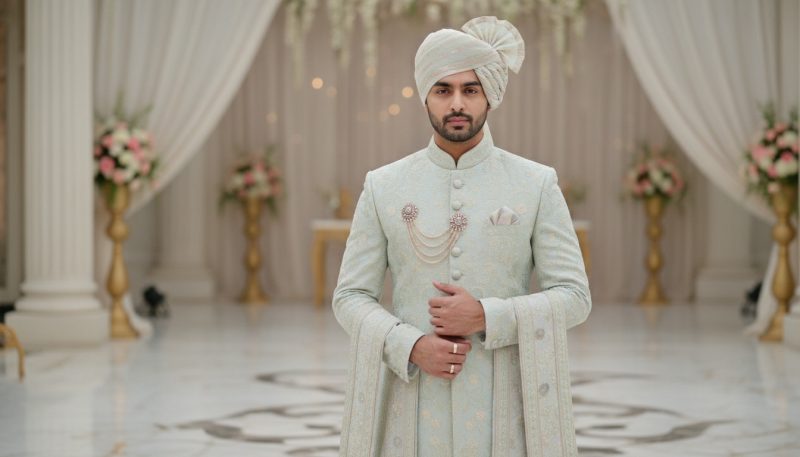
As fashion evolved, the sherwani became more widely adopted. It gained popularity in India, Pakistan, and Bangladesh. It became a ceremonial staple, especially for weddings, important festivals, and formal occasions, reflecting both cultural heritage and social prestige. Today, it is worn mainly at weddings and formal events. Modern designs still reflect its historical elegance while adapting to current styles.
Types of Sherwani
Sherwanis come in many styles, each designed for different occasions and preferences. Understanding the types of sherwani helps you choose the right one based on formality and personal taste.
- Traditional Sherwani: Rich embroidery, classic cuts, and royal colors.
- Modern Sherwani: Slim-fit silhouettes with minimal detailing.
- Indo-Western Sherwani: Fusion of Western tailoring with traditional elements.
- Regional Sherwani Styles: Lucknowi, Banarasi, Mughal-inspired, and Pakistani cuts.
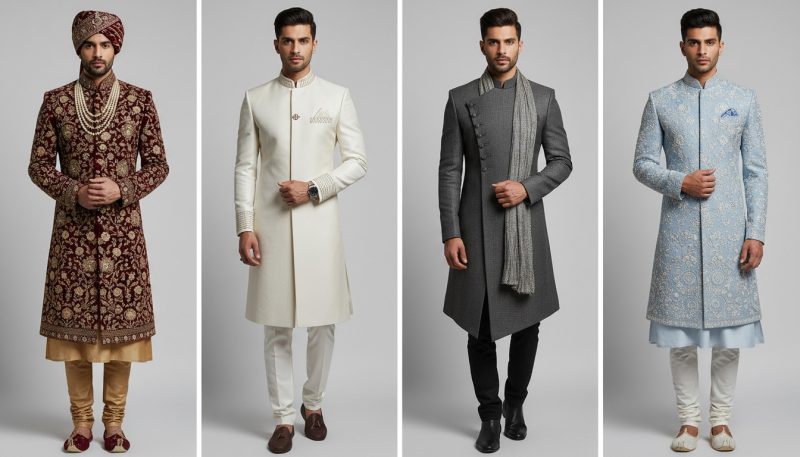
Each type varies in embroidery, fabric weight, and overall styling, making it important to select one based on the event. Explore the different types of sherwani to find the perfect style for your occasion.
Fabric for Sherwani
The fabric of a sherwani plays a major role in comfort, appearance, and durability. Different fabrics suit different climates and occasions.
Common sherwani fabrics include:
- Silk: Smooth, luxurious, and ideal for weddings.
- Brocade: Heavily textured, perfect for embroidered designs.
- Velvet: Rich and regal, best for winter weddings.
- Cotton Blends: Lightweight and breathable for summer events.
Choosing the right material is essential, so refer to our sherwani fabric guide for detailed comparisons.
Sherwani vs Kurta
A sherwani is often confused with a kurta, but both serve very different purposes.
- Sherwani: Formal, structured, coat-like garment for weddings and ceremonies.
- Kurta: Casual or semi-formal tunic worn for daily or festive occasions.
While a kurta focuses on comfort and simplicity, a sherwani is designed to make a statement of luxury and tradition. Many people confuse the two, but understanding the difference between sherwani and kurta makes outfit selection easier.
Sherwani vs Achkan: What’s the Difference?
The achkan is another traditional outfit similar in appearance to a sherwani, but there are clear distinctions.
- Sherwani: Heavier fabrics, rich embellishments, ceremonial wear.
- Achkan: Lighter, more fitted, suitable for semi-formal events.
Grooms usually prefer sherwanis for weddings, while achkans are chosen for elegant yet understated looks. To choose correctly for formal events, learn the difference between sherwani and achkan.
Sherwani Styling Guide
Styling transforms a sherwani from traditional to unforgettable. Modern trends focus on minimal embroidery, clean cuts, and Indo-Western fusion, especially among younger grooms.
Styling essentials:
- Colors: Cream, ivory, maroon for classic looks; pastel and navy for modern styles.
- Accessories: Turban, stole, brooch, pocket square.
- Embroidery balance: Heavy for weddings, subtle for receptions or engagements.
For a polished look, explore sherwani styling guide with color and accessory tips.
Evolution of Sherwani in Modern Fashion
The sherwani has evolved from royal traditional wear into a modern ceremonial outfit while retaining its classic silhouette. Contemporary designs emphasize comfort and elegance, using lighter fabrics, refined tailoring, and balanced embroidery suitable for long wedding celebrations.
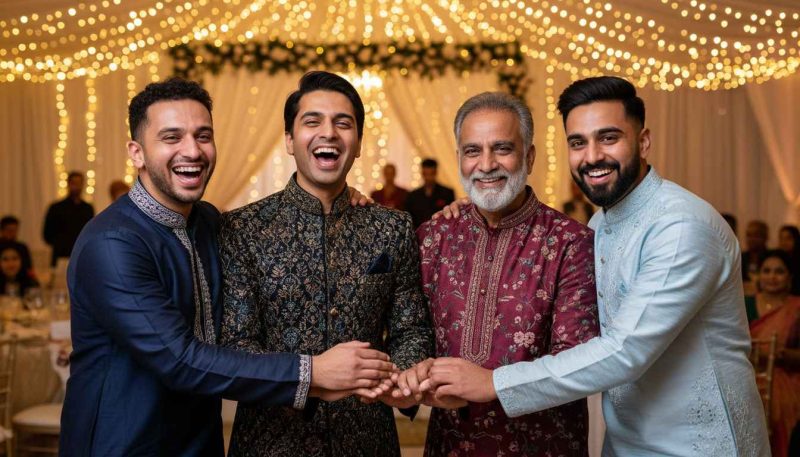
Modern sherwanis also incorporate pastel colors, minimal detailing, and Indo-Western influences, appealing to younger grooms while preserving cultural heritage. This evolution ensures the sherwani remains a timeless and stylish choice for weddings and formal occasions.
Conclusion
A sherwani is a timeless South Asian men’s garment that represents elegance, tradition, and formal style. Originating in the Mughal era, it has evolved from royal court attire into a modern wedding and ceremonial outfit. With various types, fabrics, and styling options available today, the sherwani continues to blend cultural heritage with contemporary fashion, making it a preferred choice for grooms and formal occasions.
Frequently Asked Questions About Sherwani
What is a sherwani worn for?
A sherwani is worn for weddings, receptions, cultural ceremonies, and formal celebrations. It is especially popular as a groom’s outfit in South Asian weddings due to its regal and traditional appearance.
Is a sherwani only worn by grooms?
No, a sherwani is not limited to grooms. While it is commonly worn by grooms at weddings, it can also be worn by family members and guests during formal events, festivals, and traditional celebrations.
What do men wear under a sherwani?
Men usually wear churidar, pajama, or dhoti pants under a sherwani. These bottoms complement the structured design of the sherwani and help maintain a traditional and balanced look.
What is the difference between a sherwani and an achkan?
A sherwani is heavier, more ornate, and worn for ceremonial occasions, while an achkan is lighter, more fitted, and suitable for semi-formal events. Sherwanis are typically preferred for weddings, whereas achkans offer a simpler alternative.
Is a sherwani an Indian or Pakistani outfit?
The sherwani originated in South Asia and is worn in both India and Pakistan. Today, it is an important part of traditional menswear across India, Pakistan, Bangladesh, and neighboring regions.


 New Arrivals
 Ready To Wear
 Kid’s Clothing
 Wedding Wear
 Men’s Wear
 Jewellery
 Designers
 Sale
Sale