

Blog
What Is a Lehenga? Meaning, History, Structure and Traditional Significance

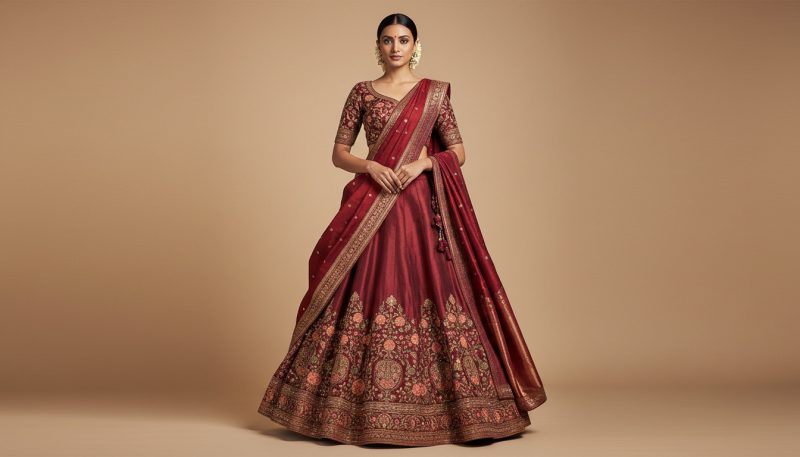
A lehenga is a traditional South Asian outfit that typically consists of a long flared skirt, a fitted blouse known as a choli, and a dupatta (a decorative scarf). While the word originally referred to the skirt itself, today it is commonly used to describe the entire three-piece ensemble. Worn for weddings, festivals, and cultural celebrations, the lehenga holds deep historical and cultural significance across India, Pakistan, and other parts of South Asia.
In simple terms, when someone asks what a lehenga means, they are referring to a traditional garment that combines craftsmanship, textile artistry, and regional heritage into one outfit.
Lehenga Meaning and Cultural Identity
The term lehenga is believed to have roots in Persian and North Indian linguistic traditions, evolving over centuries within the Indian subcontinent. In many regions, it is also referred to as ghagra. Although technically the lehenga is the skirt portion of the outfit, the complete set skirt, choli, and dupatta is often called a lehenga choli.
So, is lehenga a traditional dress? Yes. It is considered one of the most important forms of traditional attire in South Asia. For generations, women have worn traditional lehenga styles during major life events such as weddings, engagements, and religious festivals. The outfit symbolizes celebration, femininity, and cultural identity.
In bridal contexts especially, the lehenga represents heritage and ceremonial importance. The colors, embroidery, and fabric choices often reflect regional customs and symbolic meanings.
Lehenga History: Origin and Evolution
The history of lehenga traces back several centuries. Variations of long skirts were worn in ancient India, but the lehenga as we know it today became prominent during the Mughal era (16th–19th century). Mughal royal courts influenced the development of luxurious fabrics, intricate embroidery techniques, and structured silhouettes.
Key Phases in Lehenga History
- Ancient Period: Early forms of stitched and unstitched lower garments worn by women.
- Mughal Era: Introduction of rich textiles like brocade and velvet, along with elaborate zari and zardozi embroidery.
- Regional Expansion: Rajasthan and Gujarat developed distinctive flared and mirror-worked styles.
- Modern Era: Contemporary designers adapted traditional lehenga silhouettes for bridal and festive fashion worldwide.
Over time, the lehenga evolved from royal court attire to a widely celebrated garment worn during weddings and festivals. Despite stylistic changes, its traditional identity remains intact.
Parts of a Lehenga
Understanding the parts of a lehenga helps clarify how the outfit is structured. Although visually simple, the garment involves detailed craftsmanship.
1. Lehenga (Skirt)
The lehenga is a long, flared skirt that sits at the waist. Its structure may include:
- Waistband: Provides support and shape.
- Kalis (Panels): Vertical fabric panels stitched together to create volume.
- Gher (Flare): The circumference of the hemline, determining how wide the skirt spreads.
- Lining and Layering: Often includes inner lining or can-can fabric to enhance volume.
The flare and panel construction influence how the skirt moves and drapes.
2. Choli (Blouse)
The choli is a fitted blouse worn with the lehenga. It may feature:
- Short or long sleeves
- Various necklines (round, sweetheart, boat neck)
- Back tie-ups or hook closures
- Embroidery matching the skirt
The choli balances the volume of the skirt and completes the silhouette.
3. Dupatta
The dupatta is a long decorative scarf draped over the shoulder or head. It can be styled in multiple ways and often carries detailed borders or embellishments.
What Is Lehenga Choli?
Many people ask, what is lehenga choli and how is it different from a lehenga? Technically, the lehenga refers only to the skirt. However, the term lehenga choli describes the complete three-piece ensemble skirt, blouse, and dupatta.
In everyday language, both terms are used interchangeably. When someone says they are wearing a lehenga, they usually mean the full outfit rather than just the skirt.
Types of Traditional Lehenga
Over time, the traditional lehenga has evolved into multiple silhouettes while maintaining its cultural identity. The differences lie primarily in cut, flare, and structure rather than in the basic three-piece format.
A-Line Lehenga
Fitted at the waist and gradually widening toward the hem, creating a balanced and versatile silhouette.
Circular Lehenga
Characterized by a full, dramatic flare formed from circular fabric cuts, often preferred for bridal wear.
Panelled Lehenga
Constructed using multiple stitched panels, adding volume and design variation.
Mermaid Lehenga
Fitted through the hips and thighs before flaring at the bottom, offering a more contemporary shape.
Straight-Cut Lehenga
Falls straight down from the waist with minimal flare, creating a sleek and structured look.
Each type reflects regional preferences, body proportions, and occasion-specific styling. To explore silhouettes, fabric pairings, and occasion suitability in greater depth, refer to our detailed article on types of traditional lehenga.
Fabrics Used in Lehenga
Fabric plays a major role in defining the appearance and comfort of a lehenga. Common materials include:
Silk
Rich, smooth, and structured. Frequently used for bridal lehengas.
Velvet
Heavy and luxurious, often chosen for winter weddings.
Brocade
Woven fabric with intricate patterns, associated with Mughal heritage.
Georgette
Lightweight and flowy, ideal for festive occasions.
Net
Sheer fabric layered over inner lining for decorative effect.
Organza
Crisp and lightweight with subtle shine.
Each fabric contributes differently to silhouette, comfort, and occasion suitability. For a more detailed comparison of textures, seasonal recommendations, and embroidery compatibility, explore our complete guide to lehenga fabrics.
Embroidery and Craft Traditions
One of the defining features of a traditional lehenga is its embroidery. South Asia has a rich heritage of textile craftsmanship.
Common techniques include:
- Zari Work: Metallic thread embroidery.
- Zardozi: Heavy gold or silver embroidery popular during Mughal times.
- Gota Patti: Appliqué ribbon work often seen in Rajasthan.
- Mirror Work: Reflective embellishments common in Gujarat.
- Resham Embroidery: Intricate threadwork designs.
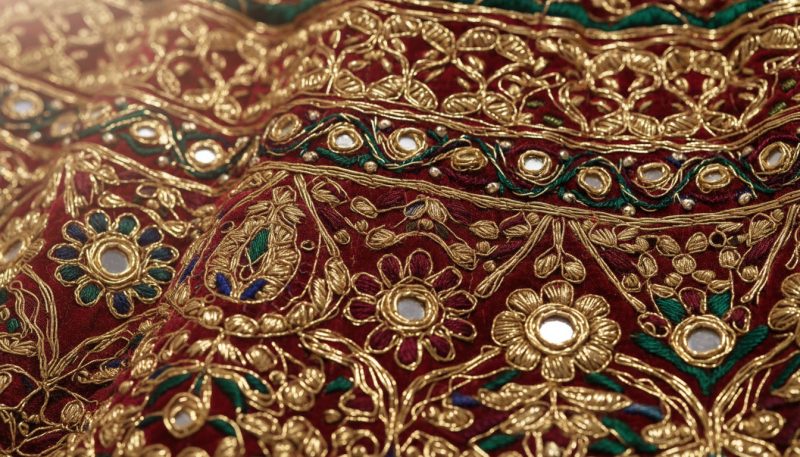
These techniques elevate the lehenga from a garment to a piece of wearable art.
Occasions Where Lehenga Is Worn
The lehenga is most commonly associated with weddings, but its usage extends beyond bridal ceremonies.
Bridal Wear
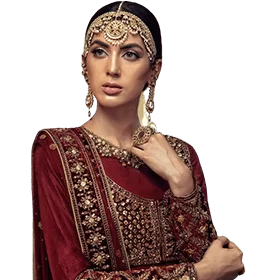
Red, maroon, and gold lehengas are traditional choices for brides in many regions.
Engagement and Sangeet
Often lighter in weight with vibrant colors.
Festivals
Navratri, Diwali, Eid, and other cultural celebrations frequently feature traditional lehenga styles.
Cultural Events
Lehengas are worn for dance performances, religious functions, and formal gatherings.
Lehenga vs Other Traditional Outfits
| Feature | Lehenga | Saree | Ghagra | Gown |
| Structure | Stitched skirt + blouse + dupatta | Unstitched draped fabric | Similar to lehenga (regional term) | One-piece Western outfit |
| Origin | South Asia | South Asia | North India | Western |
| Ease of Wear | Pre-stitched | Requires draping | Pre-stitched | Pre-stitched |
| Usage | Weddings, festivals | Daily to formal | Traditional events | Formal events |
While lehenga and ghagra are often used interchangeably, sarees differ because they are unstitched garments that require draping.
Conclusion
A lehenga is more than a festive outfit, it is a garment rooted in centuries of cultural tradition, textile craftsmanship, and regional identity. From its historical evolution during the Mughal era to its modern presence in weddings and festivals, the traditional lehenga continues to hold symbolic and aesthetic importance.
Understanding what a lehenga is involves recognizing its structure, history, fabrics, and cultural role. As both a historical garment and a contemporary fashion statement, the lehenga remains one of the most iconic forms of traditional South Asian attire.
Frequently Asked Questions
What is the difference between lehenga and gown?
The main difference between a lehenga and a gown is their structure. A lehenga is a three-piece Indian outfit with a skirt, choli, and dupatta, while a gown is a one-piece dress with a stitched silhouette. Lehengas are traditional, whereas gowns are generally Western in style.
What is the difference between lehenga and choli?
A lehenga is the long skirt portion of the outfit, while a choli is the fitted blouse worn with it. Together, they form a lehenga choli set, usually styled with a dupatta. The lehenga defines the flare, and the choli defines the upper-body fit.
Can we convert lehenga into gown?
Yes, a lehenga can be converted into a gown by stitching the skirt and blouse into a single structured outfit. This works best with lightweight or minimally embroidered lehengas. Heavily embroidered bridal lehengas may be harder to alter.
Which is best for engagement, lehenga or gown?
Both can work for an engagement depending on the event style. A gown suits modern or evening parties, while a lehenga is better for traditional ceremonies. The best choice depends on comfort and the overall theme of the function.


 New Arrivals
 Ready To Wear
 Kid’s Clothing
 Wedding Wear
 Men’s Wear
 Jewellery
 Designers
 Sale
Sale