

Uncategorized
Sherwani vs Kurta: Complete Guide to Men’s Traditional Wear

Men’s traditional wear is a reflection of South Asian culture, heritage, and elegance, blending centuries-old designs with modern styling. Among the most iconic garments in ethnic menswear are the sherwani and the kurta, each with a distinct identity, purpose, and history. Whether you’re attending a wedding, festival, or casual gathering, understanding the differences between these outfits ensures you choose the perfect attire for every occasion.
When exploring Sherwani vs Kurta, it’s important to look beyond surface-level style and understand their structure, occasion suitability, and cultural roots. A sherwani is typically a long, structured coat-style garment worn over a kurta and churidar or pajama, often crafted from rich fabrics like silk, brocade, or velvet, making it a preferred choice for weddings, receptions, and formal ceremonies. In contrast, a kurta is a versatile, lightweight tunic made from fabrics such as cotton, linen, or silk blends, ideal for festivals, religious events, and everyday traditional wear.
Key Differences Between Sherwani and Kurta
While both the sherwani and kurta are traditional South Asian outfits for men, they serve different purposes and occasions. While both the sherwani and kurta are rooted in traditional menswear, they serve different purposes. Here’s a detailed comparison:
| Aspect | Sherwani | Kurta |
| Form & Fit | Structured, fitted coat with a regal silhouette | Loose, relaxed tunic focused on comfort |
| Length | Knee-length or longer, often reaching mid-calf | Mid-thigh to knee length for ease of movement |
| Fabric & Embroidery | Rich fabrics like silk, brocade, or velvet with heavy embroidery | Cotton, linen, or silk with light or optional embroidery |
| Occasion & Formality | Weddings, receptions, and formal ceremonies | Festivals, Mehndi, casual gatherings, semi-formal events |
What is a Sherwani?
A sherwani is a traditional South Asian men’s outfit, designed as a long, tailored coat with a structured fit and intricate embroidery. It is usually worn for weddings, receptions, and formal ceremonies, symbolizing elegance, authority, and grandeur.
Key Features of a Sherwani
- Length & Fit: Knee-length or longer, often extending to mid-calf. Structured tailoring creates a regal silhouette.
- Fabric & Embellishments: Luxurious fabrics like silk, velvet, or brocade, decorated with embroidery, sequins, beads, or threadwork. Designer pieces may include mirror work or metallic accents.
- Bottom Wear & Accessories: Typically paired with churidar pants, straight trousers, or dhoti-style bottoms; often accessorized with a matching dupatta or shawl.
- Prominent Attributes: Durable stitching, lightweight inner linings for comfort, breathable fabrics, and sometimes hidden pockets for convenience.
What is a Kurta?
A kurta is a loose, comfortable tunic worn by men across South Asia, suitable for festivals, casual gatherings, and semi-formal events. Its versatile and breathable design allows freedom of movement while maintaining a classic ethnic look.
Key Features of a Kurta
- Length & Silhouette: Mid-thigh to knee-length with a relaxed fit for comfort and ease of movement.
- Fabric & Design: Breathable fabrics like cotton, linen, or light silk; subtle embroidery or prints for understated elegance.
- Pairing Options: Can be worn with pajama pants, churidar, trousers, or jeans; dupatta is optional.
- Style Tip: Indo-Western kurtas with jackets or embroidery can transform casual attire into a semi-formal outfit.
Choosing Between Sherwani and Kurta
Selecting the right outfit depends on occasion, formality, and personal style:
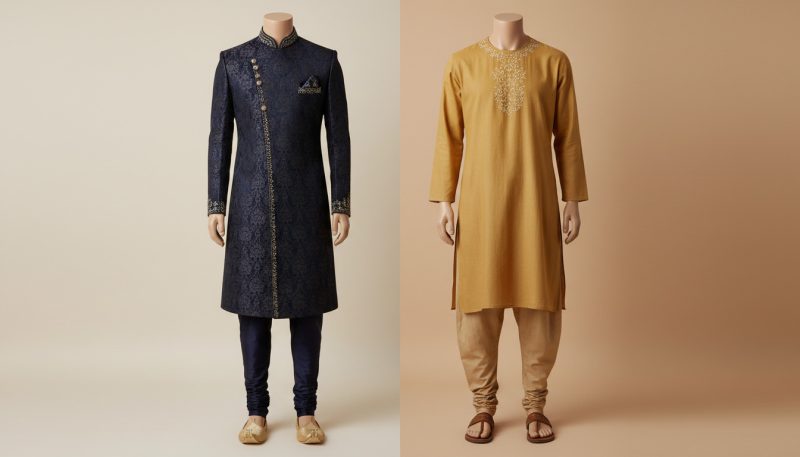
- Weddings, receptions, or formal ceremonies: Opt for a sherwani to make a grand statement.
- Festivals, mehndi ceremonies, or casual gatherings: A kurta ensures comfort while keeping your look stylish.
- Styling Tip: Pair your outfit with matching accessories, footwear, and bottoms to complete the look. Adding subtle embroidery or a lightweight shawl can elevate a simple kurta or sherwani.
Conclusion
Both the sherwani and kurta reflect the timeless elegance of South Asian fashion, offering unique solutions for different occasions. While the sherwani exudes grandeur and formality, the kurta delivers comfort and versatility. Understanding their differences in fabric, fit, and styling helps you choose the right attire, ensuring you look culturally stylish and confident at any event.


 New Arrivals
 Ready To Wear
 Kid’s Clothing
 Wedding Wear
 Men’s Wear
 Jewellery
 Designers
 Sale
Sale