

Blog
15+ Salwar Kameez Types Explained (Complete Style Guide)

Salwar kameez is one of the most versatile outfits in South Asian fashion. While it may look simple at first glance a kameez (tunic), salwar (bottom), and dupatta (scarf) there are many salwar kameez types based on structure, silhouette, and regional influence. From traditional Punjabi styles to modern palazzo suits, each variation offers a distinct look and purpose.
In this guide, we’ll break down different types of salwar kameez in a clear, structured way based on bottom styles and kameez designs so you can understand their differences and choose the right one for any occasion.
Types of Salwar Kameez Based on Bottom Style
The bottom defines the overall silhouette of a salwar suit. Here are the most popular types of salwar kameez classified by bottom design.
1. Patiala Salwar
Originating in Punjab, the Patiala salwar is known for its heavy pleats and voluminous drape. It creates a relaxed, traditional silhouette and is often paired with a short kameez. This style is ideal for festive occasions and cultural celebrations.
2. Punjabi Salwar
Often confused with Patiala, the Punjabi salwar has fewer pleats and a slightly tapered shape. It maintains comfort while offering a more structured appearance. This is a classic traditional salwar kameez type worn in North India.
3. Churidar
The churidar is a fitted bottom that gathers at the ankles, forming “churis” (bangles-like folds). It creates a sleek and elegant look and is commonly paired with Anarkali or straight-cut kameez. This style works well for formal and semi-formal events.
4. Palazzo
Palazzo pants are wide-legged and flowy, offering modern comfort. This modern salwar kameez type is popular for office wear and casual gatherings. When paired with a straight or A-line kameez, it creates a balanced silhouette.
5. Sharara
Sharara pants flare dramatically from the knee, creating a skirt-like effect. They are often heavily embroidered and worn for weddings and festive events. This style has strong Mughal influence and is considered a bridal favorite.
6. Gharara
Similar to sharara but structurally different, the gharara has a fitted portion until the knee and then a flared panel attached with a visible seam. It is a traditional and regal salwar kameez type, often worn for formal ceremonies.
7. Dhoti Salwar
Inspired by the traditional dhoti, this bottom features draped pleats around the thighs and tapers at the ankle. It gives an Indo-fusion appearance and is popular in contemporary ethnic fashion.
8. Tulip Salwar
The tulip salwar overlaps at the front, creating petal-like layers. It is stylish, modern, and perfect for party wear or semi-formal occasions.
9. Cigarette Pants
Slim, straight pants that end just above the ankle define this type. They offer a minimal and tailored look, making them ideal for office wear and structured outfits.
10. Parallel Pants
Parallel pants are straight from waist to hem with equal width throughout. They are comfortable and pair well with long, straight kameez designs.
11. Afghani Salwar
This bottom is loose and gathered at the waist and ankles, offering a relaxed and modest silhouette. It has cultural roots in Afghan and Pakistani fashion traditions.
Types of Salwar Kameez Based on Kameez Design
Apart from the bottom, the kameez style also defines different types of salwar suits.
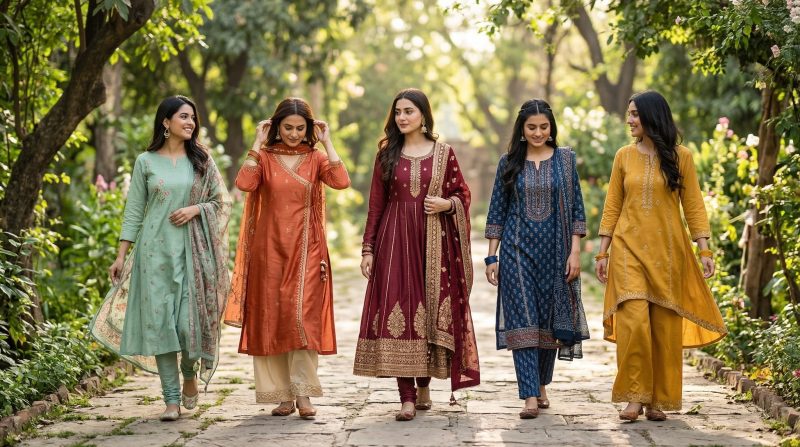
1. Anarkali Suit
Characterized by a flared, frock-style silhouette, the Anarkali is fitted at the top and flows out from the waist. Inspired by the Mughal era, it pairs beautifully with churidar bottoms and is ideal for weddings and formal occasions.
2. Straight Cut Suit
This design features a straight silhouette with side slits. It creates a slimming and structured appearance and is widely worn for office and daily wear.
3. A-Line Suit
The A-line kameez narrows at the shoulders and gradually widens toward the hem. It suits most body types and balances comfort with elegance.
4. Angarkha Style
Inspired by royal court attire, this style overlaps at the front and ties at the side. It adds a traditional yet stylish touch to ethnic wear.
5. Jacket Style Suit
This modern variation includes a long or short ethnic jacket layered over the kameez. It adds dimension and works well for festive occasions.
6. Front Slit Suit
A contemporary design where the kameez features a front slit instead of side slits. It pairs well with palazzo or cigarette pants for a chic look.
7. Floor-Length Suit
Resembling a gown, this long kameez style flows down to the ankles. It offers a grand appearance suitable for engagement ceremonies or weddings.
8. High-Low Suit
This design features a shorter front hem and longer back hem. It is a trendy option in modern salwar kameez types.
Traditional vs Modern Salwar Kameez Types
Understanding the evolution of salwar kameez helps differentiate traditional styles from modern adaptations.
Traditional Types
- Patiala Salwar
- Punjabi Salwar
- Gharara
- Anarkali
- Afghani Salwar
These styles are rooted in cultural heritage and are often crafted in silk, cotton, or embroidered fabrics like zari and gota patti.
Modern Types
- Palazzo Suit
- Cigarette Pants Suit
- Jacket Style Suit
- Tulip Salwar
- High-Low Kameez
Modern designs focus on comfort, minimal tailoring, and contemporary aesthetics.
Comparison of Popular Salwar Kameez Types
| Type | Flare Level | Fit | Traditional/Modern | Best For |
| Patiala | High | Loose | Traditional | Festive |
| Churidar | Low | Fitted | Traditional | Formal |
| Palazzo | Medium | Relaxed | Modern | Office |
| Sharara | Very High | Flared | Traditional | Wedding |
| Cigarette Pants | Low | Slim | Modern | Semi-formal |
This comparison makes it easier to choose based on preference and occasion.
How to Choose the Right Salwar Kameez Type
Based on Occasion
- Wedding: Sharara, Gharara, Anarkali
- Office: Straight Cut, Cigarette Pants, Palazzo
- Festive: Patiala, Angarkha
- Casual Wear: Punjabi salwar, Parallel pants
Based on Body Frame
- Petite: Straight cut or cigarette pants create elongation.
- Tall: Palazzo and sharara enhance height gracefully.
- Curvy: A-line and Anarkali provide flattering flare.
- Slim: Patiala and dhoti styles add volume.
Based on Season
- Summer: Cotton, lawn, georgette
- Winter: Silk, velvet blends
Choosing the right fabric and silhouette enhances overall comfort and style.
Conclusion
There are many salwar kameez types, each defined by unique silhouettes, pleats, and cultural influences. Whether you prefer the traditional elegance of a Patiala or the modern simplicity of a palazzo suit, understanding the structure behind each style helps you make informed choices. By recognizing the difference between bottom styles and kameez designs, you can confidently select the perfect salwar kameez for any occasion.
Frequently Asked Questions
What are the different styles of shalwar kameez?
Shalwar kameez comes in many styles based on the design of the bottom and the cut of the kameez. Common styles include Patiala, churidar, palazzo, sharara, gharara, and dhoti suits, along with kameez designs like Anarkali, straight-cut, and A-line. Each style creates a different silhouette, ranging from loose traditional looks to more modern tailored outfits.
Which salwar kameez style is most popular?
The Anarkali suit is one of the most popular styles. It features a fitted top with a flared kameez that creates an elegant look. For everyday wear, straight-cut suits and palazzo suits are also widely preferred because they are comfortable and versatile.
What is the difference between salwar and Anarkali?
A salwar is the loose bottom garment worn with the outfit. Anarkali refers to a style of kameez that is fitted at the top and flares out toward the bottom. In simple terms, salwar is the bottom piece, while Anarkali describes the design of the top.
Which type of salwar is trending now?
Currently, palazzo pants, cigarette pants, and sharara bottoms are trending. Palazzo and cigarette pants are popular for daily and office wear, while sharara styles are often chosen for weddings and festive occasions.


 New Arrivals
 Ready To Wear
 Kid’s Clothing
 Wedding Wear
 Men’s Wear
 Jewellery
 Designers
 Sale
Sale