

Blog
Gown vs Lehenga: Key Differences, Comfort & Which One Is Better for You?
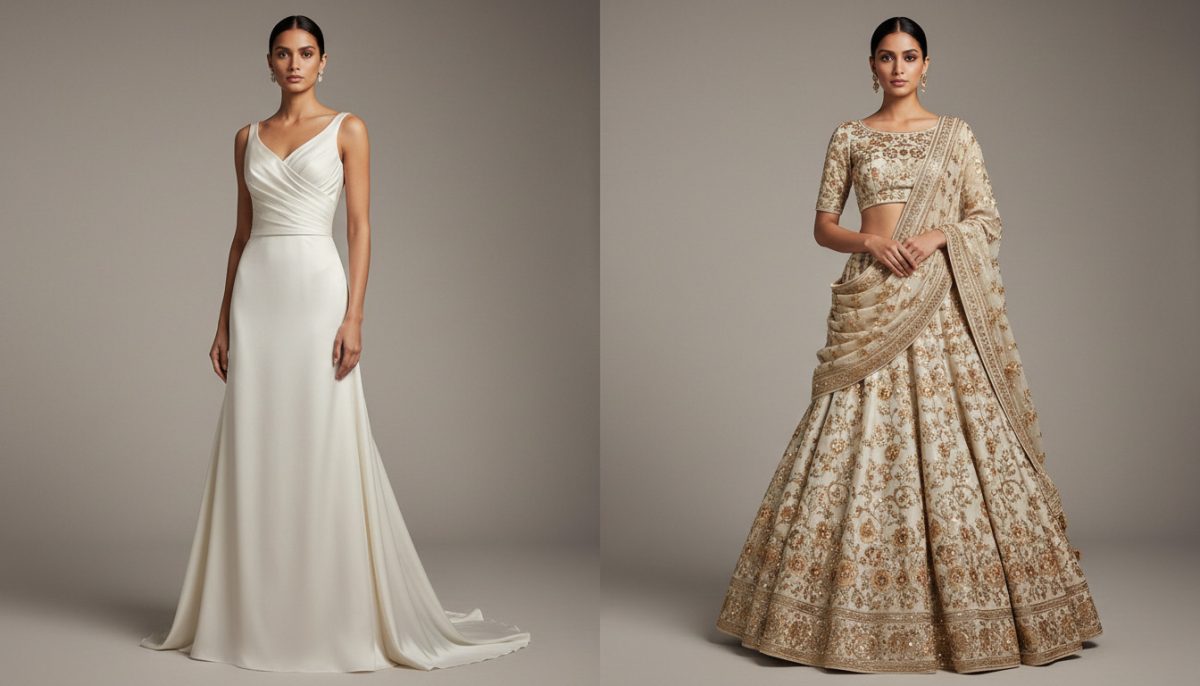
Choosing between a gown vs lehenga can feel overwhelming, especially when you want the perfect outfit for a wedding, reception, or engagement. Both outfits are elegant, statement-making, and popular for Indian celebrations but they differ significantly in structure, comfort, styling, and overall vibe.
If you’re confused about which one suits you better, this detailed comparison will help you make a confident decision.
What Is a Gown?
A gown is a one-piece outfit that flows from the shoulders down to the floor. It is commonly associated with Western fashion but has become increasingly popular in Indian weddings, especially for receptions and cocktail events.
Bridal and party gowns come in different silhouettes, including:
- A-line gown: fitted at the top and gradually flares out
- Ball gown: dramatic flare with voluminous skirt
- Mermaid gown: fitted through the body and flares at the bottom
- Sheath gown: straight and sleek
Gowns are usually made from fabrics like satin, tulle, net, velvet, or organza. Many feature sequins, beadwork, lace appliqué, or stone embellishments. Because it is a single stitched outfit, a gown offers a clean and structured appearance.
What Is a Lehenga?
A lehenga is a traditional Indian three-piece outfit consisting of:
- A long skirt
- A fitted blouse (choli)
- A dupatta
Lehengas are deeply rooted in Indian bridal fashion and are commonly worn for wedding ceremonies, sangeet, and festive celebrations.
Popular lehenga styles include:
- Circular lehenga: maximum flare and volume
- A-line lehenga: gradually flared shape
- Panelled lehenga: stitched panels for structured volume
- Mermaid (fish-cut) lehenga: fitted till the knees
Lehengas are often crafted from silk, velvet, brocade, georgette, or raw silk and feature intricate embroidery such as zari, zardozi, resham, mirror work, and sequins. Unlike a gown, a lehenga offers layered styling due to the dupatta and separate blouse.
Gown vs Lehenga: Key Differences at a Glance
Here’s a side-by-side comparison to simplify your decision:
| Feature | Gown | Lehenga |
| Structure | One-piece outfit | Three-piece (skirt, blouse, dupatta) |
| Cultural Origin | Western | Indian traditional |
| Silhouette | A-line, Mermaid, Ball gown | Circular, A-line, Panelled, Mermaid |
| Styling Element | Veil, trail | Dupatta draping |
| Comfort | Structured & streamlined | Flowy but layered |
| Weight | Moderate | Moderate to heavy |
| Reusability | Limited | Can restyle blouse/skirt |
| Maintenance | Easier storage | Requires embroidery care |
| Price Range | Mid to high | Wide range (budget to couture) |
Lehenga vs Gown Based on Comfort and Mobility
Comfort is one of the biggest deciding factors.
Gown Comfort
Because a gown is stitched as one piece, it eliminates the need to manage a dupatta. Movement feels more streamlined, especially in A-line or sheath styles. However, heavily layered ball gowns with can-can skirts can become bulky. Mermaid gowns may restrict leg movement slightly due to their fitted structure.
Lehenga Comfort
Lehengas distribute weight around the waist. Circular and panelled lehengas allow airflow and ease of movement, but heavy embroidery can add significant weight.
Managing the dupatta is another factor especially during long ceremonies or dancing. If comfort is your top priority, lightweight lehengas or minimal A-line gowns are ideal choices.
Gown vs Lehenga for Different Wedding Events
Wedding Ceremony
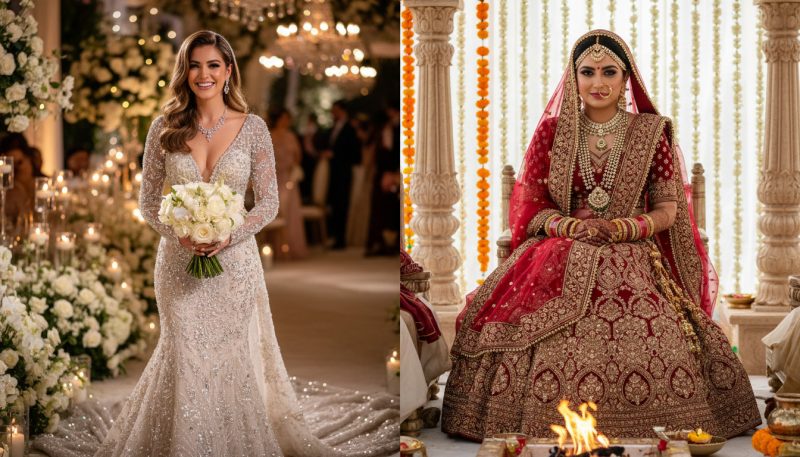
For traditional ceremonies, lehengas often feel more culturally aligned. Rich silk or velvet lehengas with zari embroidery create a regal bridal look. Gowns may work for Christian weddings or modern destination weddings.
Reception
Gowns are extremely popular for receptions. A-line or mermaid gowns create a glamorous evening look. However, heavily embellished lehengas also make a powerful reception statement.
Cocktail or Engagement
Sleek gowns are easier to carry at cocktail parties. Lightweight lehengas also work well if styled minimally.
Gown vs Lehenga Based on Body Type
Choosing based on body shape improves overall appearance.
Petite Body Type
- A-line gowns elongate the frame.
- High-waist lehengas can make legs look longer.
Tall Body Type
- Mermaid gowns enhance height.
- Panelled lehengas balance proportions beautifully.
Hourglass Shape
- Mermaid gowns highlight curves.
- Fitted lehenga cholis enhance waist definition.
Pear Shape
- A-line gowns balance hips.
- Circular lehengas create even flare.
Both outfits can flatter most body types when chosen in the right silhouette.
How to Choose Between Gown and Lehenga
Choose a gown if:
- You prefer a modern, Western silhouette.
- You want minimal layering.
- Your event is a reception or cocktail evening.
- You want ease of movement without handling a dupatta.
Choose a lehenga if:
- You want a traditional Indian bridal look.
- Your ceremony is culturally rooted.
- You enjoy layered styling.
- You want the option to restyle pieces later.
The best outfit ultimately depends on your comfort, event type, and personal aesthetic.
Final Verdict: Gown vs Lehenga
The debate between gown vs lehenga isn’t about which one is better universally, it’s about which one suits your occasion, comfort level, and style preference.
If you prefer modern elegance and minimal layering, a gown may be ideal. If you love tradition, rich embroidery, and cultural depth, a lehenga could be the better choice. Both outfits offer timeless beauty, the right one is the one that makes you feel confident and comfortable.
Frequently Asked Questions
What is the difference between lehenga and gown?
The main difference between a lehenga and a gown is their structure. A lehenga is a three-piece Indian outfit with a skirt, choli, and dupatta, while a gown is a one-piece dress with a stitched silhouette. Lehengas are traditional, whereas gowns are generally Western in style.
What is the difference between lehenga and choli?
A lehenga is the long skirt portion of the outfit, while a choli is the fitted blouse worn with it. Together, they form a lehenga choli set, usually styled with a dupatta. The lehenga defines the flare, and the choli defines the upper-body fit.
Can we convert lehenga into gown?
Yes, a lehenga can be converted into a gown by stitching the skirt and blouse into a single structured outfit. This works best with lightweight or minimally embroidered lehengas. Heavily embroidered bridal lehengas may be harder to alter.
Which is best for engagement, lehenga or gown?
Both can work for an engagement depending on the event style. A gown suits modern or evening parties, while a lehenga is better for traditional ceremonies. The best choice depends on comfort and the overall theme of the function.


 New Arrivals
 Ready To Wear
 Kid’s Clothing
 Wedding Wear
 Men’s Wear
 Jewellery
 Designers
 Sale
Sale