Blog
Formal Pakistani Dresses: A UK Buyer’s Guide to Styles, Fabrics and Prices
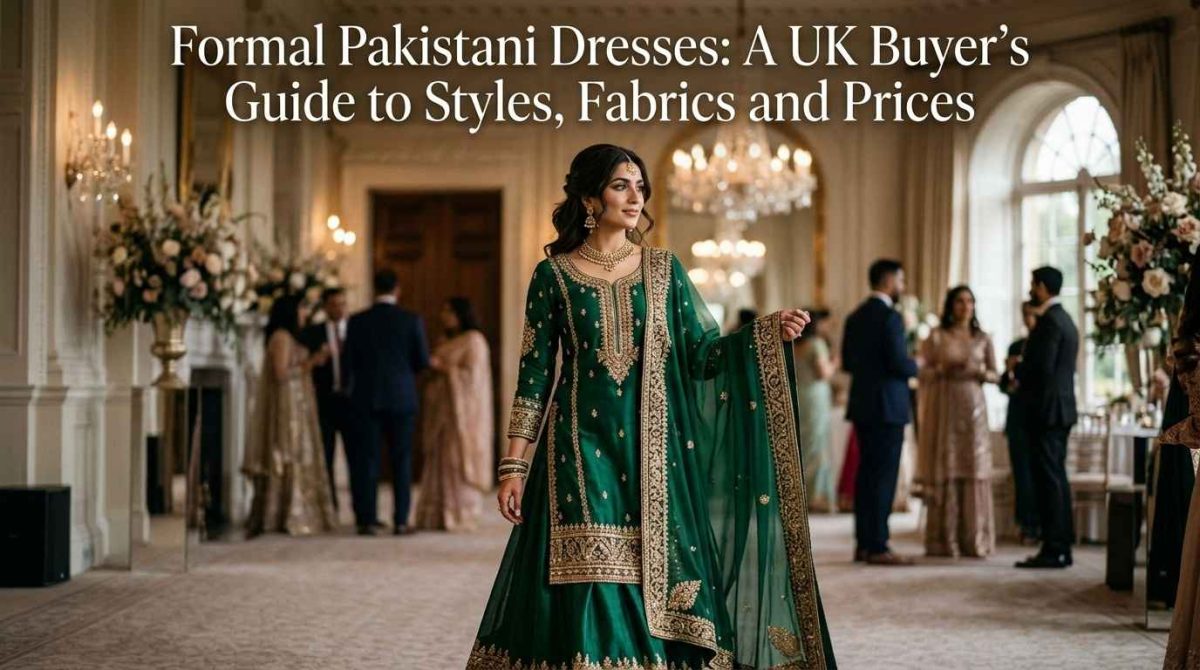
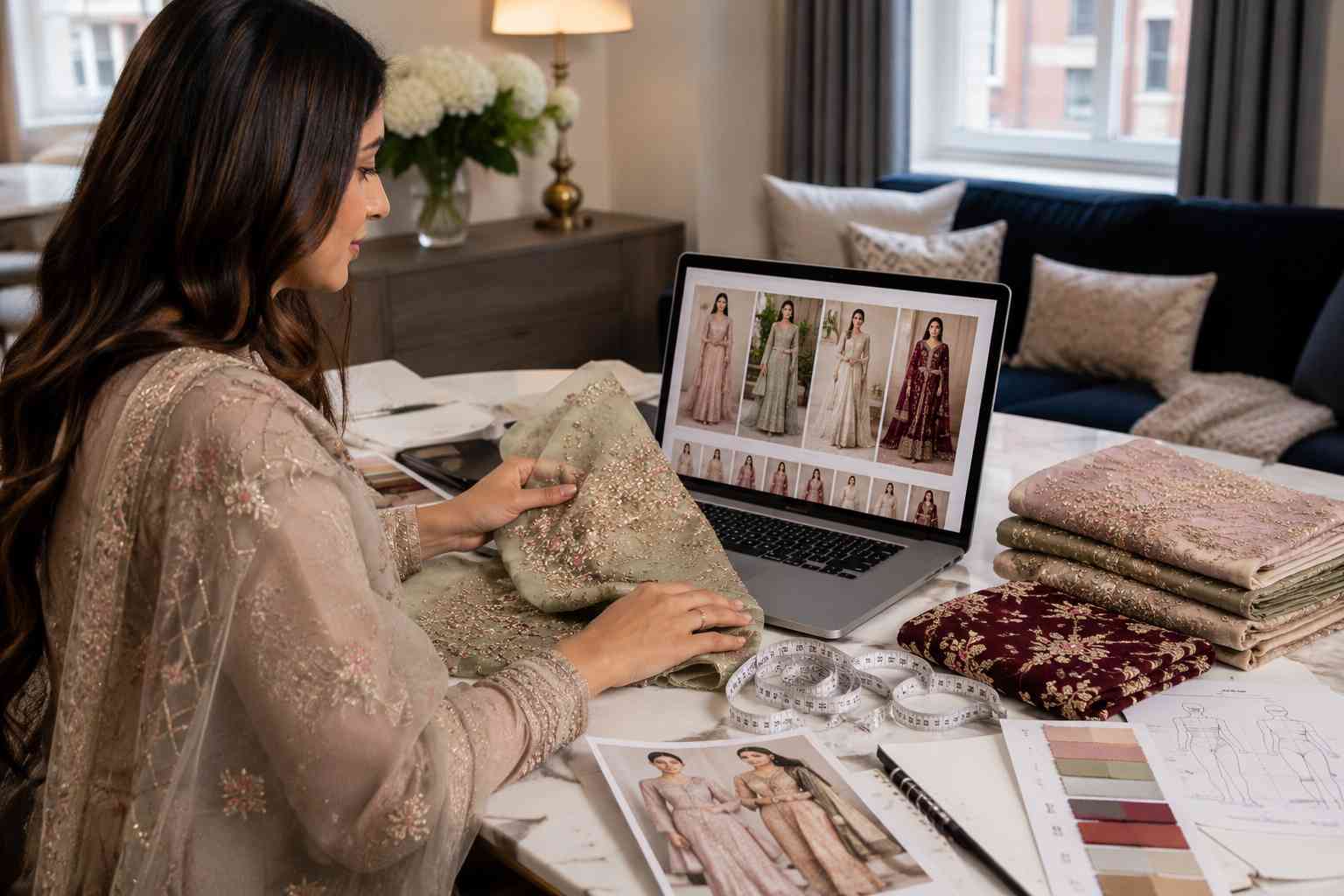
Shopping for formal Pakistani dresses online is harder than it should be. You get a styled photo and a price tag, but rarely a straight answer on what suits a nikkah over a walima, what the handwork is worth, or why a UK rail charges double for the same outfit. So here is the plain version: silhouettes, fabrics worth the cost, dated prices in rupees and pounds, and a simple way to choose.
What Counts as Formal Wear in Pakistani Dresses?
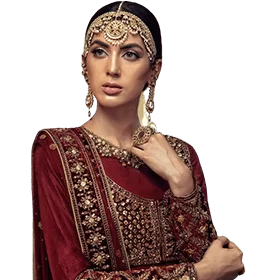
Almost every label sorts its formals into two buckets, light and heavy, and that one split shapes the rest of your decision. Light formals lean on softer fabrics like chiffon or cotton net with restrained embroidery, and they belong at dinners, daytime functions and smaller mehndi events. Heavy formals pile dense work over jamawar or raw silk and hold a structured shape, which is what the baraat, walima and reception call for.
Place your event on that line first to avoid overspending on a one-time wear or arriving underdressed.
Silhouettes You Will Actually See
The shalwar kameez is the dependable formal that alters easily and works anywhere. The anarkali falls long and fitted from the bust, which suits most figures. A lehenga choli, with its full skirt, cropped blouse and dupatta, is the most celebratory.
Sharara and gharara sets use wide, gathered legs for a richer, old-school feel. Sarees, usually chiffon or silk, surface mostly at receptions and formal dinners.
How to Read Fabric and Embroidery on Formal Dresses Pakistani Buyers Love
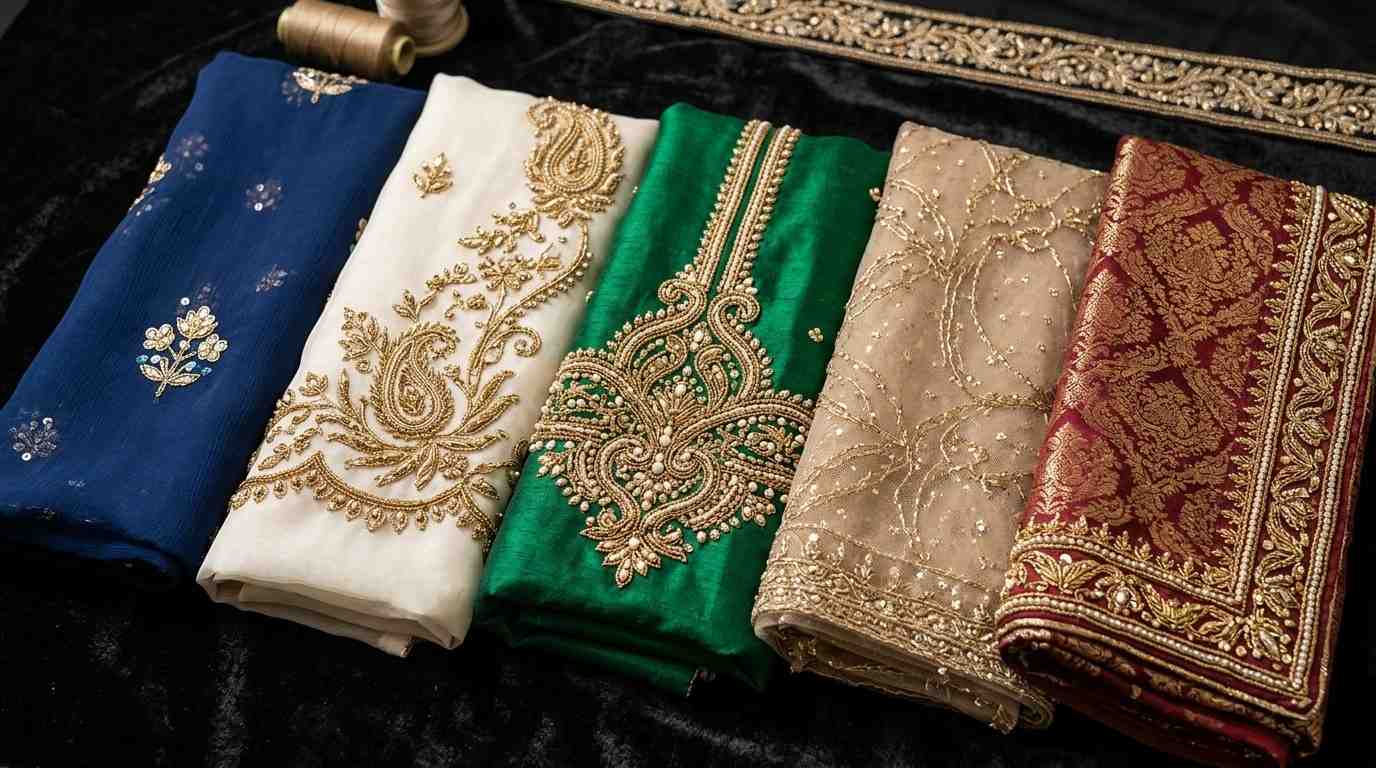
Quality lives in the cloth. Chiffon and organza fall beautifully and look great on camera, but they catch and snag. Net carries weight and embroidery without collapsing, which is why Heavy Formals default to it. Raw silk and jamawar sit heavier and stay crisp across a long evening.
Common Embroidery Styles
Stitch names matter too.
- Zardozi – Raised metallic goldwork used on bridal and walima pieces.
- Dabka – Tight coiled wire embroidery that reflects light beautifully.
- Kora – Handworked metallic detailing often paired with dabka.
- Gota – Flat metallic ribbon work commonly used on mehndi outfits.
- Kamdani (Mukaish) – Tiny metallic dots scattered across lighter fabrics.
If a listing only says embellished, ask which of these techniques it actually includes.
Formal Dresses Pakistani Prices in Rupees and Pounds
What you pay tracks fabric and the amount of handwork far more than the logo. In Pakistan, Basic formals open around Rs. 8,000, and designer luxury pret typically lands between Rs. 25,000 and Rs. 80,000.
In the UK, the same dress costs more because sellers absorb import duty, stock UK sizes and handle local returns.
Price Bands
| Category | Pakistan (PKR) | UK (GBP) |
|---|---|---|
| Entry / Light Formals | Rs. 8,000+ | £40–£80 |
| Designer Luxury Pret | Rs. 25,000–80,000 | £80–£180 |
| Heavy / Wedding Formals | Rs. 80,000+ | £180–£450+ |
Buying Formal Pakistani Dresses: What UK Shoppers Should Know
Two decisions settle most UK orders.
Stitched vs Unstitched
Unstitched outfits provide fabric that can be tailored to your exact measurements. This helps with non-standard sizing but adds tailoring costs and waiting time.
Stitched outfits arrive ready to wear in standard UK sizes and usually require only minor alterations.
Original vs Replica
Replicas often photograph well but rarely match originals in embroidery placement, fabric quality or resale value.
That is why retailers that work directly with designers, such as Imani Studio with Maria B, Sana Safinaz, Asim Jofa and Zara Shahjahan, are often worth considering. They offer genuine pieces and wider size availability, including petite and plus-size options.
For events with tight deadlines, ready-to-wear pieces are usually safer than made-to-order garments.
Conclusion
Pick for the event first, then choose the fabric for the season, and finally decide how much you want to spend based on how often you will wear the outfit.
Light formals suit smaller functions and repeat wear. Heavy formals suits are designed for major celebrations where the outfit plays a central role. When authenticity matters, a genuine designer piece almost always outperforms a replica in quality, comfort and longevity.
Frequently Asked Questions
What is the difference between formal wear and luxury pret?
Luxury pret is ready-to-wear fashion with lighter embellishments. Formal wear is generally more heavily embroidered and often made for special occasions.
How long do formal Pakistani dresses take to arrive?
Luxury pret is ready-to-wear fashion with lighter embellishments. Formal wear is generally more heavily embroidered and often made for special occasions.
What should I wear to a mehndi versus a walima?
Choose lighter, colourful outfits with gota work for mehndi events. Walimas generally call for heavier fabrics and embellishments such as zardozi or dabka.
How do I care for embroidered formal dresses?
Dry clean only. Store garments in breathable garment bags away from direct sunlight and keep heavily embroidered pieces flat when possible.

 New Arrivals
 Ready To Wear
 Kid’s Clothing
 Wedding Wear
 Men’s Wear
 Jewellery
 Designers
 Sale
Sale