

Blog
What Fabrics and Embellishments Are Used in Authentic Pakistani Bridal Couture?
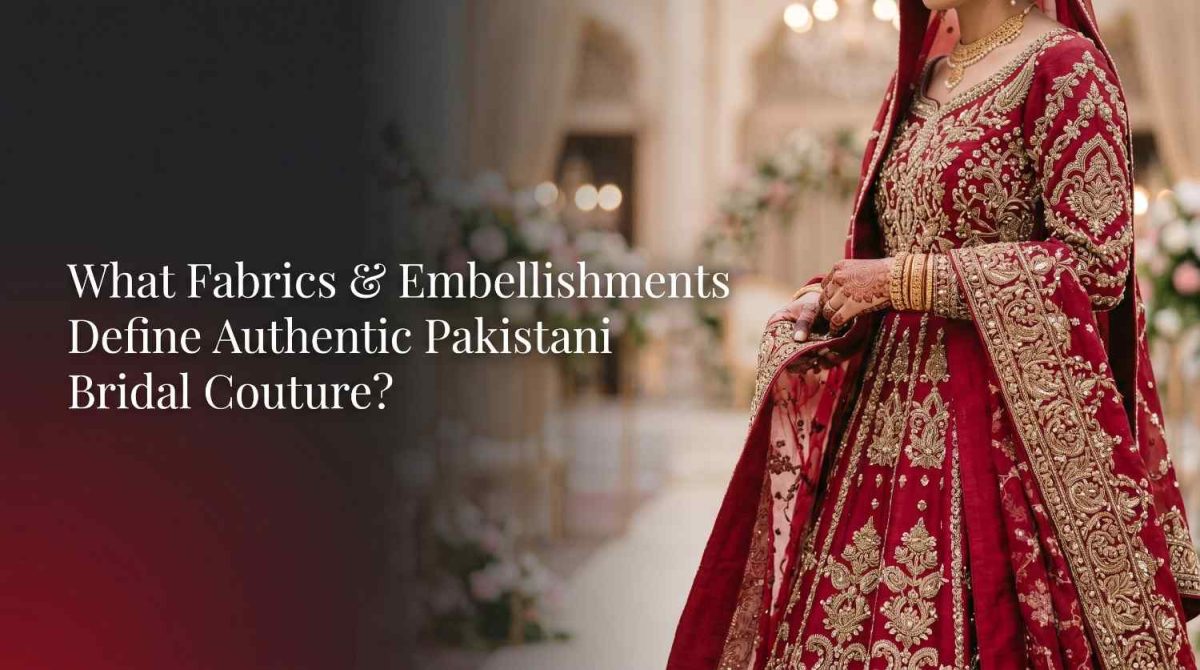
A Pakistani bridal outfit is one of the most expensive things many brides ever buy, and almost all of that value sits in the cloth and the handwork, not the label. This guide covers the fabrics and embellishments used in real Pakistani bridal couture, and how to tell a genuine piece from a convincing replica.
- Authentic Pakistani bridal couture is built on heavyweight fabrics: raw silk, jamawar, banarsi silk, velvet, organza, and tissue.
- The look comes from hand embellishment: zardozi, kora, dabka, naqshi, tilla, zari, gota, and resham, layered with pearls, sequins, and stones.
- Zardozi and dabka are not rival techniques. Zardozi is the overall metal-thread craft, and dabka is one coiled thread used to create it.
- The fastest way to spot a replica is weight and the reverse side. Real metal-thread work is heavy, and the back shows clean handwork.
Authentic Pakistani bridal couture uses heavyweight silk-family fabrics as its base, finished with hand-applied metallic embroidery such as zardozi, dabka, and kora, alongside gota, tilla, resham, pearls, and stones. The fabric carries the embellishment, which separates true couture from a printed or machine-stitched copy.
This matters most when buying remotely, which many UK brides now do. Not every beautiful outfit is fully hand-embroidered, and that is fine, but the guidance below is about spotting couture-grade work.
What Fabrics Are Used in Authentic Pakistani Bridal Couture?
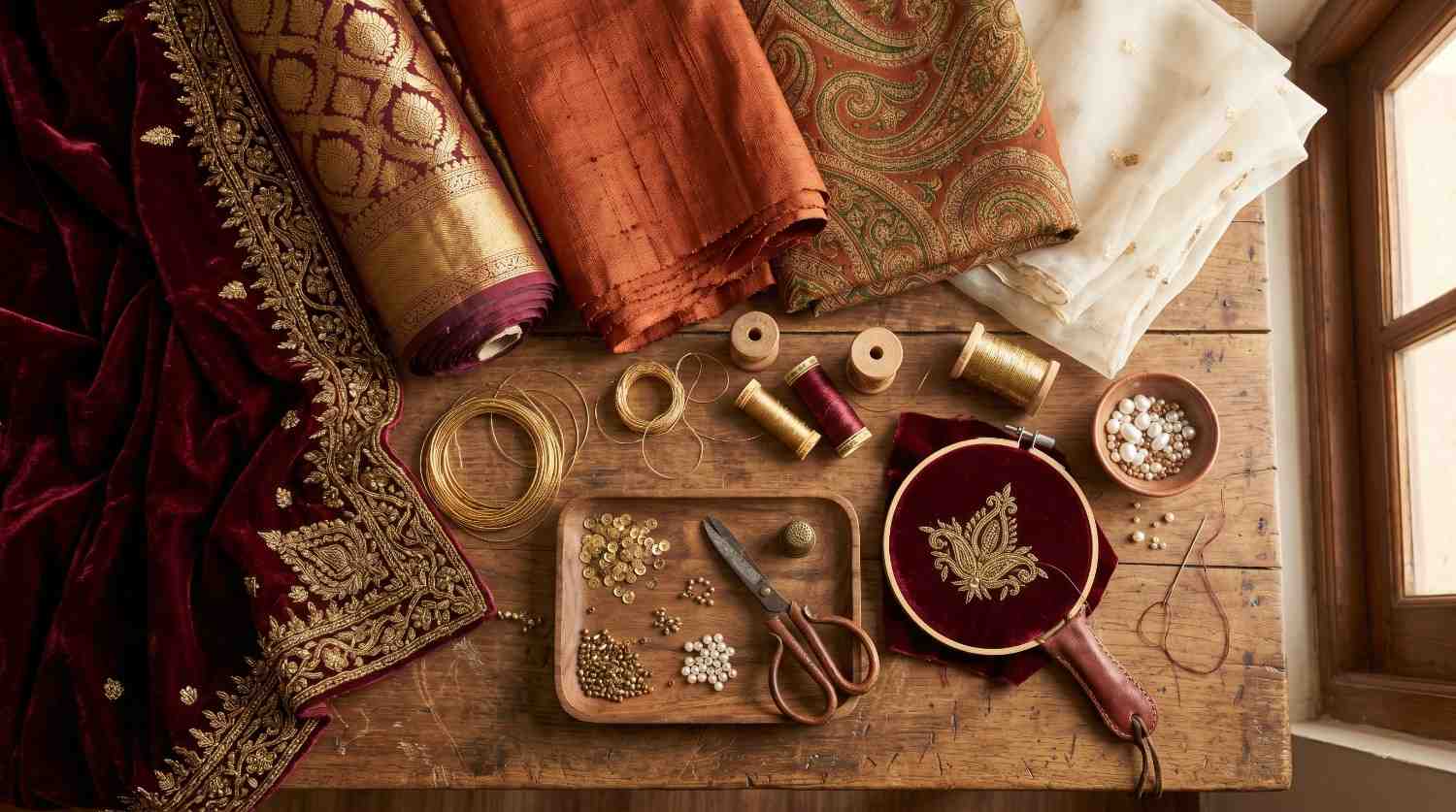
The base of most authentic Pakistani bridal couture is a silk-family fabric, chosen for how well it holds heavy embroidery. Raw silk is the most common because it is firm enough to support dense work. Choosing the right bridal lehenga fabric is a bride’s first real decision, since it sets how much embellishment the piece can carry. A velvet Pakistani bridal lehenga is the classic winter choice, as the dense pile holds zardozi and stone work well.
| Fabric | Where it is used | Why it is chosen |
| Raw silk | Lehengas, full bridals | Firm, holds heavy embroidery |
| Velvet | Winter bridals, baraat lehengas | Rich texture, structured drape |
| Jamawar / banarsi | Ghararas, formal sets | Woven motifs and zari |
| Organza / net / tissue | Dupattas, lighter layers | Sheer, light-catching |
One thing to watch: fabric names are used loosely in marketing. With the bridal dresses Pakistan produces, fabric grade is usually what justifies the price gap between two similar-looking outfits online.
What Embellishments Make Pakistani Bridal Couture Authentic?
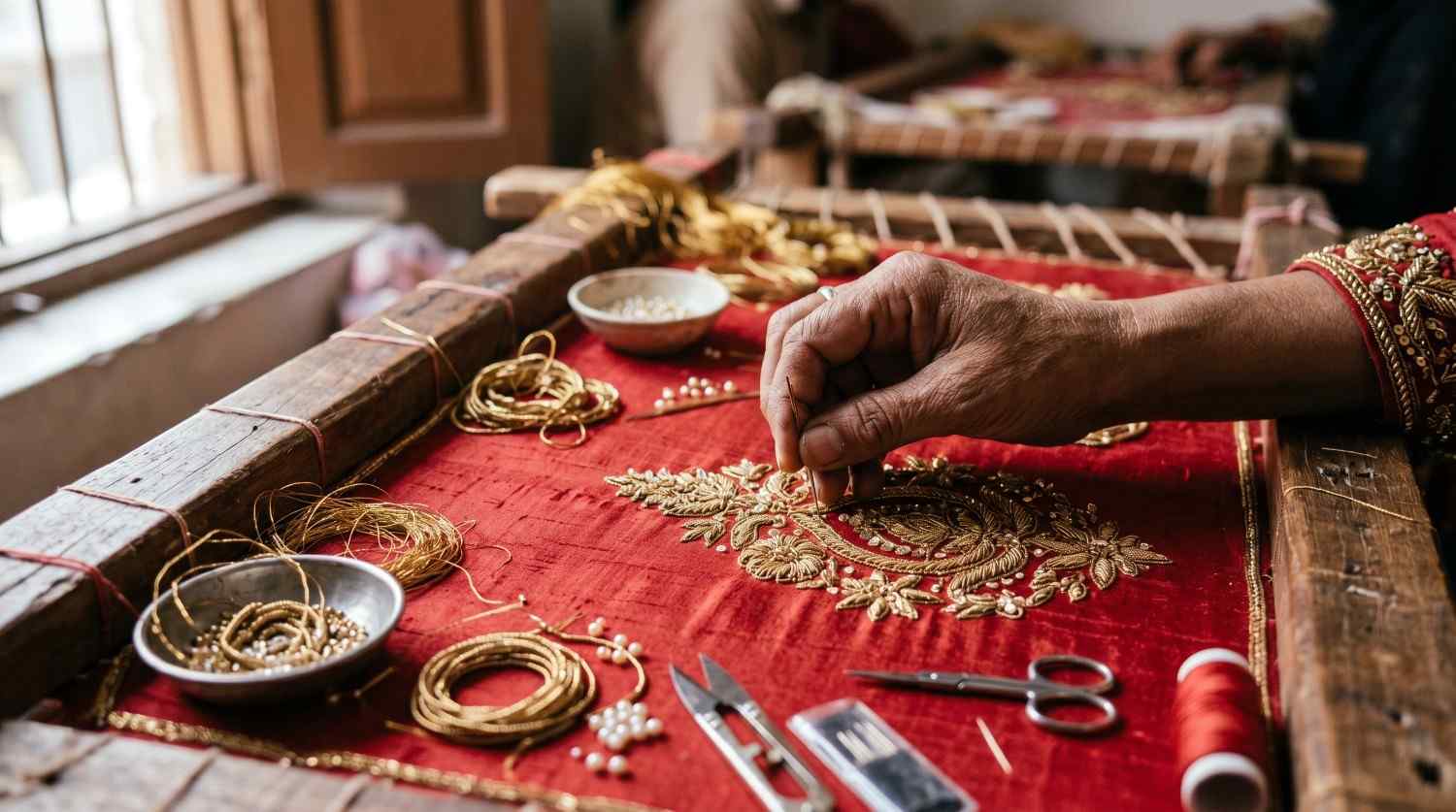
Authentic couture is defined by hand-applied metallic embroidery, with zardozi as the headline technique. Zardozi is dense metal-thread work that builds raised, light-catching motifs, made from three elements: kora (a softer, stretchy thread), dabka (a stiffer, structured thread), and naqshi (a shiny thread for fine detail). Around these sit gota (metallic ribbon), tilla and zari (metallic borders), and resham (coloured silk thread for florals). Pieces are finished with hand-applied stones, sequins, pearls, and mukaish (tiny pressed metal).
Zardozi vs Dabka: What Is the Difference?
The zardozi vs dabka question confuses many brides, but they are not competing techniques. Zardozi is the overall goldwork craft. Dabka is one of the coiled threads used inside it, alongside kora and naqshi. Asking zardozi vs dabka is like asking cake vs flour, where one is the whole and the other an ingredient.
| Zardozi | Dabka | |
| What it is | The overall metal-thread craft | A single coiled metallic thread |
| Role | The finished raised goldwork | One component used to create zardozi |
| Texture | Dense, layered, raised | Stiff, springy, defines outlines |
How Do Fabrics and Embellishments Change Across Mehndi, Baraat, and Walima?
Pakistani wedding attire changes by function. Mehndi outfits use lighter, brighter fabrics with gota, mirror work, and floral resham. The baraat outfit carries the heaviest zardozi, dabka, and stone work, often in red. The walima leans elegant and less dense, with pastels now popular. A full bridal set is three fabric-and-embellishment decisions, so plan them together. These are conventions, not rules.
How Do You Tell Authentic Hand-Done Couture From a Machine-Made Replica?
Most guides list the techniques but never explain how to verify authenticity, which is the question that matters when a replica looks identical in photos. The clearest tells are physical. Authentic metal-thread couture is heavy in the hand, because real kora, dabka, and stones add weight a copy cannot fake. Turn the panel over: hand embroidery shows slightly irregular stitching on the reverse, while machine work shows uniform rows and a flat back. Hand-placed stones vary in size and spacing, and machine work repeats evenly.
This is why Imani Studio sources genuine designer pieces rather than replicas, and why desingers boutique that deals in authentic couture can confirm fabric content, designer provenance, and whether the work is hand-done before you commit. Photographs rarely prove this, so ask for close reverse-side images and the designer name.
How Can a UK Bride Buy Authentic Pakistani Bridal Couture Without Flying to Pakistan?
A UK bride can buy through a specialist boutique that sources directly from designers in Pakistan, stitches to measurement, and ships to the UK. Authentic couture costs more because the price reflects real materials and weeks of handwork, not branding, so choose a seller that stocks genuine labels. Imani Studio works this way from the UK. In one recorded order, a customer had a designer outfit sourced, stitched, and shipped from Pakistan in around three weeks, with updates throughout. Heavy handwork needs lead time, so start early and confirm delivery dates in writing.
Frequently Asked Questions
What is the most popular fabric for bridal dresses in Pakistan?
Raw silk is the most widely used base because it holds heavy embroidery well. Velvet suits winter weddings, jamawar and banarsi silk suit ghararas, and organza, net, and tissue are used for dupattas and lighter layers.
What is the difference between zardozi and dabka?
They are not competing techniques. Zardozi is the overall metal-thread embroidery craft that creates raised goldwork. Dabka is one of the coiled threads used to make it, alongside kora and naqshi.
Is zardozi done by hand or by machine?
Authentic zardozi is hand embroidery, stitched by a karigar over many hours. Machine versions are cheaper but lighter and lack the hand-placed irregularity. Turn the fabric over and feel its weight to tell the difference.
Is velvet good for a Pakistani bridal lehenga?
Yes, for winter. A velvet Pakistani bridal lehenga holds heavy zardozi and stone work well and photographs deep and rich. It is warm, so raw silk or organza is better for summer weddings.
Does Imani Studio sell authentic designer bridal couture or replicas?
Imani Studio sells authentic Pakistani designer bridal couture, not replicas. It carries genuine designer labels and can confirm fabric content and designer provenance before purchase.
Can Imani Studio source and ship Pakistani bridal couture to the UK?
Yes. Imani Studio is UK-based and arranges sourcing, stitching to measurement, and worldwide delivery. One documented order was sourced, stitched, and shipped from Pakistan to the UK in around three weeks.


 New Arrivals
 Ready To Wear
 Kid’s Clothing
 Wedding Wear
 Men’s Wear
 Jewellery
 Designers
 Sale
Sale