

Blog
Why Do Pakistani Wedding Suits and Bridal Lehengas Fade or Lose Embellishments After Dry Cleaning?
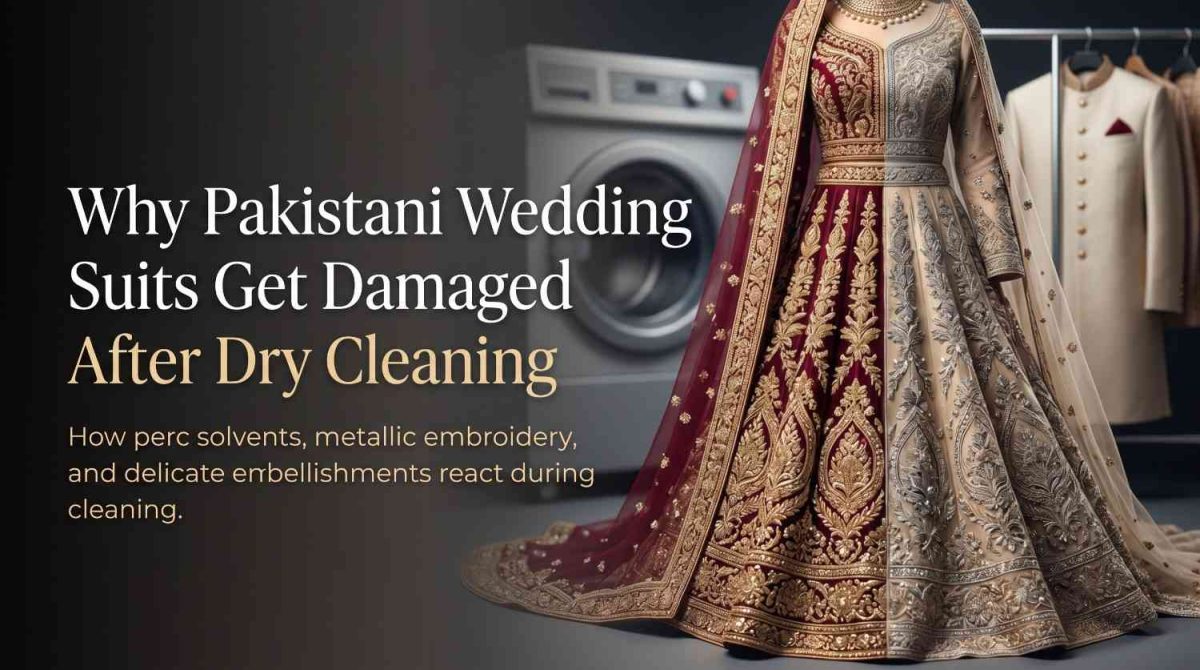
You sent your Pakistani wedding suit to the dry cleaner and it came back looking worse than before. The gold threadwork is dull, some stones have fallen off, and the fabric looks nothing like it did. You are not imagining it, and the dry cleaner did not necessarily do anything wrong. The problem runs much deeper than that.
TL;DR
- Standard dry cleaning uses a solvent called perc that strips the metallic coating off zardozi, kora, dabka, and tilla embroidery, leaving dull, brittle, grey wire that cannot be restored.
- Stones and sequins on Pakistani suits are often attached with heat-activated adhesive, not stitched. Dry cleaning solvent dissolves that adhesive and the embellishments fall off during the next wear.
- Most high-street dry cleaners in the UK have no specialist training in South Asian bridal garments. They use the same cycle they would on a sequined Western gown, which is not the same thing at all.
- The safest approach for heavily embroidered pieces is a specialist ethnic wear dry cleaner using hydrocarbon or silicone-based solvents, not perc.
- For light stains between wears, cold spot cleaning and airing the garment is far safer than sending it to any cleaner at all.
Pakistani wedding suits fade and lose embellishments after dry cleaning because the standard solvent used in most UK dry cleaners, perchloroethylene (perc), chemically reacts with the metallic materials in zardozi, kora, dabka, and tilla embroidery. It strips the gold or silver coating and leaves behind dull, brittle wire. The machine agitation that loosens dirt also deforms hand-coiled metalwork and dissolves the adhesive holding stones and sequins in place.
The dry cleaner did not necessarily make a mistake. The process they used was simply never designed for garments built this way.
These suits are constructed from specialist materials, metallic wire, silk thread, adhesive-bonded stones, that behave completely differently from the fabrics standard dry cleaning was developed for.
What Does the Dry Cleaning Solvent Actually Do to Pakistani Embroidery?
Perchloroethylene, called perc, is the solvent used in the majority of commercial dry cleaning machines across the UK. It works well on oils, makeup, and food stains from standard fabrics. On metallic embroidery, it behaves like a corrosive stripping agent.
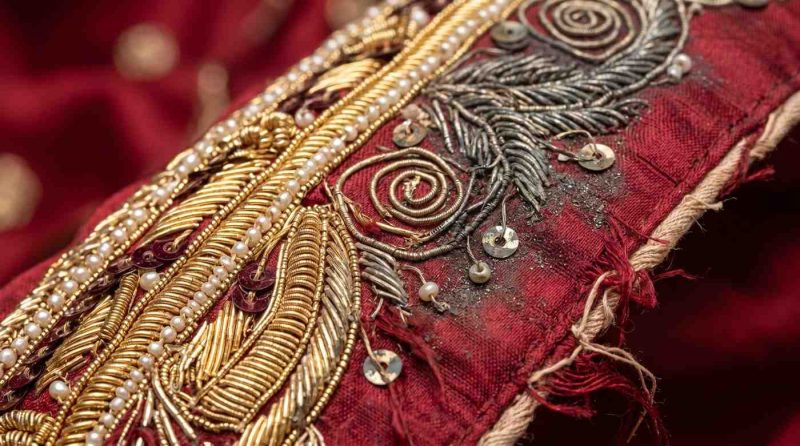
Pakistani formal and bridal wear uses embroidery that is fundamentally metallic in construction. Kora is a coiled metal wire. Dabka is a flattened spiral wire. Tilla is pure gold or silver thread. Zardozi combines all of these with added stones, sequins, and pearls built into dense raised motifs. Each of these materials has a thin metallic coating or lacquer that holds its colour and shine. Perc breaks that coating down.
Residual perc trapped in dense weave areas then triggers oxidisation. You see this as blackened, dull threads around seams. Eventually the lacquer binding fails completely and the threads become brittle, leaving a fine metallic dust on the fabric. Tilla thread suffers first because it has the thinnest protective layer. Zardozi, which combines multiple metallic techniques in one motif, takes damage across all layers at the same time.
Why Do the Stones and Beads Fall Off After Dry Cleaning?
Many embellishments on Pakistani suits are not hand-stitched. They are glued. Flat sequins (sitara), glass stones, and decorative beads are frequently attached at production stage with a heat-activated adhesive, including on ready-to-wear pieces from mid-range labels. The adhesive is reliable under normal wear but it dissolves in dry cleaning solvent. The garment may come out of the machine looking intact. The bond has already broken. The stones fall off during pressing, handling, or the next time you wear it.
Even hand-stitched embellishments are not fully safe. Pakistani bridal embroidery is anchored through fine silk threads. The drum agitation in a dry cleaning machine, even on a gentle cycle, creates friction and tension those anchor threads were never designed to handle.
If you want to check whether your embellishments are glued or sewn, turn the garment inside out. Glued pieces leave no thread anchor on the reverse of the fabric. Stitched pieces will show small thread loops or knots through the base.
Which Embroidery Types Are at Highest Risk?
| Embroidery Type | What It Is | Risk Level | Why |
| Tilla | Pure gold or silver thread | Very high | Thinnest metallic coating, oxidises fastest |
| Kora | Coiled metal wire | Very high | Wire deforms under agitation, lacquer strips |
| Dabka | Flattened spiral wire | Very high | Same as kora, seam areas most vulnerable |
| Zardozi | Multi-technique metallic embroidery | Highest | Combines all metallic types, damage is cumulative |
| Resham | Coloured silk thread | Medium | Colour bleed risk on pale fabrics |
| Gota-patti | Metallic ribbon trim | Medium to high | Ribbon edges fray, stitching separates |
| Sequins, glued | Adhesive-backed flat embellishments | High | Adhesive dissolves in solvent |
| Sequins, hand-sewn | Individually stitched flat discs | Lower | Structurally stable if anchor threads are intact |
The heaviest bridal pieces, those combining zardozi, kora, dabka, tilla, and stones, are the highest-risk garments and the least appropriate for standard dry cleaning.
Why Do Most UK Dry Cleaners Not Know This?
Pakistani formal wear is a specialist material category that general dry cleaners have no training in. Most high-street dry cleaners in the UK look at a Pakistani lehenga and categorise it as an embellished formal garment. They apply the same generic cycle they would use on a sequined Western evening gown. The construction is entirely different. The materials are different. The way embellishments are attached is different. The risk profile is different.
A professional dry cleaner is trained to assess fabric type, colourfastness, stitching, and decorations before deciding on treatment. But that assessment only works if the cleaner has experience with the specific garment type. Without knowledge of how South Asian bridal embroidery is constructed, even a careful cleaner cannot make the right call.
In cities with large South Asian communities like Birmingham, Bradford, Leicester, and London, specialist ethnic garment care services exist. In smaller towns they are rare, and finding one that genuinely understands Pakistani bridal construction takes some research.
What Is the Safest Way to Clean a Pakistani Wedding Suit?
The answer depends on what type of suit it is and what type of embroidery it has.
| Garment Type | Safe Method | Avoid |
| Bridal lehenga with zardozi, kora, or dabka | Specialist ethnic dry cleaner, hydrocarbon or silicone solvent only | Standard perc dry cleaner, steam press directly on embroidery |
| Party wear with resham or gota-patti | Cold hand-wash for resham only, or specialist cleaner | Machine wash, tumble dry, hot press |
| Dupatta with metallic border | Air it out, spot clean the margins only | Full immersion in any liquid, standard dry clean |
| Light lawn or cotton with embroidery | Gentle cold hand-wash inside out | Machine spin, heat dry |
Before handing any heavily embroidered garment to a dry cleaner, ask two questions. First, do they use perc or an alternative solvent. Hydrocarbon and silicone-based solvents are gentler on metallic embroidery. Second, do they have specific experience with South Asian or Pakistani bridal wear. A specialist should inspect the garment before accepting it and flag any high-risk areas before touching it.
Can the Damage Be Reversed After Dry Cleaning?
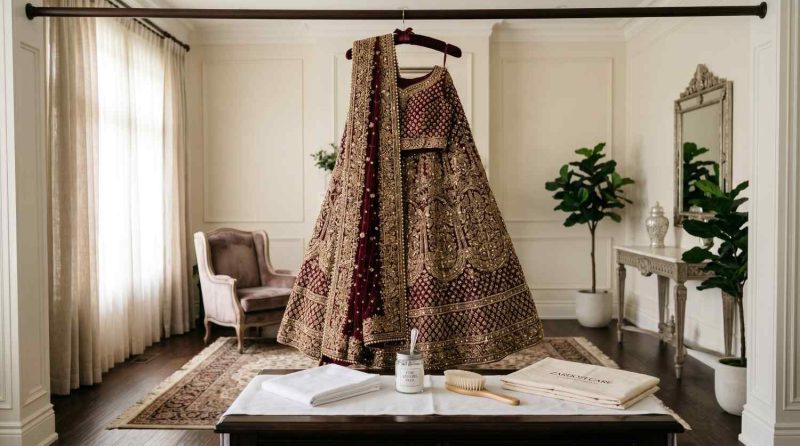
For metallic fade, almost never.Once perc strips the lacquer from kora or tilla wire, the original finish is gone. No cleaning or treatment process restores oxidised metalwork. Very light surface tarnishing can sometimes be partially improved by a specialist, but heavy dullness is permanent.
Lost stones and beads can sometimes be repaired if you kept the fallen pieces. A Pakistani karigar or specialist ethnic alteration service can re-attach them, though it is visible on close inspection and the cost varies depending on how much has been lost.
Resham colour bleed onto pale base fabric is also usually permanent on natural silk or chiffon. Once the dye has transferred into the fibres, it does not come out.
How Should You Handle a Pakistani Wedding Suit Between Wears?
Pakistani formal wear does not need cleaning after every wear. Over-cleaning causes more cumulative damage than wearing. After each wear, hang the garment in a well-ventilated room away from direct sunlight for 24 hours. This removes most odour without any chemical contact at all.
For a localised stain, food, makeup, or henna, blot the area immediately with a clean white cloth dampened with cold water. Do not rub. Do not apply detergent directly onto embroidered areas. For an oil-based stain near embellishments, press a small amount of talcum powder onto the spot, let it sit for an hour to absorb the oil, then brush it gently away. This handles most post-event stains without putting the whole garment through any kind of cleaning process.
If you are storing the suit long-term, wrap it in acid-free tissue paper and keep it in a breathable garment bag away from light and moisture. Plastic storage bags trap humidity and accelerate tarnishing on metallic embroidery.
Frequently Asked Question
Is it safe to dry clean a Pakistani bridal lehenga with zardozi embroidery?
Not at a standard dry cleaner using perc. Perc reacts with the metallic coating on zardozi, kora, dabka, and tilla embroidery, stripping the gold or silver finish and leaving dull, brittle wire behind. If professional cleaning is necessary, take it to a specialist ethnic wear cleaner who uses hydrocarbon or silicone-based solvents and has direct experience with South Asian bridal garments. Ask about the solvent before handing it over. The cleaner should also inspect the piece and discuss any high-risk areas with you before starting.
Why did the stones fall off my Pakistani suit after dry cleaning?
Many embellishments on Pakistani suits are attached with heat-activated adhesive rather than stitched individually. Dry cleaning solvent dissolves this adhesive, breaking the bond during the cleaning cycle. The stones may not fall off immediately but release during pressing, handling, or the next wear. To check whether your embellishments are glued or sewn, look at the inside of the fabric. Glued pieces leave no thread anchor visible on the reverse. Re-attachment by a specialist karigar is possible if you have kept the fallen pieces.
Why did the stones fall off my Pakistani suit after dry cleaning?
Many embellishments on Pakistani suits are attached with heat-activated adhesive rather than stitched individually. Dry cleaning solvent dissolves this adhesive, breaking the bond during the cleaning cycle. The stones may not fall off immediately but release during pressing, handling, or the next wear. To check whether your embellishments are glued or sewn, look at the inside of the fabric. Glued pieces leave no thread anchor visible on the reverse. Re-attachment by a specialist karigar is possible if you have kept the fallen pieces.
Can I hand-wash a Pakistani party wear suit at home?
Suits with resham silk thread embroidery on cotton or lawn can generally be hand-washed in cold water with a mild detergent, turned inside out. Suits with metallic embroidery, zardozi, kora, dabka, tilla, or gota-patti, should not be fully immersed in water. The metal wire used in these techniques is vulnerable to oxidisation when wet, and repeated water exposure weakens the anchor threads over time. For metallic embroidery, spot cleaning and specialist professional care are always the safer option.
How do I find a dry cleaner in the UK that is safe for Pakistani wedding suits?
Search for dry cleaners that specifically mention experience with South Asian, Indian, or Pakistani bridal and formal wear. Ask whether they use perc or alternative solvents. A genuine specialist will ask you about the embroidery type, inspect the garment before accepting it, and cover embroidered sections during any pressing stage. In cities like Birmingham, Bradford, Leicester, and London, specialist ethnic garment care services are more commonly available. In smaller towns they are harder to find and worth contacting ahead of collection day rather than turning up and hoping.
If a suit has already been damaged by dry cleaning, is there anything that can be done?
For metallic fade and dullness, usually not. The lacquer coating once stripped by perc cannot be chemically restored, and heavy tarnishing on kora or tilla is typically permanent. Lost stones can sometimes be re-attached by a skilled karigar if you still have the pieces. Resham colour bleed onto pale fabric is also generally permanent on silk or chiffon. A specialist ethnic dry cleaner may be able to assess mild surface dullness and attempt a targeted treatment, but this should be checked case by case rather than assumed to work.
Does Imani Studio offer advice on caring for suits after purchase?
Yes. Imani Studio is a UK-based Pakistani designer boutique that has been stocking and advising customers on bridal and formal wear since 2005. For customers who purchase from Imani, care guidance specific to the garment and its embroidery type is available. The team stocks labels including Maria B, Sana Safinaz, and Asim Jofa and understands the construction of these pieces in a way that a general dry cleaner would not.


 New Arrivals
 Ready To Wear
 Kid’s Clothing
 Wedding Wear
 Men’s Wear
 Jewellery
 Designers
 Sale
Sale