
Blog
Pakistani Bridal Dresses : A 2026 Styles & Price Guide
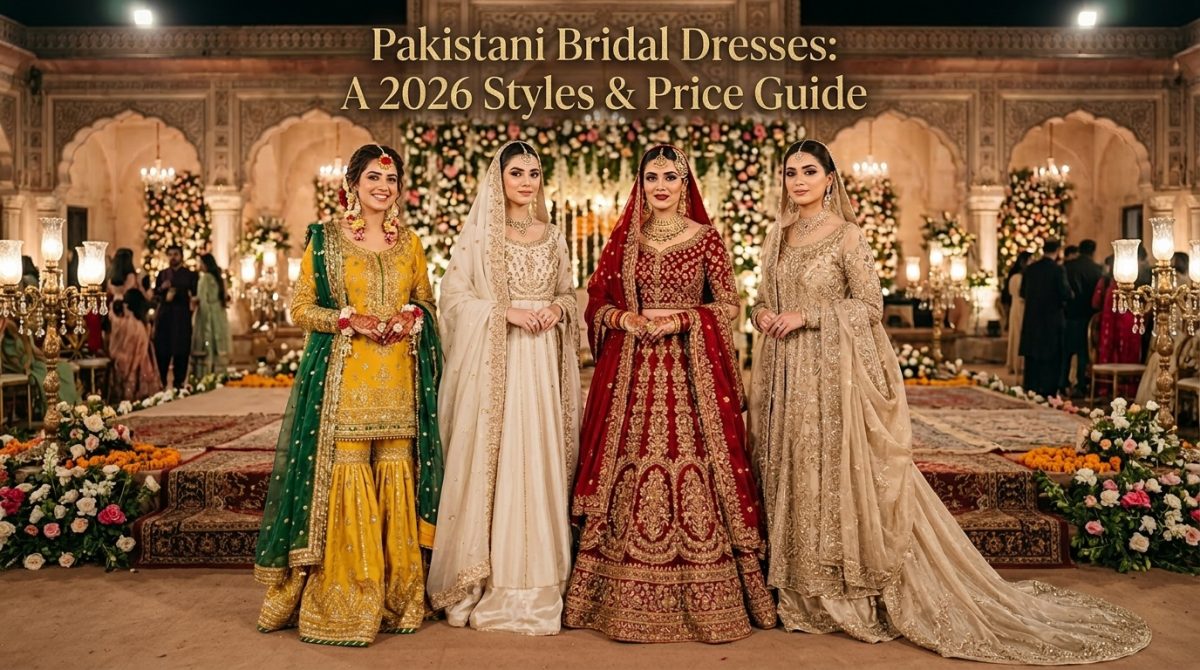
Choosing Pakistani bridal dresses is rarely a single purchase. You are dressing for three or four functions, each with its own colour rules, fabric and budget, and the baraat outfit is the one that shows up in every photograph for the rest of your life. This guide breaks down the styles, real 2026 prices and how to match each outfit to its event, so you spend on the right piece instead of the loudest one.
Quick picks
| If you are… | Best pick | Why |
| A traditional baraat bride | Red velvet or raw-silk lehenga choli | Heaviest impact in photos |
| Planning a pastel nikkah | Tissue-silk pishwas | Regal but light to wear |
| Doing a modern walima | Champagne bridal maxi | Sleek and photographs cleanly |
| On a tight budget | Mid-market ready-to-wear lehenga | Keeps the silhouette, cuts the cost |
What Counts as Bridal Wedding Dresses in Pakistan
Bridal Wedding Dresses in Pakistan cover every outfit worn across the wedding week, not just the red baraat lehenga. A full bridal wardrobe usually means a mehndi or mayon look, a nikkah dress, the baraat outfit and a walima ensemble.
Tradition still leans red for the baraat, while nikkah and walima have shifted toward pastels, champagne and ivory. Each event sets the tone, so plan the wardrobe as a set rather than four separate buys.
The Styles Pakistani Designers Build Bridal Wear Around
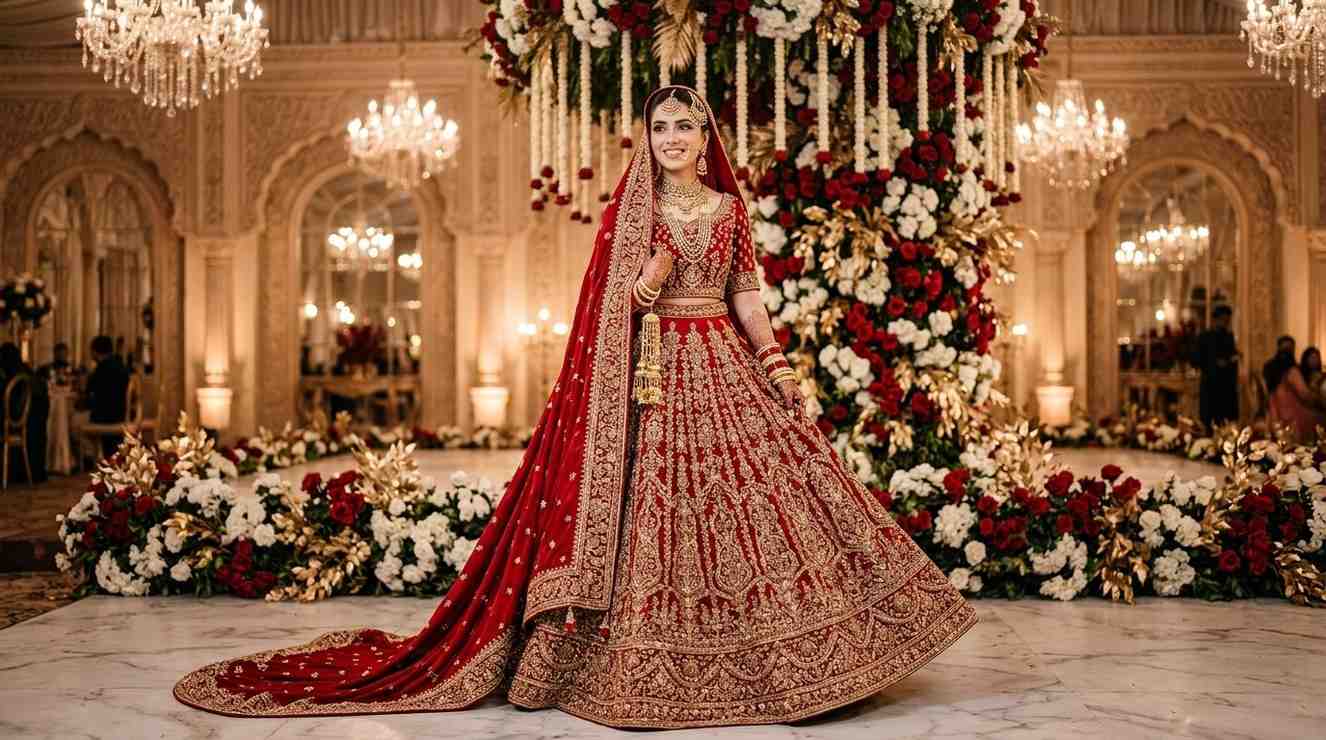
Bridal dresses by Pakistani designers come down to a handful of core silhouettes. The lehenga choli stays the baraat favourite for its heavy flare and hand ornamentation. The sharara and gharara give a flowing, traditional bottom that suits mehndi and nikkah. The pishwas, a long frock-style gown, reads regal and works for nikkah and walima, while the bridal maxi offers a sleeker, modern floor-length look.
| Style | Best event | Vibe | Typical fabric |
| Lehenga choli | Baraat | Heavy, traditional | Raw silk, velvet, net |
| Sharara | Mehndi, nikkah | Flowy, festive | Organza, jamawar |
| Gharara | Nikkah, mehndi | Classic, voluminous | Silk, net |
| Pishwas / frock | Nikkah, walima | Regal, fluid | Tissue silk, organza |
| Bridal maxi | Walima | Sleek, modern | Silk, georgette, velvet |
Handwork is where the price hides. Zardozi is raised metallic hand embroidery, while dabka, tilla and resham are thread and wire techniques stitched by hand. A single baraat piece can take a karigar two to four months to finish.
What Luxury Bridal Wear Actually Costs in 2026
Luxury Bridal Wear in Pakistan spans a huge range, so the word “bridal” tells you almost nothing about price on its own. Designer bridal lehengas start around PKR 250,000 and climb past PKR 5 million for couture (LAAM, 2026). Ready-to-wear and mid-market bridals sit well below that. The gap usually comes down to one thing: whether the embroidery is genuine handwork or machine and printed detailing.
Ranges verified from LAAM’s 2025 bridal guide and current Pakistani designer listings (2026).
| Tier | Price (PKR, 2026) | What you get |
| Ready-to-wear / mid-market | 80,000 to 250,000 | Lighter handwork, faster delivery, little customisation |
| Designer (entry couture) | 250,000 to 800,000 | Real handwork, some customisation, a named designer |
| Premium couture | 800,000 to 5,000,000+ | Pure fabrics, full hand embroidery, made to measure |
The catch at the top tier is time. A fully hand-embroidered baraat lehenga can need three to six months, so a rushed couture order either costs a rush premium or quietly cuts corners on the very handwork you paid for.
How to Choose Your Bridal Collection by Event
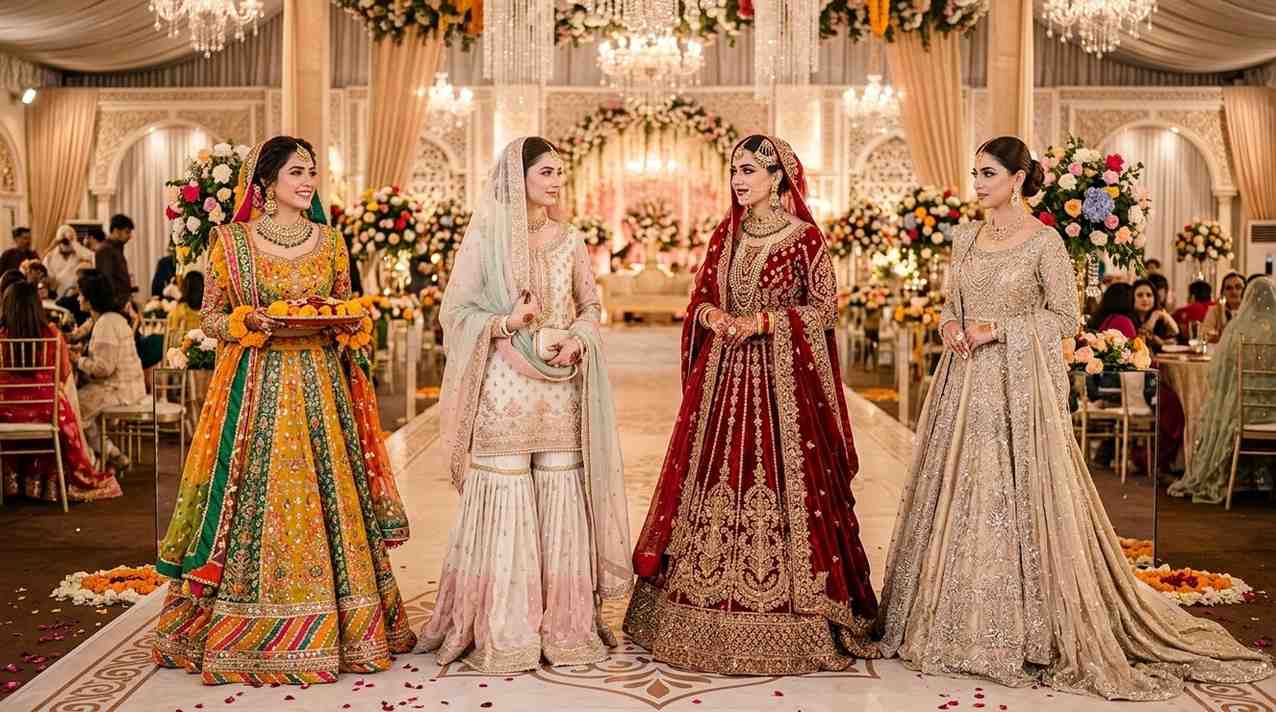
Match each piece of your bridal collection to the function and the season instead of buying the heaviest dress you can afford. Red and deep jewel tones still own the baraat. Nikkah and walima suit pastels, ivory and champagne. Winter weddings in Islamabad and the north favour velvet for warmth, while summer functions in Karachi and Lahore are easier in organza, net and lighter silk.
| Event | Go-to style | Colour | Fabric note |
| Mehndi / mayon | Sharara, gharara, frock | Yellow, green, orange | Light, movement-friendly |
| Nikkah | Pishwas, gharara | Pastel, ivory | Tissue silk, organza |
| Baraat | Lehenga choli | Red, maroon, jewel tones | Velvet in winter, raw silk in summer |
| Walima | Maxi, pishwas | Champagne, pastel | Silk, georgette |
How to Shop Smart
Order four to six months before the wedding so designers have time for custom fittings. Always confirm whether the embroidery is hand or machine before you pay, get the final fitting date in writing, and budget separately for alterations. If you are buying from abroad, request fabric swatches and close-up embroidery photos, because a screen flattens the difference between real dabka and a printed copy.
Frequently Asked Questions
What is the starting price of a designer bridal lehenga in Pakistan?
From around PKR 250,000 for entry designer pieces, with couture running into the millions (LAAM, 2026).
Which style is most popular for the baraat?
The red lehenga choli, chosen for its flare and heavy hand embroidery.
How early should I order a bridal dress?
Four to six months ahead, so there is time for custom handwork and fittings.
What colour should I wear for nikkah and walima?
Pastels, ivory and champagne are the current preference, while red stays for the baraat.
Are pishwas and maxi the same thing?
No. A pishwas is a long frock-style gown; a maxi is a sleeker floor-length dress.
Can I buy Pakistani bridal dresses online from the UK or USA?
Yes, most designers ship worldwide. Request swatches and embroidery photos before you pay.
Who are well-known Pakistani bridal designers?
HSY, Faiza Saqlain, Elan, Nomi Ansari, Erum Khan and Saira Shakira are among the recognised names.
Conclusion
Your wedding wardrobe works best when each outfit earns its place. Put the bulk of your budget into the baraat lehenga, since that is the dress your photos will carry for decades, and keep the nikkah and walima lighter in both fabric and spend. Decide your styles and colours early, confirm the embroidery is real handwork, and lock your fittings in writing. Do that, and you walk into every function dressed for the moment instead of fighting your own outfit.


 New Arrivals
 Ready To Wear
 Kid’s Clothing
 Wedding Wear
 Men’s Wear
 Jewellery
 Designers
 Sale
Sale